Close
Login Register
Search
  • About
    • What We Do
    • Who We Are
    • FAQs
  • Our Writing
    • Explainers
    • Essays
    • Letterbox
    • Reports & More
  • Podcasts
  • Our Events
  • Projects
    • Power In The Food Systems
    • Local-Global Scale Project
    • MEAT: The Four Futures Podcast
    • Fuel To Fork
    • Nature
    • Reckoning with Regeneration
    • SHIFT
    • Games at TABLE
    • Rethinking the Global Soy Dilemma
  • Resources
  • Opportunities
    • Jobs
    • Funding
    • Courses
    • Collaborations
    • Events
  • Newsletter
  • TABLE (EN)
Search
Back

TABLE

Image
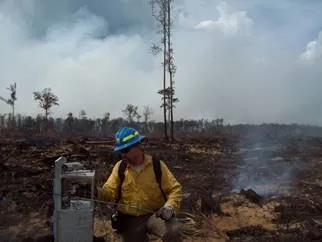
USFWS, Sampling Peat Smoke for Research, Flickr, Creative Commons License 2.0
Resource
Denial of long-term issues with agriculture on tropical peatlands will have devastating consequences
In this letter, over 100 researchers and practitioners argue that media coverage of the 2016 International Peat Congress (the first to be held in the tropics) was dangerously misleading in its assertions that peatland management under palm oil plantations was sustainable (see for example this news article by BorneoPost). They argue that such articles, by downplaying the issues imposed on peatland ecosystems by agriculture, undermine recent real and promising advances in tropical peatland management.
Read
Image
Image: Eric Schepers, Tree, Flickr, Creative Commons licence 2.0
Resource
Land Sharing vs Land Sparing to Conserve Biodiversity: How Agricultural Markets Make the Difference
This paper makes an important methodological contribution to the highly disputed debate about whether the net effect of agricultural intensification on biodiversity is positive or negative. What is already known is that there is clear relationship between increased agricultural intensification and decreased biodiversity on the land that has been intensified. 
Read
Image
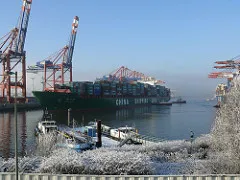
Photo: Smitty42, China Shipping Line, Flickr, Creative Commons License 2.0
Resource
China looks to green its import of agricultural commodities
This blog by Thomas Verhagen, the Senior Programme Manager at Cambridge University’s Institute for Sustainability Leadership, details how Chinese banking regulators and collaborators are aiming to change Chinese food imports. 
Read
Image
Resource
G20 Leaders welcome 'Green Finance' initiatives
For the first time in its history, G20 Leaders have referenced the importance of greening the financial system. In addition to the mention in their annual Communiqué, G20 members also published a Green Finance Synthesis Report that examines the need for and challenges of developing green finance.
Read
Image
Credit: Juan Mercada, Olor a Marrakesh, Flickr, Creative Commons licence 2.0
Resource
Marrakesh climate talks represent unique opportunity to decide the future of agriculture within international climate policy
Ongoing discussions on agriculture within the United Nations Framework Convention on Climate Change (UNFCCC), will culminate this year at the COP22 climate negotiations in Marrakech, following a long process since their initiation in Durban in 2011. The talks in Marrakech follow the signing of the Paris Agreement in 2015 which, in its preamble, explicitly refers to safeguarding food security. Also, the vast majority of countries’ Intended Nationally Determined Contributions submissions (i.e. climate pledges) prioritise agriculture as a sector for adaptation and mitigation action.
Read
Image
Credit: thebarrowboy - trawling, Flickr, Creative Commons Licence 2.0
Resource
Future fisheries can expect $10 billion revenue loss due to climate change
The authors used a species distribution model and applied this to the 887 marine fish (which represents 60% of global average annual catch in the 2000s) and invertebrate species in the world oceans under high and low emissions scenarios. The authors find that global maximum catch potential (MCP) is projected to decrease globally by 7.7% between 2010 and 2050, under the business as usual scenario, and the global revenue from this is predicted to decrease by 10.4% compared to 2010. Under the low emissions scenario, MCP is projected to decrease globally by 4.1% and revenue by 7.1%​
Read
Image
Credit: Dan zen, Golden soy, Flickr, Creative Commons Licence 2.0
Resource
Challenging assumptions about the effects of elevated CO2 on crops: soybean field trials show that intensifying drought eliminates the expected benefits
This paper by researchers in the US and Australia reports the findings of a long-term field-trial-based investigation into the effect of elevated carbon dioxide concentrations (CO2) on soy yield and drought tolerance. Their findings challenge the widely-held belief that crop yield will be increased by elevated CO2 (the so-called CO2 fertilisation effect) both because of increased photosynthetic rate, and because of lower susceptibility to drought: it has long been assumed that in higher CO2 conditions, stomatal conductance will be lower, leading to slower water loss from the leaves, slower water uptake from the roots, and consequently more moisture remaining in the soil for longer, thereby sustaining crops in limited rainfall.
Read
Image
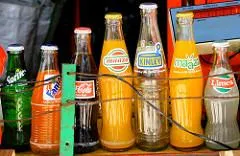
Credit: wellunwell, soft drinks, Flickr, Creative Commons Licence 2.0
Resource
Trimming the excess: environmental impacts of discretionary food consumption in Australia
This study estimates the environmental impacts of what it terms discretionary foods - foods and drinks that do not provide nutrients that the body particularly needs. It finds that these foods account for 33-39% of food-related footprints in Australia.
Read
Image
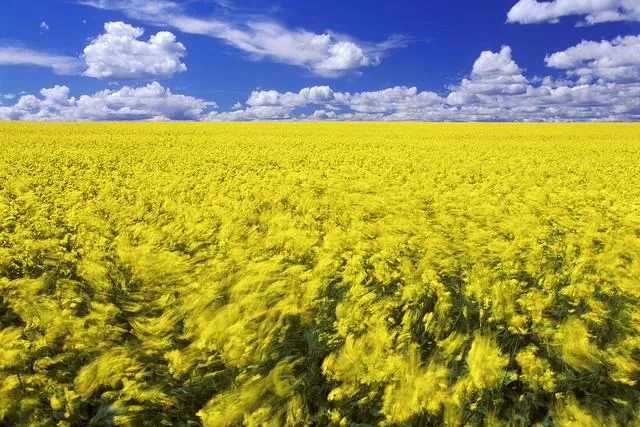
Photo: Province of British Columbia, Dawson Creek, Flickr, Creative Commons License 2.0
Resource
The Solutions Journal - Special issue: Towards sustainable food futures
A key objective of this Special Issue is to provide a creative space for scholars who may be limited in the scope of their publication outlets, especially when it comes to proposing “out of the box” ideas.  
Read
  • VIEW MORE

Sign up for Fodder, our monthly newsletter unpacking the future of food.

Tick below to opt-in to email communications.

You can change your mind at any time by clicking the unsubscribe link in the footer of any email you receive from us, or by contacting us at info@tabledebates.org.

We use Mailchimp as our marketing platform. By clicking below to subscribe, you acknowledge that your information will be transferred to Mailchimp for processing. Learn more about Mailchimp's privacy practices.
  • Glossary
  • About
  • Our Writing
  • Podcasts
  • Resources

Social

YouTube Facebook Instagram

© Copyright 2025

A collaboration between: