Close
Login Register
Search
  • About
    • What We Do
    • Who We Are
    • FAQs
  • Our Writing
    • Explainers
    • Essays
    • Letterbox
    • Reports & More
  • Podcasts
  • Our Events
  • Projects
    • Power In The Food Systems
    • Local-Global Scale Project
    • MEAT: The Four Futures Podcast
    • Fuel To Fork
    • Nature
    • Reckoning with Regeneration
    • SHIFT
    • Games at TABLE
    • Rethinking the Global Soy Dilemma
  • Resources
  • Opportunities
    • Jobs
    • Funding
    • Courses
    • Collaborations
    • Events
  • Newsletter
  • TABLE (EN)
Search
Back

TABLE

Image
Photo credit: Lorraine, BEST of SHOW March 2010 - Oregon Society of Artists - Field Burning, Flickr, Creative Commons licence 2.0
Resource
Decoupling of greenhouse gas emissions from global agricultural production: 1970–2050
One of the greatest challenges of this century is figuring out how to feed more people, while significantly reducing greenhouse gas emissions from agriculture, just as other demands on land - for example, for sequestration and bioenergy production - are increasing. 
Read
Image
Credit: Edward Musiak, Mountain range, Flickr, Creative Commons licence 2.0
Resource
Climate analogues suggest limited potential for intensification of production on current croplands under climate change
This paper takes as its starting point the mainstream projections that in future, global food production will need to increase by another 60–110% by 2050, to keep up with anticipated increases in human population and changes in diet (it should be noted, however, that the need and feasibility of such increases is contested (see), with many arguing that dietary change and waste reduction can reduce the need for production increases (see)).
Read
Image
Photo credit: Martin Delisle, Flickr, Creative Commons License 2.0
Resource
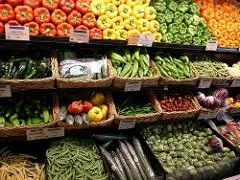
Alignment of Healthy Dietary Patterns and Environmental Sustainability: A Systematic Review
This systematic review confirms earlier findings that a number of well-categorised sustainable dietary patterns are also good for health outcomes. There was consistent evidence to suggest that diets higher in plant-based foods such as vegetables, fruits, legumes, seeds, nuts, and whole grains and lower in animal-based foods (especially red meat), are both healthier and associated with a lower impact on the environment.
Read
Image
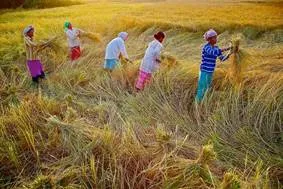
Photo credit: Michael Foley, Paddy harvest ballet, Flickr, Creative Commons licence 2.0
Resource
Using the concept of ‘nutritional yield’ as a metric to evaluate synergies and tradeoffs for sustainable agriculture
Over the past half-century, the paradigm for agricultural development has been to maximize yields through intensifying production, especially for cereal crops. But achieving food security and building a healthy, resilient global food supply is about more than just the quantity of calories provided. New metrics of success and methods of evaluation are needed in order to measure progress towards meeting the world’s nutritional needs within environmental limits.
Read
Image
Photo credit: Masahiro Ihara, Flickr, Creative Commons License 2.0
Resource
Systematic review on the impacts of dietary change on greenhouse gas emissions, land use, water use, and health
This paper by FCRN member Lukasz Aleksandrowicz and colleagues consolidates current evidence on the environmental impacts of dietary change, finding environmental benefits are possible from shifting typical Western diets to a variety of alternative dietary patterns. The results also highlight that there is still complexity in defining environmentally sustainable diets, though moderate reductions in meat consumption (particularly ruminant meat) replaced by plant-based foods, seem to reliably reduce greenhouse gas (GHG) emissions, land use, and water use, as well as improve health.
Read
Image
Photo credit: Alex, Flickr, Creative Commons License 2.0
Resource
Reducing meat consumption in developed and transition countries to counter climate change and biodiversity loss: a review of influence factors
FCRN members Prof. Dr. Susanne Stoll-Kleemann and Uta Schmidt (MSc.) have brought our attention to their recent article on reducing meat consumption.
Read
Image
Photo credit: Steven Depolo, Rotting Peach Moldy, Flickr, Creative Commons License 2.0
Resource
PODCAST: Liz Goodwin on Reducing Food Loss and Waste — Lessons from the UK
On this episode of the World Resources Institute (WRI) podcast, Lawrence MacDonald interviews Dr Liz Goodwin, who is a WRI senior fellow and their first Director of food loss and waste.
Read
Image
Resource
How Mars and WRI Developed Science-based Sustainability Targets for climate, land and water
This blog on the World Resources Institute’s (WRI) website discusses their collaboration with food multinational Mars in developing science-based sustainability targets for climate, land use, and water.
Read
Image
Resource
New campaign, launch 10th November: Are you #vegcurious?
The Eating Better Alliance has launched a new campaign about eating less meat. The alliance have worked to create a new way of talking about eating less meat, through fun and positive messages and a set of adverts to inspire a new generation of men to be more daring with their food and give vegetarian options a chance. 
Read
  • VIEW MORE

Sign up for Fodder, our monthly newsletter unpacking the future of food.

Tick below to opt-in to email communications.

You can change your mind at any time by clicking the unsubscribe link in the footer of any email you receive from us, or by contacting us at info@tabledebates.org.

We use Mailchimp as our marketing platform. By clicking below to subscribe, you acknowledge that your information will be transferred to Mailchimp for processing. Learn more about Mailchimp's privacy practices.

  • Glossary
  • About
  • Our Writing
  • Podcasts
  • Resources

Social

YouTube Facebook Instagram

© Copyright 2025

A collaboration between: