Image Resources Our extensive research library contains thousands of summaries of journal articles, reports and news stories that can be searched by keyword and category RESOURCES CATEGORY Books Briefing paper Event recording Featured articles Featured report Game Journal articles News and resources Reports Think piece Video Working paper Workshop summary Year 2026 2025 2024 2023 2022 2021 2020 2019 2018 2017 2016 2015 2014 2013 2012 2011 2010 2009 2008 2007 2002 2001 Image Resource Update: Biofuels and EU Policy Development In our 24th September Newsletter, we mentioned that the EU is considering plans to limit crop-based biofuels to 5% of transport fuel. Biofuels have been promoted in recent years, largely because of the belief that they will help reduce transport’s impact on the environment, and particularly because of its contribution to climate change. But the indirect effects of growing crops to make fuel have seriously challenged these assumptions. Read Image Resource Land Grabs in Africa compared to the “wild west” José Graziano da Silva, the FAO's director general, has compared the land grab deals in Africa to the “wild west,” saying a "sheriff" is needed to restore the rule of law. Large land deals have accelerated since the surge in food prices in 2007-08, prompting companies and sovereign wealth funds to take steps to guarantee food supplies. Read Image Resource Report: Carbon Disclosure Project – Collective responses to rising water challenges The Carbon Disclosure Project also released its Global Water Report, entitled Collective responses to rising water challenges. The intention of this report is to serve as a “call to action for companies to treat water with the strategic importance it deserves; to consider the role they should play in tackling water challenges and to provide the leadership required to build a more resilient future.” Despite increased awareness and activity among some respondents, the Global 500 response rate remained static at 60% (191 companies). Read Image Resource Report: Carbon Disclosure Project – “The Future of Reporting” The Carbon Disclosure Project released its FTSE 350 Climate Change Report 2012, entitled The Future of Reporting, which provides an annual update on greenhouse gas emissions data and climate change strategies at the UK’s largest public corporations. Read Resource FCRN Network Member book: Living with the Trees of Life– Towards the Transformation of Tropical Agriculture Read Resource New guide released: The Business Case for Reducing Emissions This guide, produced by IGD, is designed to help businesses understand what they can do to reduce their greenhouse gas emissions, and communicates it in a way that will provide the business case for investment in greenhouse gas (GHG) reduction initiatives. Read Resource Double burden of over and undernutrition in India Read Resource New food and packaging waste reduction figures The Courtauld Commitment is a voluntary “responsibility deal” aimed at improving resource efficiency and reducing the carbon and wider environmental impact of the grocery sector. This includes action to reduce food and packaging waste. Signatories to the deal include UK grocery retailers and manufacturers, and the initiative is led and coordinated by the Waste Resources Action Programme (WRAP). Read Resource Defra Report FO0412: Understanding the environmental impacts of consuming foods that are produced locally in season Defra has published the results of a study which looked at the environmental impact of consuming foods that are produced locally in season. One of Defra’s current high level environmental behaviour goals is for consumers to eat more food that is locally in season. Read VIEW MORE
Image Resource Update: Biofuels and EU Policy Development In our 24th September Newsletter, we mentioned that the EU is considering plans to limit crop-based biofuels to 5% of transport fuel. Biofuels have been promoted in recent years, largely because of the belief that they will help reduce transport’s impact on the environment, and particularly because of its contribution to climate change. But the indirect effects of growing crops to make fuel have seriously challenged these assumptions. Read
Image Resource Land Grabs in Africa compared to the “wild west” José Graziano da Silva, the FAO's director general, has compared the land grab deals in Africa to the “wild west,” saying a "sheriff" is needed to restore the rule of law. Large land deals have accelerated since the surge in food prices in 2007-08, prompting companies and sovereign wealth funds to take steps to guarantee food supplies. Read
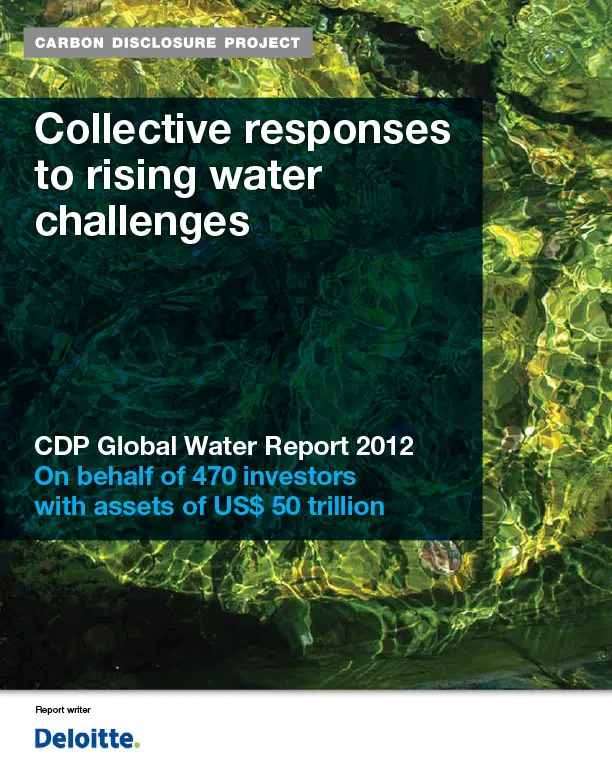
Image Resource Report: Carbon Disclosure Project – Collective responses to rising water challenges The Carbon Disclosure Project also released its Global Water Report, entitled Collective responses to rising water challenges. The intention of this report is to serve as a “call to action for companies to treat water with the strategic importance it deserves; to consider the role they should play in tackling water challenges and to provide the leadership required to build a more resilient future.” Despite increased awareness and activity among some respondents, the Global 500 response rate remained static at 60% (191 companies). Read
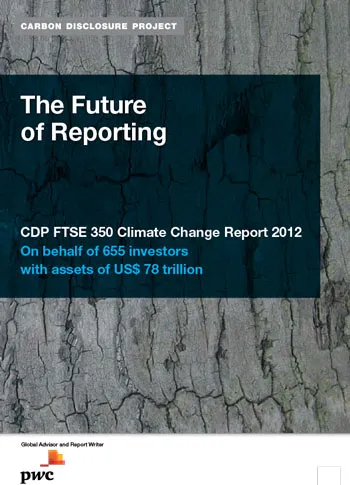
Image Resource Report: Carbon Disclosure Project – “The Future of Reporting” The Carbon Disclosure Project released its FTSE 350 Climate Change Report 2012, entitled The Future of Reporting, which provides an annual update on greenhouse gas emissions data and climate change strategies at the UK’s largest public corporations. Read
Resource FCRN Network Member book: Living with the Trees of Life– Towards the Transformation of Tropical Agriculture Read
Resource New guide released: The Business Case for Reducing Emissions This guide, produced by IGD, is designed to help businesses understand what they can do to reduce their greenhouse gas emissions, and communicates it in a way that will provide the business case for investment in greenhouse gas (GHG) reduction initiatives. Read
Resource New food and packaging waste reduction figures The Courtauld Commitment is a voluntary “responsibility deal” aimed at improving resource efficiency and reducing the carbon and wider environmental impact of the grocery sector. This includes action to reduce food and packaging waste. Signatories to the deal include UK grocery retailers and manufacturers, and the initiative is led and coordinated by the Waste Resources Action Programme (WRAP). Read
Resource Defra Report FO0412: Understanding the environmental impacts of consuming foods that are produced locally in season Defra has published the results of a study which looked at the environmental impact of consuming foods that are produced locally in season. One of Defra’s current high level environmental behaviour goals is for consumers to eat more food that is locally in season. Read