Image Resources Our extensive research library contains thousands of summaries of journal articles, reports and news stories that can be searched by keyword and category RESOURCES CATEGORY Books Briefing paper Event recording Featured articles Featured report Game Journal articles News and resources Reports Think piece Video Working paper Workshop summary Year 2026 2025 2024 2023 2022 2021 2020 2019 2018 2017 2016 2015 2014 2013 2012 2011 2010 2009 2008 2007 2002 2001 Image Resource New report says government ‘not serious’ about improving Britain’s diet The British government has failed to tackle poor nutrition and diet, and should do more to take public health nutrition into consideration in every area of policy, says a report by the UK Coronary Prevention Group, a charity dedicated to preventing heart disease through healthy lifestyles. Read Image Resource New report on ‘heat-beating’ beans In Africa and Latin America, the production of beans (Phaseolus vulgaris) is highly vulnerable to climate change impacts, which include higher temperatures and more frequent drought. Climate modeling suggests that, over the next several decades, the area suited for this crop in eastern and central Africa could shrink up to 50% by 2050. Read Image Resource What does the Global Nutrition Report mean for research? In this article from Scidev, Laurence Haddad (senior research fellow at the International Food Policy Research Institute and former director at the Institute of Development Studies) discusses the new Global Nutrition Report by the International Food Policy Research Institute (IFPRI). Read Image Resource IFPRI’s 2014–2015 Global Food Policy Report In this report IFPRI describes the major food policy issues, developments, and decisions of 2014 and highlights challenges and opportunities for 2015. Read Image Resource Global trends in antimicrobial use in food animals This paper estimates that global use of antimicrobial drugs in animal farming is anticipated to rise by 67% by 2030, due to increasing demand for animal products and a shift towards more large scale intensive systems of production. It argues that a range of measures need to be taken in order to address the negative impacts of this growth. Read Image Resource Can Africa provide enough low-carbon land to meet global food needs? Some scientists have suggested that Africa's wet savannahs could be ideal for growing crops needed to meet the growing demand for food and bioenergy. In this paper however, researchers from Princeton University and the CGIAR Research Program on Climate Change, Agriculture and Food Security (CCAFS) warn that farmland conversion of these savannahs will come at a much higher cost than previously thought. Read Image Resource Sustainable food production: constraints, challenges and choices by 2050 This paper asks the question “Can agriculture be sustainable?” It argues that, if we want to take a different path, we will have to make the choice to do so. It emphasises that we need to be clear that we have choices - options that need to be debated rather than subsumed in a dialogue of crisis and food shortages. The paper outlines some of these options in order to pursue a more sustainable pathway. Read Image Resource Meeting the Global Food Demand of the Future by Engineering Crop Photosynthesis and Yield Potential A paper published in the journal Cell argues that the current rate of increase in crop yields is insufficient to meet business-as-usual anticipated growth in demand for food (it cites one projection that the world will need 85% more primary foodstuffs by 2050, relative to 2013). Read Image Resource Adapting to climate change will bring new environmental problems This paper entitled The environmental impact of climate change adaptation on land use and water quality published in Nature Climate Change says that adaptation to climate change could have profound environmental repercussions, potentially generating further pressures and threats for both local and global ecosystems. Read VIEW MORE
Image Resource New report says government ‘not serious’ about improving Britain’s diet The British government has failed to tackle poor nutrition and diet, and should do more to take public health nutrition into consideration in every area of policy, says a report by the UK Coronary Prevention Group, a charity dedicated to preventing heart disease through healthy lifestyles. Read
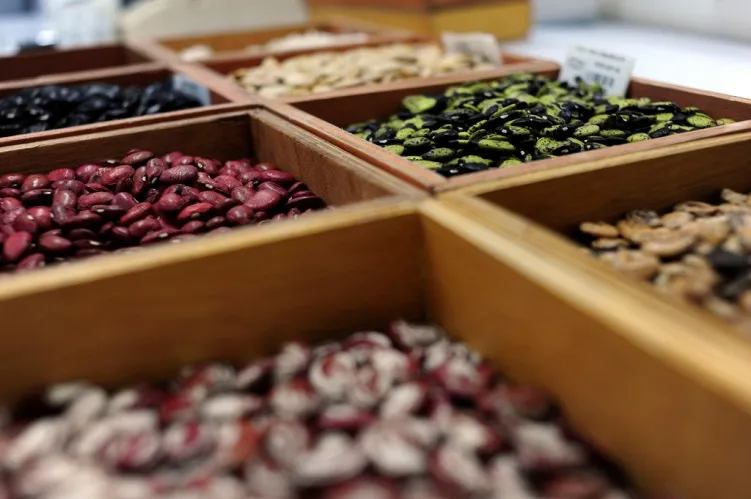
Image Resource New report on ‘heat-beating’ beans In Africa and Latin America, the production of beans (Phaseolus vulgaris) is highly vulnerable to climate change impacts, which include higher temperatures and more frequent drought. Climate modeling suggests that, over the next several decades, the area suited for this crop in eastern and central Africa could shrink up to 50% by 2050. Read
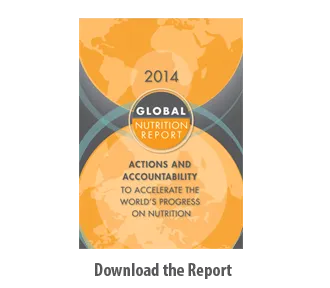
Image Resource What does the Global Nutrition Report mean for research? In this article from Scidev, Laurence Haddad (senior research fellow at the International Food Policy Research Institute and former director at the Institute of Development Studies) discusses the new Global Nutrition Report by the International Food Policy Research Institute (IFPRI). Read
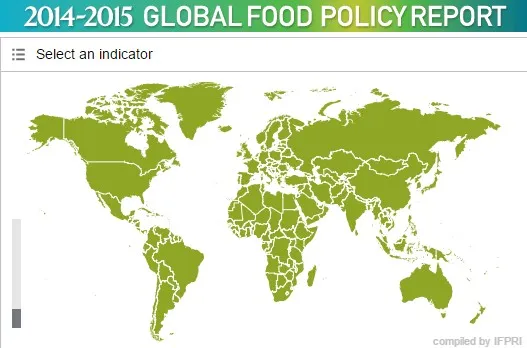
Image Resource IFPRI’s 2014–2015 Global Food Policy Report In this report IFPRI describes the major food policy issues, developments, and decisions of 2014 and highlights challenges and opportunities for 2015. Read
Image Resource Global trends in antimicrobial use in food animals This paper estimates that global use of antimicrobial drugs in animal farming is anticipated to rise by 67% by 2030, due to increasing demand for animal products and a shift towards more large scale intensive systems of production. It argues that a range of measures need to be taken in order to address the negative impacts of this growth. Read
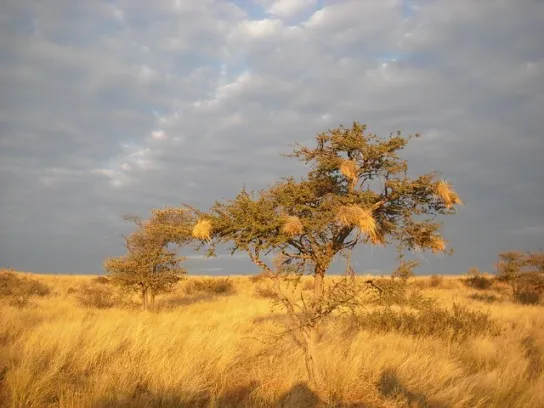
Image Resource Can Africa provide enough low-carbon land to meet global food needs? Some scientists have suggested that Africa's wet savannahs could be ideal for growing crops needed to meet the growing demand for food and bioenergy. In this paper however, researchers from Princeton University and the CGIAR Research Program on Climate Change, Agriculture and Food Security (CCAFS) warn that farmland conversion of these savannahs will come at a much higher cost than previously thought. Read
Image Resource Sustainable food production: constraints, challenges and choices by 2050 This paper asks the question “Can agriculture be sustainable?” It argues that, if we want to take a different path, we will have to make the choice to do so. It emphasises that we need to be clear that we have choices - options that need to be debated rather than subsumed in a dialogue of crisis and food shortages. The paper outlines some of these options in order to pursue a more sustainable pathway. Read
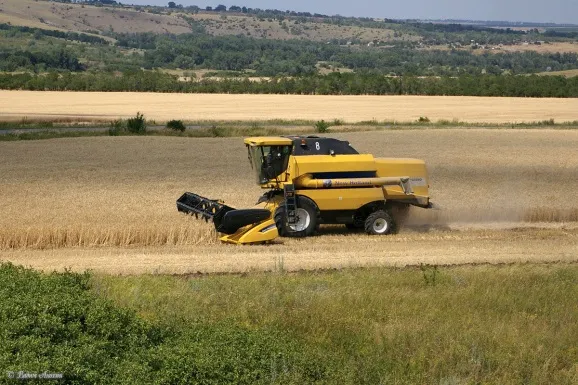
Image Resource Meeting the Global Food Demand of the Future by Engineering Crop Photosynthesis and Yield Potential A paper published in the journal Cell argues that the current rate of increase in crop yields is insufficient to meet business-as-usual anticipated growth in demand for food (it cites one projection that the world will need 85% more primary foodstuffs by 2050, relative to 2013). Read
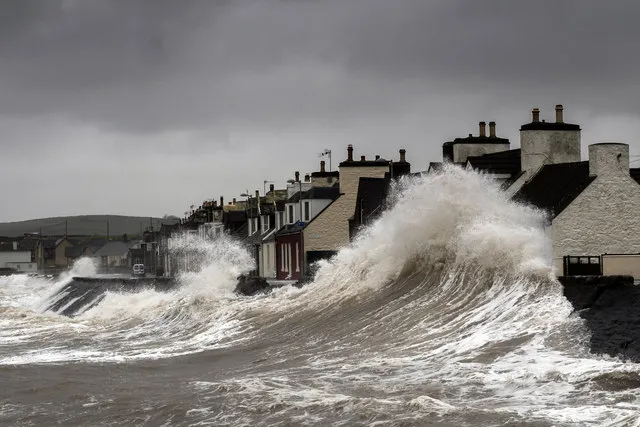
Image Resource Adapting to climate change will bring new environmental problems This paper entitled The environmental impact of climate change adaptation on land use and water quality published in Nature Climate Change says that adaptation to climate change could have profound environmental repercussions, potentially generating further pressures and threats for both local and global ecosystems. Read