Image Resources Our extensive research library contains thousands of summaries of journal articles, reports and news stories that can be searched by keyword and category RESOURCES CATEGORY Books Briefing paper Event recording Featured articles Featured report Game Journal articles News and resources Reports Think piece Video Working paper Workshop summary Year 2026 2025 2024 2023 2022 2021 2020 2019 2018 2017 2016 2015 2014 2013 2012 2011 2010 2009 2008 2007 2002 2001 Image Resource Fossil fuel emissions threatens protein in crops –diets of the world’s poorest most hardly hit A new paper published in Global Change Biology looks into the effects of increasing CO2 levels on protein in crops. The study finds that not only can increased CO2 be a problem for food security through climate change, but it can also directly impact the nutritional value of crops. Read Image Resource Climate change seen as major threat to agricultural exports from Uganda and Peru In a survey carried out by the International Trade Centre, ITC exporters reveal widespread concerns about reduced competitiveness due to climate change. Based on surveys of exporting firms in both Peru and Uganda, the new publication, Climate Change and the Agri-Food Trade: Perceptions of Exporters in Peru and Uganda, identifies threats arising from climate change and seeks to develop solutions to help the agriculture sector adapt. The publication concludes that climate change makes existing challenges in the agri-food sector even more difficult to overcome, and argues that it is already having a highly negative impact on competitiveness. Read Image Resource New SUSFANS consortium builds framework to underpin EU-wide food policies A new consortium has been created with the aim of mapping out the influence of consumer behaviour and producer choices on the nutritional adequacy and sustainability of dietary patterns. Read Image Resource Rise in consumption of non-dairy milk substitutes in Europe and US This Bloomberg article describes how as a percentage of all new milk products on the market in 2014, non-dairy milk products made up 24% and 31% in European and North American respectively. In addition to oat, soy and almond milk, scientists have also developed alternatives based on from hemp and quinoa. The article focuses on the case of a Swedish Oat-milk producing company Oatly – a company that has seen sales grow significantly with revenue increasing with 37 percent this year. It describes how “(t)he expanding range of options has helped broaden the appeal of products such as Oatly beyond vegetarians, vegans, and the lactose intolerant”. Read Image Resource Methane: the future of fish feed? This article reports that a new fish and animal feedstock product which uses methane gas may be released into the European feedstock markets from the beginning of 2018. The product, FeedKind, is currently in pre-production phase and it is described that the manufacturing process is very similar to the way in which Marmite and other yeast-extract sandwich spreads are produced. Read Image Resource French supermarkets forced to donate unsold food under new law A large proportion of supermarket food is thrown away every day regardless of quality, to avoid legal liability if a customer complains. In France, the government has now taken a firm step to incentivise food donation by removing the liability from the supermarkets. By barring stores from spoiling and throwing away food the government aims to tackle waste alongside food poverty. The measure follows a decision from February 2015 to remove the best-before dates on fresh foods and it is part of a wider drive to halve the amount of food waste in France by 2025. The bill will also ban supermarkets from deliberately spoiling unsold food so it cannot be eaten and the law will also introduce an education programme about food waste in schools and businesses. Read Image Resource The state of food insecurity in the world 2015 - Meeting the 2015 international hunger targets: taking stock of uneven progress In this publication FAO highlights the latest statistics on global food insecurity. The latest available estimates indicate that about 795 million people in the world – just over one in nine – were undernourished in 2014–16. In relative terms, the share of undernourished people in the population, or the prevalence of undernourishment (PoU), has decreased from 18.6 percent in 1990–92 to 10.9 percent in 2014–16, reflecting fewer undernourished people in a growing global population. Read Image Resource ‘Feeding the Planet: Building on the Milan Charter’ - Position statement by CIWF Compassion In World Farming (CIWF) has produced a new report, Feeding the Planet: Building on the Milan Charter, released to coincide with the Expo Milan 2015 which is organised around the theme: Feeding The Planet, Energy for Life. The Milan Charter – produced by Italy - highlights the need to produce healthy, safe and sufficient food for everyone, while respecting the planet and its equilibrium. Read Image Resource Donor mapping - Global sustainable food and agriculture: a landscape assessment This is a new report commissioned by the Global Alliance for the Future of Food in collaboration with the Meridian Institute for use by Global Alliance members. The Global Alliance is a coalition of foundations that have come together to help shift food and agriculture systems towards greater sustainability, security, and equity. In this report they aim to provide a high level assessment and overview of the philanthropic donor landscape in relation to sustainable food and agriculture systems. The report represents a synthesis of several parallel and complementary efforts: Read VIEW MORE
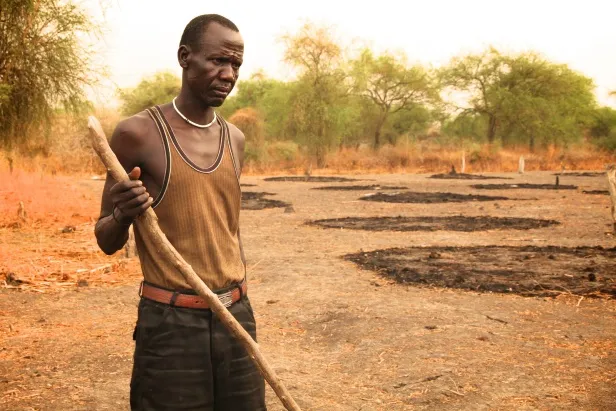
Image Resource Fossil fuel emissions threatens protein in crops –diets of the world’s poorest most hardly hit A new paper published in Global Change Biology looks into the effects of increasing CO2 levels on protein in crops. The study finds that not only can increased CO2 be a problem for food security through climate change, but it can also directly impact the nutritional value of crops. Read
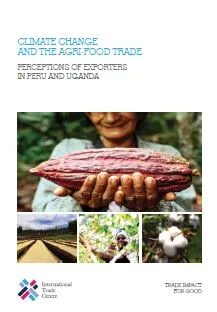
Image Resource Climate change seen as major threat to agricultural exports from Uganda and Peru In a survey carried out by the International Trade Centre, ITC exporters reveal widespread concerns about reduced competitiveness due to climate change. Based on surveys of exporting firms in both Peru and Uganda, the new publication, Climate Change and the Agri-Food Trade: Perceptions of Exporters in Peru and Uganda, identifies threats arising from climate change and seeks to develop solutions to help the agriculture sector adapt. The publication concludes that climate change makes existing challenges in the agri-food sector even more difficult to overcome, and argues that it is already having a highly negative impact on competitiveness. Read
Image Resource New SUSFANS consortium builds framework to underpin EU-wide food policies A new consortium has been created with the aim of mapping out the influence of consumer behaviour and producer choices on the nutritional adequacy and sustainability of dietary patterns. Read
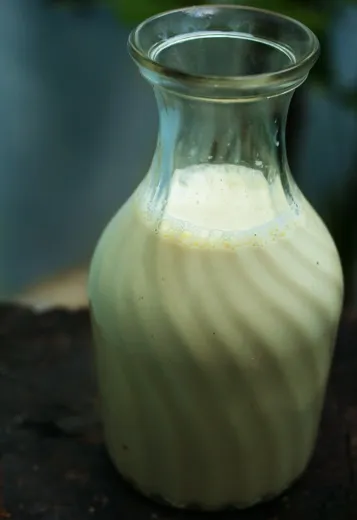
Image Resource Rise in consumption of non-dairy milk substitutes in Europe and US This Bloomberg article describes how as a percentage of all new milk products on the market in 2014, non-dairy milk products made up 24% and 31% in European and North American respectively. In addition to oat, soy and almond milk, scientists have also developed alternatives based on from hemp and quinoa. The article focuses on the case of a Swedish Oat-milk producing company Oatly – a company that has seen sales grow significantly with revenue increasing with 37 percent this year. It describes how “(t)he expanding range of options has helped broaden the appeal of products such as Oatly beyond vegetarians, vegans, and the lactose intolerant”. Read
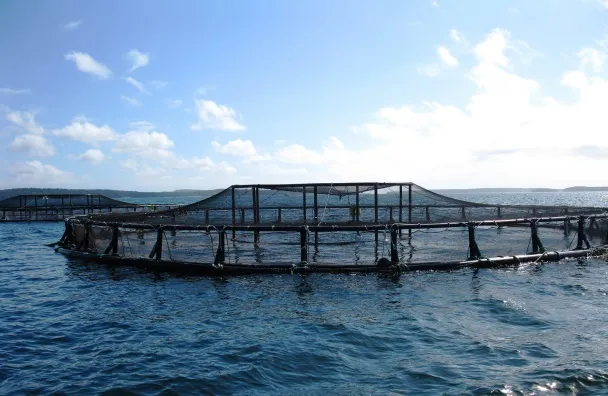
Image Resource Methane: the future of fish feed? This article reports that a new fish and animal feedstock product which uses methane gas may be released into the European feedstock markets from the beginning of 2018. The product, FeedKind, is currently in pre-production phase and it is described that the manufacturing process is very similar to the way in which Marmite and other yeast-extract sandwich spreads are produced. Read
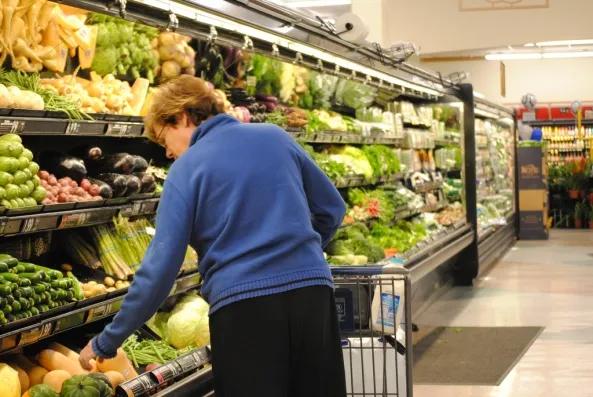
Image Resource French supermarkets forced to donate unsold food under new law A large proportion of supermarket food is thrown away every day regardless of quality, to avoid legal liability if a customer complains. In France, the government has now taken a firm step to incentivise food donation by removing the liability from the supermarkets. By barring stores from spoiling and throwing away food the government aims to tackle waste alongside food poverty. The measure follows a decision from February 2015 to remove the best-before dates on fresh foods and it is part of a wider drive to halve the amount of food waste in France by 2025. The bill will also ban supermarkets from deliberately spoiling unsold food so it cannot be eaten and the law will also introduce an education programme about food waste in schools and businesses. Read
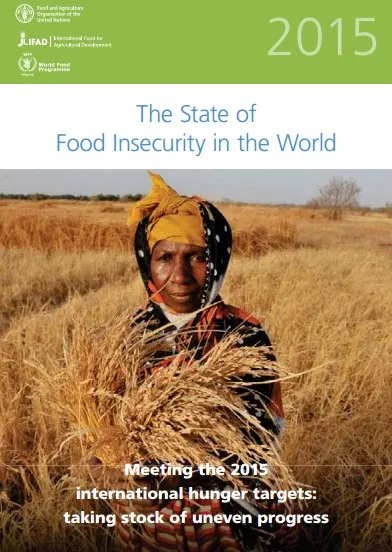
Image Resource The state of food insecurity in the world 2015 - Meeting the 2015 international hunger targets: taking stock of uneven progress In this publication FAO highlights the latest statistics on global food insecurity. The latest available estimates indicate that about 795 million people in the world – just over one in nine – were undernourished in 2014–16. In relative terms, the share of undernourished people in the population, or the prevalence of undernourishment (PoU), has decreased from 18.6 percent in 1990–92 to 10.9 percent in 2014–16, reflecting fewer undernourished people in a growing global population. Read
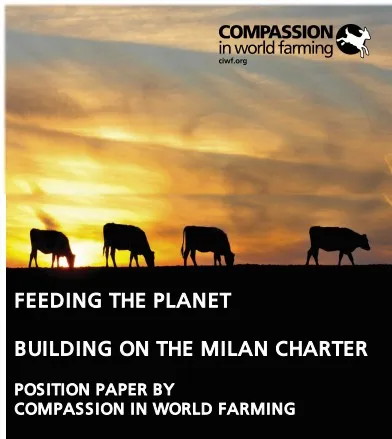
Image Resource ‘Feeding the Planet: Building on the Milan Charter’ - Position statement by CIWF Compassion In World Farming (CIWF) has produced a new report, Feeding the Planet: Building on the Milan Charter, released to coincide with the Expo Milan 2015 which is organised around the theme: Feeding The Planet, Energy for Life. The Milan Charter – produced by Italy - highlights the need to produce healthy, safe and sufficient food for everyone, while respecting the planet and its equilibrium. Read
Image Resource Donor mapping - Global sustainable food and agriculture: a landscape assessment This is a new report commissioned by the Global Alliance for the Future of Food in collaboration with the Meridian Institute for use by Global Alliance members. The Global Alliance is a coalition of foundations that have come together to help shift food and agriculture systems towards greater sustainability, security, and equity. In this report they aim to provide a high level assessment and overview of the philanthropic donor landscape in relation to sustainable food and agriculture systems. The report represents a synthesis of several parallel and complementary efforts: Read