Image Resources Our extensive research library contains thousands of summaries of journal articles, reports and news stories that can be searched by keyword and category RESOURCES CATEGORY Books Briefing paper Event recording Featured articles Featured report Game Journal articles News and resources Reports Think piece Video Working paper Workshop summary Year 2026 2025 2024 2023 2022 2021 2020 2019 2018 2017 2016 2015 2014 2013 2012 2011 2010 2009 2008 2007 2002 2001 Image Resource Metrics for sustainable healthy diets: why, what, how? The FCRN and the Food Foundation have jointly produced new report based on a meeting, held November 2016, on the topic of metrics for sustainable healthy diets for the food industry. While a range of sustainability metrics for this industry already exists, none comprehensively measure the progress (or otherwise) that food companies are taking to foster a public shift towards more sustainable and healthy eating patterns (SHEPs). The meeting report considers whether further work on such a set of metrics would be of use. Read Image Resource European Council endorses measures for “positive nutrition” to improve food products While regulation aimed at improving food products has traditionally focused on decreasing unhealthy ingredients such as salt or sugar, a new move to aid food producers to include healthy ingredients is on the way. At a recent workshop organised by Euractiv it was discussed how the addition of, say, protein or fibre in processed food could be policy goal as well. Read Image Resource Conference proceedings from the Global Conference on Sustainable Beef 2016 available now The Global Roundtable for Sustainable Beef (GRSB), a global, multi-stakeholder initiative developed to advance improvement in sustainability of the global beef value chain, held a conference in October 2016. Read Image Resource Talk on policies in a post Brexit world and more sustainable diets David Baldock, a Senior Fellow and former Executive Director of IEEP, gave a Food Thinkers talk at an event organised by the Food Research Collaboration, entitled: "Horses and Carts: can policies in a post Brexit world harness farming to more sustainable diets?" Read Image Resource Food Consumption in the City: Practices and patterns in Urban Asia and the Pacific Edited by Marlyne Sahakian, Czarina Saloma and Suren Erkman Read Image Resource Free eBook on Good Nutrition: Perspectives for the 21st Century This newly released free eBook aims to provide the latest perspectives on the nutrition challenges that are now common to all societies worldwide. It argues that the case for good nutrition for all people, in all parts of the globe and throughout the entire life-cycle, is growing stronger and includes contributions from some of the world’s most influential and respected experts in the field. Read Image Resource Seaweed aquaculture for food security, income generation and environmental health in Tropical Developing Countries The World Bank has released a short working paper arguing that the expansion of seaweed farming in tropical developing countries could have large positive impacts on local poverty, ecosystem management and climate change mitigation. The report goes through different benefits and uses of seaweed production and briefly discusses current and potential markets for the crop. Read Image Resource Global Coverage of Agricultural Sustainability Standards, and Their Role in Conserving Biodiversity This article evaluates the impact of voluntary crop sustainability standards on biodiversity protection. The authors reviewed the 12 major crop standards (such as Organic cropland (IFOAM), Fairtrade and Roundtable on Sustainable Palm Oil), and found that only two of these prohibited all deforestation (Rainforest Alliance/Sustainable Agriculture Network and Proterra). Read Image Resource Nitrification inhibitors — climate change mitigation tool recommended by the IPCC – may be less effective than previously thought Read VIEW MORE
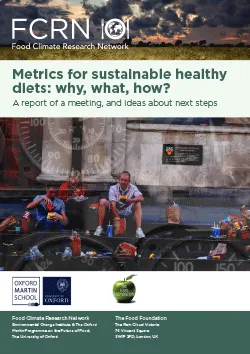
Image Resource Metrics for sustainable healthy diets: why, what, how? The FCRN and the Food Foundation have jointly produced new report based on a meeting, held November 2016, on the topic of metrics for sustainable healthy diets for the food industry. While a range of sustainability metrics for this industry already exists, none comprehensively measure the progress (or otherwise) that food companies are taking to foster a public shift towards more sustainable and healthy eating patterns (SHEPs). The meeting report considers whether further work on such a set of metrics would be of use. Read
Image Resource European Council endorses measures for “positive nutrition” to improve food products While regulation aimed at improving food products has traditionally focused on decreasing unhealthy ingredients such as salt or sugar, a new move to aid food producers to include healthy ingredients is on the way. At a recent workshop organised by Euractiv it was discussed how the addition of, say, protein or fibre in processed food could be policy goal as well. Read
Image Resource Conference proceedings from the Global Conference on Sustainable Beef 2016 available now The Global Roundtable for Sustainable Beef (GRSB), a global, multi-stakeholder initiative developed to advance improvement in sustainability of the global beef value chain, held a conference in October 2016. Read
Image Resource Talk on policies in a post Brexit world and more sustainable diets David Baldock, a Senior Fellow and former Executive Director of IEEP, gave a Food Thinkers talk at an event organised by the Food Research Collaboration, entitled: "Horses and Carts: can policies in a post Brexit world harness farming to more sustainable diets?" Read
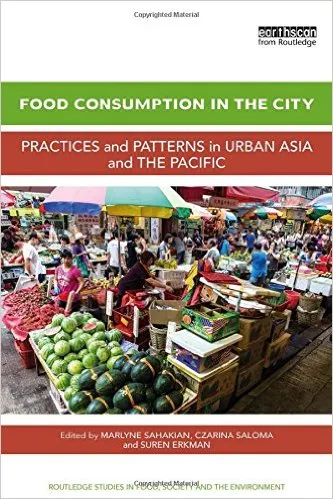
Image Resource Food Consumption in the City: Practices and patterns in Urban Asia and the Pacific Edited by Marlyne Sahakian, Czarina Saloma and Suren Erkman Read
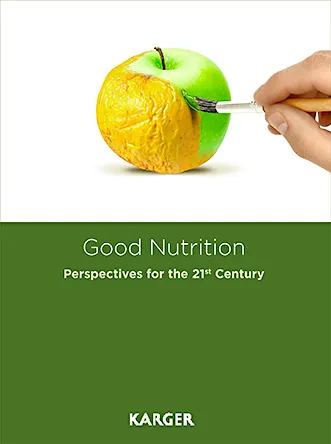
Image Resource Free eBook on Good Nutrition: Perspectives for the 21st Century This newly released free eBook aims to provide the latest perspectives on the nutrition challenges that are now common to all societies worldwide. It argues that the case for good nutrition for all people, in all parts of the globe and throughout the entire life-cycle, is growing stronger and includes contributions from some of the world’s most influential and respected experts in the field. Read
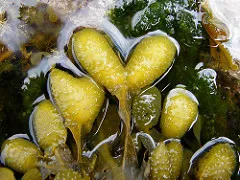
Image Resource Seaweed aquaculture for food security, income generation and environmental health in Tropical Developing Countries The World Bank has released a short working paper arguing that the expansion of seaweed farming in tropical developing countries could have large positive impacts on local poverty, ecosystem management and climate change mitigation. The report goes through different benefits and uses of seaweed production and briefly discusses current and potential markets for the crop. Read
Image Resource Global Coverage of Agricultural Sustainability Standards, and Their Role in Conserving Biodiversity This article evaluates the impact of voluntary crop sustainability standards on biodiversity protection. The authors reviewed the 12 major crop standards (such as Organic cropland (IFOAM), Fairtrade and Roundtable on Sustainable Palm Oil), and found that only two of these prohibited all deforestation (Rainforest Alliance/Sustainable Agriculture Network and Proterra). Read
Image Resource Nitrification inhibitors — climate change mitigation tool recommended by the IPCC – may be less effective than previously thought Read