Image Resources Our extensive research library contains thousands of summaries of journal articles, reports and news stories that can be searched by keyword and category RESOURCES CATEGORY Books Briefing paper Event recording Featured articles Featured report Game Journal articles News and resources Reports Think piece Video Working paper Workshop summary Year 2026 2025 2024 2023 2022 2021 2020 2019 2018 2017 2016 2015 2014 2013 2012 2011 2010 2009 2008 2007 2002 2001 Image Resource Report by the Global Forest Coalition on the impact of beef production This report, entitled ‘What’s at Steak? The Real Cost of Meat’ published by the Global Forest Coalition in December 2016, emphasises the negative impact of industrial livestock production on forests, using five detailed case studies, in Bolivia, Brazil, India, Paraguay, and Russia. In South America, for example, the report states that 71% of deforestation in the region has been driven by demand for livestock products. Read Image Resource Index aiming to reflect both climate impact and nutritional impact of food products This paper by FCRN member Corné van Dooren and colleagues reports that higher greenhouse gas emissions tend to be generated in the production of energy dense foods and lower in nutrient dense foods, and that emissions show significant correlations with 15 nutrients, including saturated fat, animal protein and sodium. Using these finding, the authors propose a ‘Sustainable Nutrient Rich Foods’ (SNRF) index, which summarises both climate and nutritional impacts of individual foods. Read Image Resource Consideration of the potential for micronutrient fertilisers to fight hidden hunger in sub-Saharan Africa In this evidence review, co-written by FCRN member Ken Giller, the authors assess the extent to which agronomic fortification, the application of micronutrient fertiliser to crops, can improve the nutritional quality of diets in sub-Saharan Africa. They find that, while the technique has been shown to be effective in increasing the nutritional content and yield of crops, more research is required to establish the degree to which it can alleviate micronutrient deficiencies in humans. Read Image Resource High yields realised by a pilot bubble-insulated ‘Food to Waste to Food’ growing system, while also cutting energy demand by 80% This paper describes the operation of a bubble-insulated greenhouse system that recycles organic waste, through its anaerobic conversion into biogas and digestate, into inputs for new food. It reports that commercial crop yields were repeatedly matched and bettered, while an 80% reduction in heat energy demand and 95% reduction in CO2eq emissions was realised compared to conventional greenhouse production. Read Image Resource FCRN’s Tara Garnett speaks at the Nobel Prize week in Stockholm Tara Garnett participated in the Nobel prize celebrations, giving the opening speech the Nobel Week Dialogue event in Stockholm on 9 December. You can watch her talk, introducing the day's discussion here. Read Image Resource Mass food and nutrition data available to the Swiss public through website The Swiss institute ‘Ecole Polytechnique Federale de Lausanne’ (EPFL) has launched Openfood.ch, a website that provides the public with data on more than 14,000 food products sold in Switzerland. Read Image Resource Special report series about EU CAP, food and agricultural profitability In light of the talks about the post-2020 Common Agricultural Policy (CAP), Euractiv has begun a special series of articles about agriculture in Europe. Read Image Resource Free eBook: Sustainable Food Systems: The Role of the City by Robert Biel This is a free eBook, which can also be ordered in hardback and paperback from UCL press. Read Image Resource Nexus2020: The most important research questions for business sustainability The Nexus2020 project has published a report in which academics and business leaders worked together to identify the most important questions around sustainability for businesses. It specifically focuses on so-called ‘nexus’ issues: the interconnections between food, water, energy and the natural environment. Read VIEW MORE
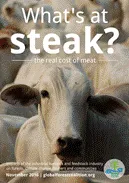
Image Resource Report by the Global Forest Coalition on the impact of beef production This report, entitled ‘What’s at Steak? The Real Cost of Meat’ published by the Global Forest Coalition in December 2016, emphasises the negative impact of industrial livestock production on forests, using five detailed case studies, in Bolivia, Brazil, India, Paraguay, and Russia. In South America, for example, the report states that 71% of deforestation in the region has been driven by demand for livestock products. Read
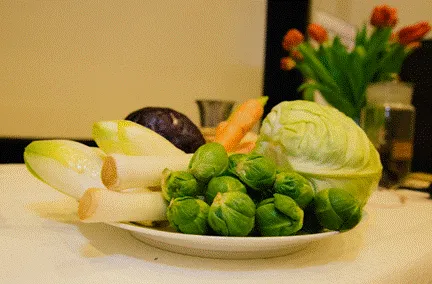
Image Resource Index aiming to reflect both climate impact and nutritional impact of food products This paper by FCRN member Corné van Dooren and colleagues reports that higher greenhouse gas emissions tend to be generated in the production of energy dense foods and lower in nutrient dense foods, and that emissions show significant correlations with 15 nutrients, including saturated fat, animal protein and sodium. Using these finding, the authors propose a ‘Sustainable Nutrient Rich Foods’ (SNRF) index, which summarises both climate and nutritional impacts of individual foods. Read
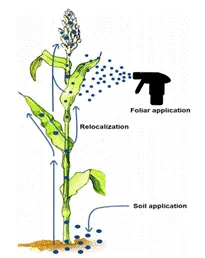
Image Resource Consideration of the potential for micronutrient fertilisers to fight hidden hunger in sub-Saharan Africa In this evidence review, co-written by FCRN member Ken Giller, the authors assess the extent to which agronomic fortification, the application of micronutrient fertiliser to crops, can improve the nutritional quality of diets in sub-Saharan Africa. They find that, while the technique has been shown to be effective in increasing the nutritional content and yield of crops, more research is required to establish the degree to which it can alleviate micronutrient deficiencies in humans. Read
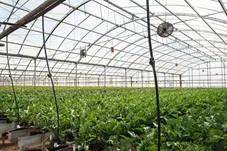
Image Resource High yields realised by a pilot bubble-insulated ‘Food to Waste to Food’ growing system, while also cutting energy demand by 80% This paper describes the operation of a bubble-insulated greenhouse system that recycles organic waste, through its anaerobic conversion into biogas and digestate, into inputs for new food. It reports that commercial crop yields were repeatedly matched and bettered, while an 80% reduction in heat energy demand and 95% reduction in CO2eq emissions was realised compared to conventional greenhouse production. Read
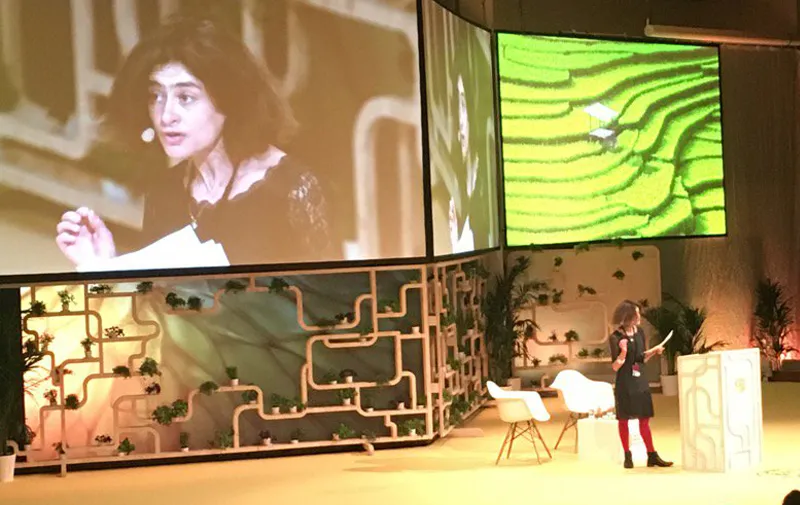
Image Resource FCRN’s Tara Garnett speaks at the Nobel Prize week in Stockholm Tara Garnett participated in the Nobel prize celebrations, giving the opening speech the Nobel Week Dialogue event in Stockholm on 9 December. You can watch her talk, introducing the day's discussion here. Read
Image Resource Mass food and nutrition data available to the Swiss public through website The Swiss institute ‘Ecole Polytechnique Federale de Lausanne’ (EPFL) has launched Openfood.ch, a website that provides the public with data on more than 14,000 food products sold in Switzerland. Read
Image Resource Special report series about EU CAP, food and agricultural profitability In light of the talks about the post-2020 Common Agricultural Policy (CAP), Euractiv has begun a special series of articles about agriculture in Europe. Read
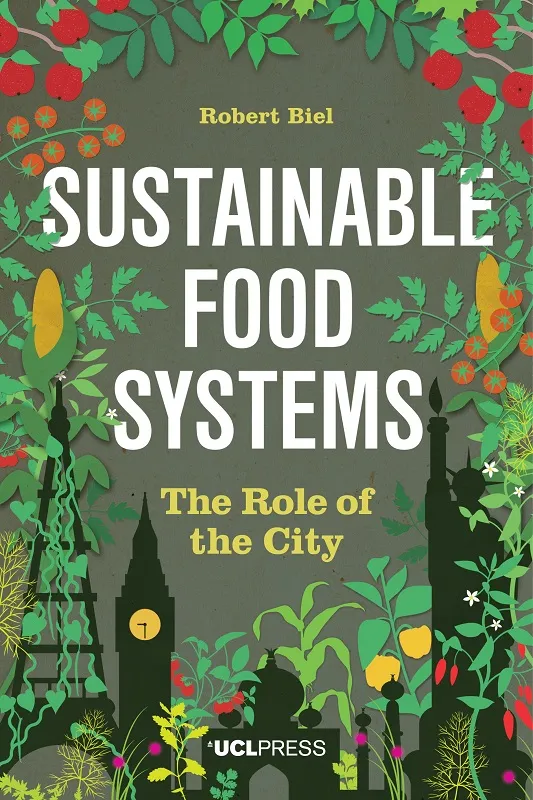
Image Resource Free eBook: Sustainable Food Systems: The Role of the City by Robert Biel This is a free eBook, which can also be ordered in hardback and paperback from UCL press. Read
Image Resource Nexus2020: The most important research questions for business sustainability The Nexus2020 project has published a report in which academics and business leaders worked together to identify the most important questions around sustainability for businesses. It specifically focuses on so-called ‘nexus’ issues: the interconnections between food, water, energy and the natural environment. Read