Image Resources Our extensive research library contains thousands of summaries of journal articles, reports and news stories that can be searched by keyword and category RESOURCES CATEGORY Books Briefing paper Event recording Featured articles Featured report Game Journal articles News and resources Reports Think piece Video Working paper Workshop summary Year 2026 2025 2024 2023 2022 2021 2020 2019 2018 2017 2016 2015 2014 2013 2012 2011 2010 2009 2008 2007 2002 2001 Image Event recording Recording: A dialogue on Regenerative Agriculture On 11 May 2021, TABLE and LEAP facilitated a dialogue between Ken Giller (Wageningen University) and Yichao Rui (Rodale Institute) on the topic of Regenerative Agriculture. We asked: why is it taking the world by storm and what are the broader implications for farmers and food systems? Read Image News and resources Simon Bush: Boycotting seafood will not save the seas Prof Simon Bush, Chair of the Environmental Policy Group at Wageningen University, has written an opinion piece critically reflecting on the Netflix documentary Seaspiracy and its argument that we should stop eating fish to protect ocean ecosystems. Bush queries some of the factual claims of the film, including statements about whether fish stocks will collapse by 2048, the fraction of fish that is illegally caught and the presence of pollutants in fish. He argues that seafood is an essential source of nutrition for billions of people, including many of the poorest people. Read Image News and resources Aid organisations call for urgent government action on famine NGOs have warned in an open letter to state leaders that 34 million people are currently at risk of famine, with many more experiencing hunger. The letter says “These people are not starving, they are being starved” and points to drivers including violence, inequality, the impacts of climate change, loss of land or jobs, and the impacts of COVID-19. They call for $5.5 billion to be provided to support immediate food assistance. Read Image Books True Cost Accounting for Food: Balancing the Scale This book explains how True Cost Accounting - i.e. the practice of tallying up all of the environmental and social costs and benefits associated with the production of a good or service - can be used to reform the food system. Read Image Reports A One Health approach to food This report by the Barilla Center for Food & Nutrition presents a “Double Pyramid” of food systems, which aims to illustrate eating styles that are both healthy and environmentally sustainable. The model (view it here) uses a “health” pyramid and a “climate pyramid”. In both, foods are placed vertically according to whether it is advised to eat them more frequently (towards the bottom of the pyramids) or less frequently (towards the top of the pyramids). Read Image Reports Performance of agroecological approaches in LMICs This rapid evidence review from CCAFS Low-Emissions Development assesses the performance of agroecological approaches in low- and middle- income countries. Based on over 10,000 studies, it finds that agroecological practices such as farm diversification, agroforestry and organic agriculture can help low- and middle-income countries (LMICs) in both mitigating and adapting to climate change through their food systems. Read Image Reports Transforming food systems after COVID-19 This report from the International Food Policy Research Institute (IFPRI) explores what the impacts of the COVID-19 pandemic and government responses mean for the effort to transform food systems to be more healthy and sustainable. Read Image Journal articles Food waste in healthcare, business and hospitality catering This paper co-authored by Table member Toni Meier quantifies the levels, environmental impacts and reduction potential of food waste produced in the business, healthcare and hospitality food service subsectors in Germany. It finds that significant waste reductions could be achieved within one year, with the greatest potential reduction of 17% being found in the healthcare subsector. Read Image Journal articles The limits of a technological fix This editorial in the Nature Food journal discusses the role that technology can and should play in reforming the food system. It argues that while technologies such as cultured meat, precision agriculture, drones and artificial intelligence are expected to contribute to sustainable food security in the future, technology often creates unexpected impacts that are hard to predict and that must be mitigated. Furthermore, it says, ethics and traditional knowledge systems are key to transforming the food system. Read VIEW MORE
Image Event recording Recording: A dialogue on Regenerative Agriculture On 11 May 2021, TABLE and LEAP facilitated a dialogue between Ken Giller (Wageningen University) and Yichao Rui (Rodale Institute) on the topic of Regenerative Agriculture. We asked: why is it taking the world by storm and what are the broader implications for farmers and food systems? Read
Image News and resources Simon Bush: Boycotting seafood will not save the seas Prof Simon Bush, Chair of the Environmental Policy Group at Wageningen University, has written an opinion piece critically reflecting on the Netflix documentary Seaspiracy and its argument that we should stop eating fish to protect ocean ecosystems. Bush queries some of the factual claims of the film, including statements about whether fish stocks will collapse by 2048, the fraction of fish that is illegally caught and the presence of pollutants in fish. He argues that seafood is an essential source of nutrition for billions of people, including many of the poorest people. Read
Image News and resources Aid organisations call for urgent government action on famine NGOs have warned in an open letter to state leaders that 34 million people are currently at risk of famine, with many more experiencing hunger. The letter says “These people are not starving, they are being starved” and points to drivers including violence, inequality, the impacts of climate change, loss of land or jobs, and the impacts of COVID-19. They call for $5.5 billion to be provided to support immediate food assistance. Read
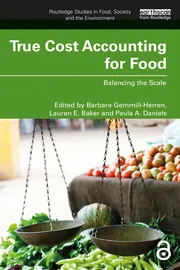
Image Books True Cost Accounting for Food: Balancing the Scale This book explains how True Cost Accounting - i.e. the practice of tallying up all of the environmental and social costs and benefits associated with the production of a good or service - can be used to reform the food system. Read
Image Reports A One Health approach to food This report by the Barilla Center for Food & Nutrition presents a “Double Pyramid” of food systems, which aims to illustrate eating styles that are both healthy and environmentally sustainable. The model (view it here) uses a “health” pyramid and a “climate pyramid”. In both, foods are placed vertically according to whether it is advised to eat them more frequently (towards the bottom of the pyramids) or less frequently (towards the top of the pyramids). Read
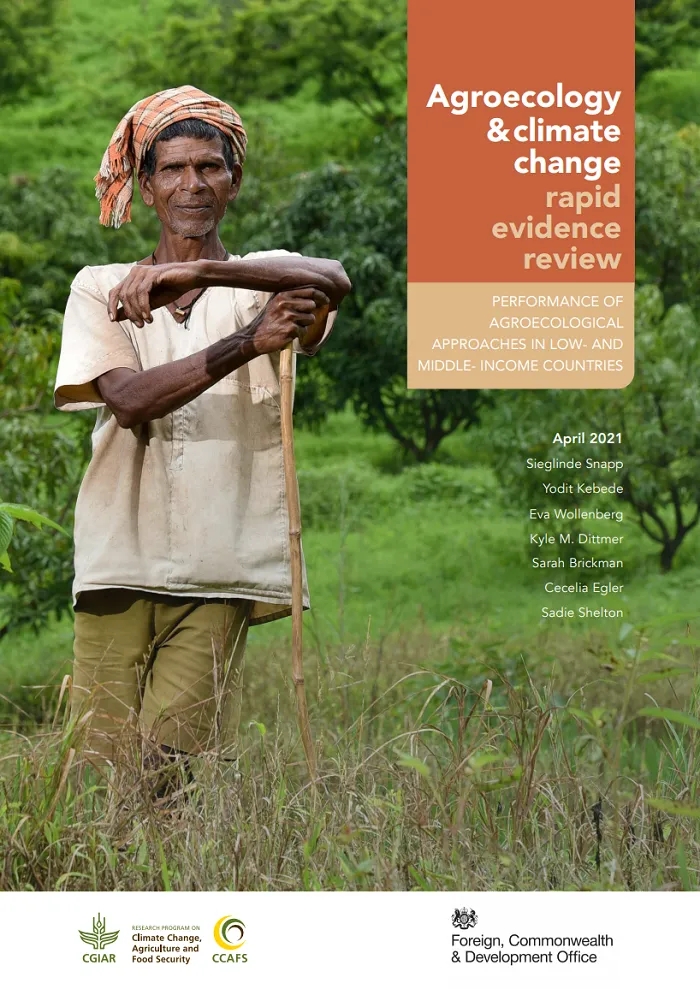
Image Reports Performance of agroecological approaches in LMICs This rapid evidence review from CCAFS Low-Emissions Development assesses the performance of agroecological approaches in low- and middle- income countries. Based on over 10,000 studies, it finds that agroecological practices such as farm diversification, agroforestry and organic agriculture can help low- and middle-income countries (LMICs) in both mitigating and adapting to climate change through their food systems. Read
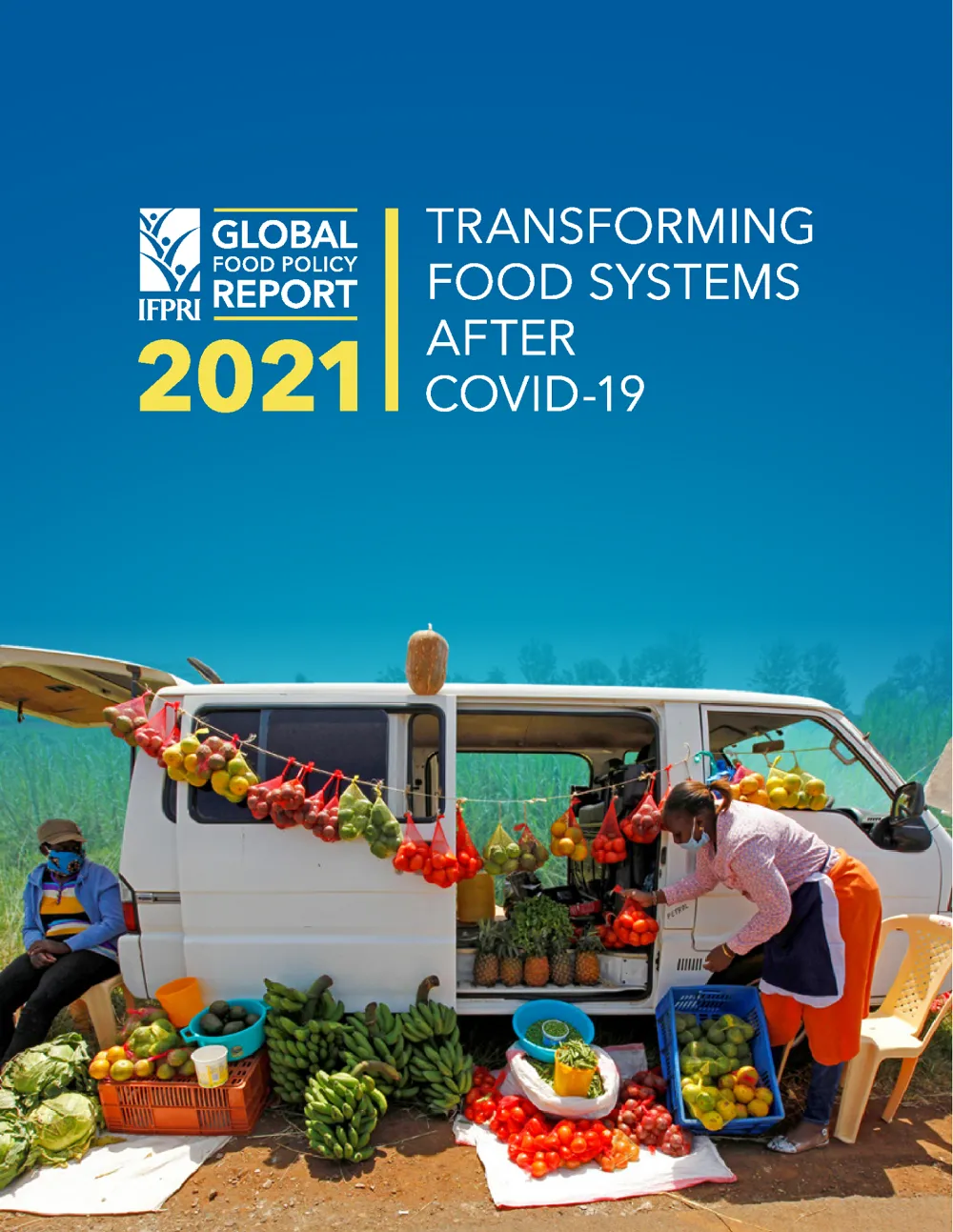
Image Reports Transforming food systems after COVID-19 This report from the International Food Policy Research Institute (IFPRI) explores what the impacts of the COVID-19 pandemic and government responses mean for the effort to transform food systems to be more healthy and sustainable. Read
Image Journal articles Food waste in healthcare, business and hospitality catering This paper co-authored by Table member Toni Meier quantifies the levels, environmental impacts and reduction potential of food waste produced in the business, healthcare and hospitality food service subsectors in Germany. It finds that significant waste reductions could be achieved within one year, with the greatest potential reduction of 17% being found in the healthcare subsector. Read
Image Journal articles The limits of a technological fix This editorial in the Nature Food journal discusses the role that technology can and should play in reforming the food system. It argues that while technologies such as cultured meat, precision agriculture, drones and artificial intelligence are expected to contribute to sustainable food security in the future, technology often creates unexpected impacts that are hard to predict and that must be mitigated. Furthermore, it says, ethics and traditional knowledge systems are key to transforming the food system. Read