Image Resources Our extensive research library contains thousands of summaries of journal articles, reports and news stories that can be searched by keyword and category RESOURCES CATEGORYBooksBriefing paperEvent recordingFeatured articlesFeatured reportGameJournal articlesNews and resourcesReportsThink pieceVideoWorking paperWorkshop summary YEAR201220132014201520162017201820192020202120222023202420252026 Image Resource UNEP Year Book 2014: Emerging issues in our global environment Ten years after the first Year Book in this series appeared, a special e-book anniversary edition – UNEP Year Book 2014 – presents a fresh look at ten issues highlighted over the past decade. Read Image Resource Storify report from debate - Feeding Britain: Can we do it sustainably?” This debate, held on 8 July 2014 and hosted by the Green Alliance, discussed the question “Feeding Britain: Can we do it sustainably?” It focused on how prepared companies are for changes in food supply and price shocks, how sustainability fits within the approaches they are currently using, and whether UK food security can really be delivered sustainably. Read Image Resource Climate change influencing risk of crop slowdown in the next 20 years The authors behind this study say that climate change has substantially increased the prospect that crop production will fail to keep up with rising demand in the next 20 years. Read Image Resource Interview about dietary GHGs: Q&A - Should we all become vegans to save the planet? In our mailing of 1st July 2014 we highlighted a new paper by Pete Scarborough et al. which compared the GHG intensity of diets adopted by vegetarians, fish eaters and meat eaters in the UK. The Oxford Martin School has now published a short interview with Pete, in which he outlines his motivation for undertaking this work, the method he adopted, and the insights gained from the study. Citation Scarborough, P., "Q&A: Should We All Become Vegans to save the Planet?" Interview by Sally Stewart. Web log post. ThinkLONG. Oxford Martin School, University of Oxford, 08 July 2014. Read the full interview blog-post here. We have also highlighted Peter Scarborough’s paper in an earlier newsletter, see it and our ‘further reading’ recommendations here. Read Image Resource Dietary Guidelines for Americans 2015 suspected to include advice on sustainable diets The next version of Dietary Guidelines for Americans, from the U.S. Department of Agriculture (USDA) and the Department of Health and Human Services (HHS) seem likely to include advice on sustainable diets. Preliminary conclusions from a subcommittee on food sustainability and safety indicate that the message of how the food is produced will be included in the final recommendations. For more on these subcommittee discussions read an article in Science here. Read more a bout the dietary guidelines here. You can also find more information on our website about other dietary guidelines and food policy. Read Image Resource The Global Calculator - interactive tool to reduce emissions The Global Calculator is an open-source interactive tool allows you to explore all the options we have to reduce emissions through changing our technologies, fuels, land use and lifestyles up to the year 2050. It is funded by the UK Government’s International Climate Fund and the EU’s Climate-KIC, and has been built by an international team. Read Image Resource Animal Health and Greenhouse Gas Emissions Intensity – Report of the First Network workshop The Animal Health & GHG Emissions Intensity Network is a UK-led initiative of the Livestock Research Group of the Global Research Alliance on Agricultural Greenhouse Gases (GRA). It aims to bring researchers from across the world together to investigate links and synergies between efforts to reduce livestock disease and reduce the intensity of livestock related GHG emissions. The network’s first workshop was held in Dublin on the 25th March 2014. Read Image Resource OECD- FAO Agricultural Outlook 2014-2023 This twentieth edition of the Agricultural Outlook, and the tenth prepared jointly between OECD and the UN Food and Agriculture Organization (FAO), provides market projections to 2023 for major agricultural commodities, biofuels and fish across 41 countries and 12 regions: OECD member countries (European Union as a region), key non-OECD agricultural producers (such as India, China, Brazil, Russian Federation and Argentina) and groups of smaller non-OECD economies in a more aggregated form. This edition includes a special focus on India. Read Image Resource People, Plate and Planet – new report and online tool for sustainable diets The Centre for Alternative Technology (CAT) has launched a new report on sustainable diets - People, Plate and Planet, describing dietary choices that can reduce greenhouse gas emissions and pressures on land. The report considers nutrition, GHG emissions and land use and states that the most significant impact on these areas comes from what we eat, not where it is from or how much packaging there is around it. Read VIEW MORE
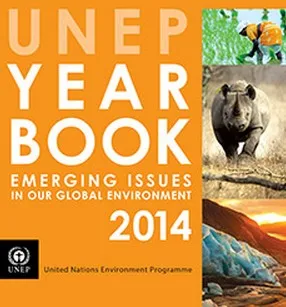
Image Resource UNEP Year Book 2014: Emerging issues in our global environment Ten years after the first Year Book in this series appeared, a special e-book anniversary edition – UNEP Year Book 2014 – presents a fresh look at ten issues highlighted over the past decade. Read
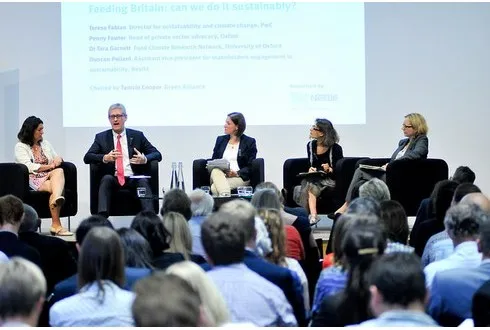
Image Resource Storify report from debate - Feeding Britain: Can we do it sustainably?” This debate, held on 8 July 2014 and hosted by the Green Alliance, discussed the question “Feeding Britain: Can we do it sustainably?” It focused on how prepared companies are for changes in food supply and price shocks, how sustainability fits within the approaches they are currently using, and whether UK food security can really be delivered sustainably. Read
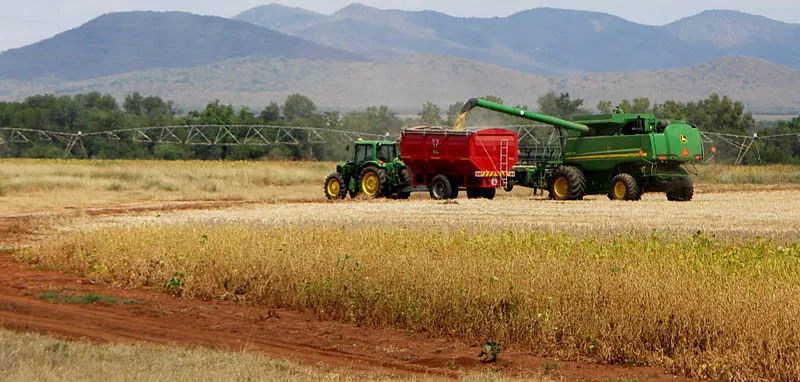
Image Resource Climate change influencing risk of crop slowdown in the next 20 years The authors behind this study say that climate change has substantially increased the prospect that crop production will fail to keep up with rising demand in the next 20 years. Read
Image Resource Interview about dietary GHGs: Q&A - Should we all become vegans to save the planet? In our mailing of 1st July 2014 we highlighted a new paper by Pete Scarborough et al. which compared the GHG intensity of diets adopted by vegetarians, fish eaters and meat eaters in the UK. The Oxford Martin School has now published a short interview with Pete, in which he outlines his motivation for undertaking this work, the method he adopted, and the insights gained from the study. Citation Scarborough, P., "Q&A: Should We All Become Vegans to save the Planet?" Interview by Sally Stewart. Web log post. ThinkLONG. Oxford Martin School, University of Oxford, 08 July 2014. Read the full interview blog-post here. We have also highlighted Peter Scarborough’s paper in an earlier newsletter, see it and our ‘further reading’ recommendations here. Read
Image Resource Dietary Guidelines for Americans 2015 suspected to include advice on sustainable diets The next version of Dietary Guidelines for Americans, from the U.S. Department of Agriculture (USDA) and the Department of Health and Human Services (HHS) seem likely to include advice on sustainable diets. Preliminary conclusions from a subcommittee on food sustainability and safety indicate that the message of how the food is produced will be included in the final recommendations. For more on these subcommittee discussions read an article in Science here. Read more a bout the dietary guidelines here. You can also find more information on our website about other dietary guidelines and food policy. Read
Image Resource The Global Calculator - interactive tool to reduce emissions The Global Calculator is an open-source interactive tool allows you to explore all the options we have to reduce emissions through changing our technologies, fuels, land use and lifestyles up to the year 2050. It is funded by the UK Government’s International Climate Fund and the EU’s Climate-KIC, and has been built by an international team. Read
Image Resource Animal Health and Greenhouse Gas Emissions Intensity – Report of the First Network workshop The Animal Health & GHG Emissions Intensity Network is a UK-led initiative of the Livestock Research Group of the Global Research Alliance on Agricultural Greenhouse Gases (GRA). It aims to bring researchers from across the world together to investigate links and synergies between efforts to reduce livestock disease and reduce the intensity of livestock related GHG emissions. The network’s first workshop was held in Dublin on the 25th March 2014. Read
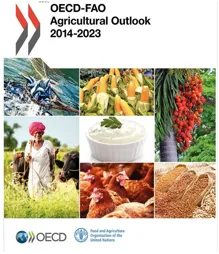
Image Resource OECD- FAO Agricultural Outlook 2014-2023 This twentieth edition of the Agricultural Outlook, and the tenth prepared jointly between OECD and the UN Food and Agriculture Organization (FAO), provides market projections to 2023 for major agricultural commodities, biofuels and fish across 41 countries and 12 regions: OECD member countries (European Union as a region), key non-OECD agricultural producers (such as India, China, Brazil, Russian Federation and Argentina) and groups of smaller non-OECD economies in a more aggregated form. This edition includes a special focus on India. Read
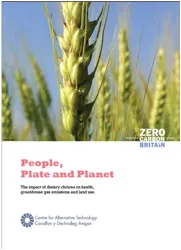
Image Resource People, Plate and Planet – new report and online tool for sustainable diets The Centre for Alternative Technology (CAT) has launched a new report on sustainable diets - People, Plate and Planet, describing dietary choices that can reduce greenhouse gas emissions and pressures on land. The report considers nutrition, GHG emissions and land use and states that the most significant impact on these areas comes from what we eat, not where it is from or how much packaging there is around it. Read