Image Resources Our extensive research library contains thousands of summaries of journal articles, reports and news stories that can be searched by keyword and category RESOURCES CATEGORYBooksBriefing paperEvent recordingFeatured articlesFeatured reportGameJournal articlesNews and resourcesReportsThink pieceVideoWorking paperWorkshop summary YEAR201220132014201520162017201820192020202120222023202420252026 Image Resource Commercialising edible insects – How to market the impossible About 1900 species of insects are eaten worldwide by at least 2 billion people – not because they are short of food, but out of choice. But for most Western consumers the idea of insects as food is disgusting. However, a handful of entrepreneurial start-ups are working to change this. Read Image Resource Healthy and sustainable food choices among native and migrant citizens of the Netherlands In recent years there has been increasing attention for facilitating healthier and more sustainable food choices. Research and policy making in the field, however, have largely ignored important cultural changes that are taking place in the Netherlands (and elsewhere in Europe) due to the inflow of new ethnic groups. Read Image Resource WRAP report: How to divide up carbon budgets fairly Following the publication of Household Food and Drink Waste in the UK 2012 report in November 2014 and the Product Focused report earlier this year, WRAP has now released a new report that is more People Focused. Read Image Resource Price gap between more and less healthy foods grew between 2002 and 2012 Novel use of UK national data finds a growing gap between the prices of more and less healthy foods between 2002 and 2012. Healthy foods in 2012 were three times more expensive per calorie than less healthy foods. Food prices in the UK have risen faster than the price of other goods in recent years, and this new study, which tracked the price of 94 key food and beverage items from 2002 to 2012, shows that the increase has been greater for more healthy foods, making them progressively more expensive over time. Read Image Resource It is time to revisit current dietary recommendations for saturated fat Although there is no absolute consensus on the recommendation for total fat and dietary fat and saturated fat (SFA) intake between governing bodies and health organizations, there is a general sense of convergence. All guidelines currently suggest that total fat should not exceed 35% of daily calories. Although most guidelines propose a target for dietary SFA, there is no consensus on the value to aim for. Read Image Resource Blog: Food Ethics Council on food policy This blog discusses the June Business Forum meeting organised by the Food Ethics Council which saw businesses and NGOs coming together to consider how industry and government discusses issues of food consumption and choice now, and how this might need to change. Read Image Resource Book: Climate change impact and adaptation in agricultural systems This book contains 17 chapters focusing on the impacts of climate change on ecosystems, food security, water resources and economic stability. Strategies to develop sustainable systems that minimize impact on climate and/or mitigate the effects of human activity on climate change are also presented. Read Image Resource Book: Savoring Alternative Food: School Gardens, Healthy Eating and Visceral Difference Advocates of the alternative food movement often insist that food is our "common ground" – that through the very basic human need to eat, we all become entwined in a network of mutual solidarity. In this book, the author explores the contradictions and shortcomings of alternative food activism by examining specific endeavours of the movement through various lenses of social difference – including class, race, gender, and age. Read Image Resource Sustainable intensification of agriculture - working group report by BBSRC BBSRC - Biotechnology and Biological Sciences Research Council has released a report on sustainable intensification (SI) together with an invitation for interested parties to comment. Responses received will be taken into account in addressing the group’s recommendations. Read VIEW MORE
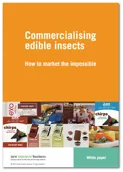
Image Resource Commercialising edible insects – How to market the impossible About 1900 species of insects are eaten worldwide by at least 2 billion people – not because they are short of food, but out of choice. But for most Western consumers the idea of insects as food is disgusting. However, a handful of entrepreneurial start-ups are working to change this. Read
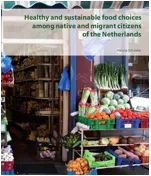
Image Resource Healthy and sustainable food choices among native and migrant citizens of the Netherlands In recent years there has been increasing attention for facilitating healthier and more sustainable food choices. Research and policy making in the field, however, have largely ignored important cultural changes that are taking place in the Netherlands (and elsewhere in Europe) due to the inflow of new ethnic groups. Read
Image Resource WRAP report: How to divide up carbon budgets fairly Following the publication of Household Food and Drink Waste in the UK 2012 report in November 2014 and the Product Focused report earlier this year, WRAP has now released a new report that is more People Focused. Read
Image Resource Price gap between more and less healthy foods grew between 2002 and 2012 Novel use of UK national data finds a growing gap between the prices of more and less healthy foods between 2002 and 2012. Healthy foods in 2012 were three times more expensive per calorie than less healthy foods. Food prices in the UK have risen faster than the price of other goods in recent years, and this new study, which tracked the price of 94 key food and beverage items from 2002 to 2012, shows that the increase has been greater for more healthy foods, making them progressively more expensive over time. Read
Image Resource It is time to revisit current dietary recommendations for saturated fat Although there is no absolute consensus on the recommendation for total fat and dietary fat and saturated fat (SFA) intake between governing bodies and health organizations, there is a general sense of convergence. All guidelines currently suggest that total fat should not exceed 35% of daily calories. Although most guidelines propose a target for dietary SFA, there is no consensus on the value to aim for. Read
Image Resource Blog: Food Ethics Council on food policy This blog discusses the June Business Forum meeting organised by the Food Ethics Council which saw businesses and NGOs coming together to consider how industry and government discusses issues of food consumption and choice now, and how this might need to change. Read
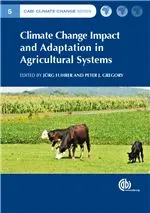
Image Resource Book: Climate change impact and adaptation in agricultural systems This book contains 17 chapters focusing on the impacts of climate change on ecosystems, food security, water resources and economic stability. Strategies to develop sustainable systems that minimize impact on climate and/or mitigate the effects of human activity on climate change are also presented. Read
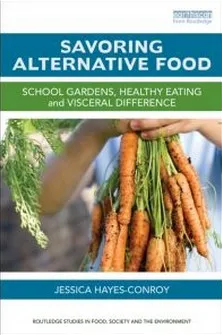
Image Resource Book: Savoring Alternative Food: School Gardens, Healthy Eating and Visceral Difference Advocates of the alternative food movement often insist that food is our "common ground" – that through the very basic human need to eat, we all become entwined in a network of mutual solidarity. In this book, the author explores the contradictions and shortcomings of alternative food activism by examining specific endeavours of the movement through various lenses of social difference – including class, race, gender, and age. Read
Image Resource Sustainable intensification of agriculture - working group report by BBSRC BBSRC - Biotechnology and Biological Sciences Research Council has released a report on sustainable intensification (SI) together with an invitation for interested parties to comment. Responses received will be taken into account in addressing the group’s recommendations. Read