Image Resources Our extensive research library contains thousands of summaries of journal articles, reports and news stories that can be searched by keyword and category RESOURCES CATEGORYBooksBriefing paperEvent recordingFeatured articlesFeatured reportGameJournal articlesNews and resourcesReportsThink pieceVideoWorking paperWorkshop summary YEAR201220132014201520162017201820192020202120222023202420252026 Image Resource Climate metrics and the carbon footprint of livestock products: where's the beef? Due to the large share of non-CO2 GHGs in emissions from livestock production, the choice of GHG metric used to compare emissions of different GHGs is crucial, both in order to assess the aggregate contribution of the livestock sector to climate change and for highlighting hot-spots in the animal food chain where emission reductions can be most cost-effectively made. Read Image Resource Breeding for productivity and breeding for welfare: what is the relationship? A question that emerged from FCRN's previous discussions with various experts on animal farming was whether breeding for productivity and animal welfare can be aligned. Read Image Resource Large global study concludes that unhealthy eating habits are outpacing healthy eating patterns in most world regions This paper, entitled Dietary quality among men and women in 187 countries in 1990 and 2010: a systematic assessment argues that although worldwide, consumption of healthy foods such as fruit and vegetables has improved during the past two decades, it has been outpaced in most regions by the increased intake of unhealthy foods such as processed meat and sweetened drinks. Read Image Resource Book: Food Utopias - Reimagining citizenship, ethics and community Abstract Food is a contentious and emotive issue, subject to critiques from multiple perspectives. Alternative food movements – including the different articulations of local, food miles, seasonality, food justice, food knowledge and food sovereignty – consistently invoke themes around autonomy, sufficiency, cooperation, mutual aid, freedom, and responsibility. Read Image Resource Book: Human Rights and the Food Sovereignty Movement - Reclaiming control Abstract Our global food system is undergoing rapid change. Since the global food crisis of 2007-2008, a range of new issues have come to public attention, such as land grabbing, food prices volatility, agrofuels and climate change. Peasant social movements are trying to respond to these challenges by organizing from the local to the global to demand food sovereignty. Read Image Resource Opinion piece in The Economist by ILRI Director: “The Meat We Eat, the Lives We Lift - Livestock (like people) are different the world over” In this article published in the Economist, Jimmy Smith, director of the International Livestock Research Institute (ILRI) argues that the livestock issue requires a differentiated approach. Read Image Resource Life cycle assessment of tap water: Analysis and comparison with other beverages The report Life cycle assessment of tap water: Analysis and comparison with other beverages traces the entire life cycle from water catchment/extraction to serving it up in a glass. The report compares tap water with mineral water and other beverages and shows (unsurprisingly) that from an environmental point of view, tap water is preferable to bottled water and all other beverages. The report was produced by ESU Services – a sustainability consulting firm and commissioned by the Swiss Gas and Water Association (SVGW) in 2014. Read Image Resource New climate change projections for Australia´s eight NRM regions in CSIRO report This report sets out new climate change projections for Australia. It was produced by Commonwealth Scientific and Industrial Research Organisation (CSIRO) and funded by the Australian Government Department of the Environment, CSIRO and the Australian Bureau of Meteorology. The key findings from the report are copied as follows: Read Image Resource US dietary guidelines proposed by government advisory committee - back low-meat diet for helping planet The 2015 USDA’s Dietary Guidelines Advisory Committee, has published a report that sets out its revised dietary recommendations to encourage Americans to eat more healthily, and this time the recommendations also take account of environmental sustainability considerations. The report, Scientific Report of the 2015 Dietary Guidelines Advisory Committee (Advisory Report) will be reviewed by the Secretaries of the U.S. Department of Health and Human Services (HHS) and the U.S. Department of Agriculture (USDA) and the Federal government will determine how it will use the information in the Advisory Report as the government develops the new Dietary Guidelines for Americans, 2015 to be released later this year. Read VIEW MORE
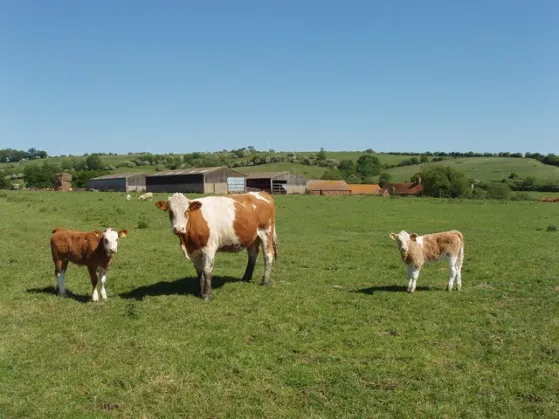
Image Resource Climate metrics and the carbon footprint of livestock products: where's the beef? Due to the large share of non-CO2 GHGs in emissions from livestock production, the choice of GHG metric used to compare emissions of different GHGs is crucial, both in order to assess the aggregate contribution of the livestock sector to climate change and for highlighting hot-spots in the animal food chain where emission reductions can be most cost-effectively made. Read
Image Resource Breeding for productivity and breeding for welfare: what is the relationship? A question that emerged from FCRN's previous discussions with various experts on animal farming was whether breeding for productivity and animal welfare can be aligned. Read
Image Resource Large global study concludes that unhealthy eating habits are outpacing healthy eating patterns in most world regions This paper, entitled Dietary quality among men and women in 187 countries in 1990 and 2010: a systematic assessment argues that although worldwide, consumption of healthy foods such as fruit and vegetables has improved during the past two decades, it has been outpaced in most regions by the increased intake of unhealthy foods such as processed meat and sweetened drinks. Read
Image Resource Book: Food Utopias - Reimagining citizenship, ethics and community Abstract Food is a contentious and emotive issue, subject to critiques from multiple perspectives. Alternative food movements – including the different articulations of local, food miles, seasonality, food justice, food knowledge and food sovereignty – consistently invoke themes around autonomy, sufficiency, cooperation, mutual aid, freedom, and responsibility. Read
Image Resource Book: Human Rights and the Food Sovereignty Movement - Reclaiming control Abstract Our global food system is undergoing rapid change. Since the global food crisis of 2007-2008, a range of new issues have come to public attention, such as land grabbing, food prices volatility, agrofuels and climate change. Peasant social movements are trying to respond to these challenges by organizing from the local to the global to demand food sovereignty. Read
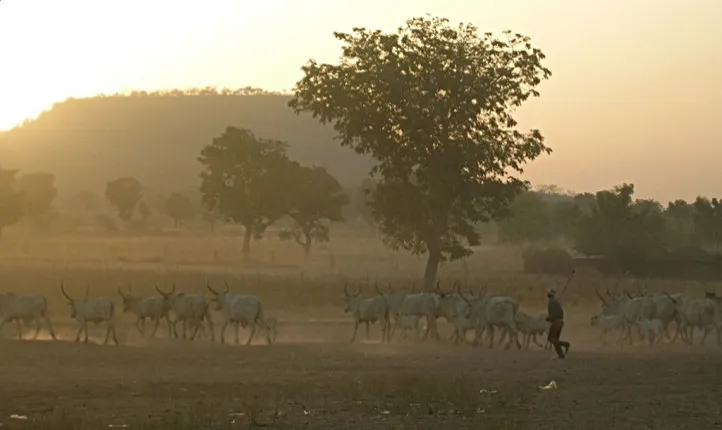
Image Resource Opinion piece in The Economist by ILRI Director: “The Meat We Eat, the Lives We Lift - Livestock (like people) are different the world over” In this article published in the Economist, Jimmy Smith, director of the International Livestock Research Institute (ILRI) argues that the livestock issue requires a differentiated approach. Read
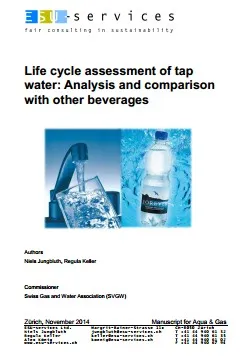
Image Resource Life cycle assessment of tap water: Analysis and comparison with other beverages The report Life cycle assessment of tap water: Analysis and comparison with other beverages traces the entire life cycle from water catchment/extraction to serving it up in a glass. The report compares tap water with mineral water and other beverages and shows (unsurprisingly) that from an environmental point of view, tap water is preferable to bottled water and all other beverages. The report was produced by ESU Services – a sustainability consulting firm and commissioned by the Swiss Gas and Water Association (SVGW) in 2014. Read
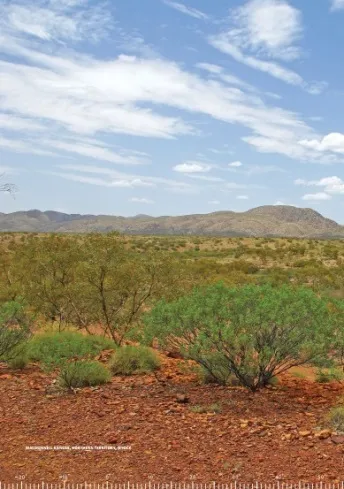
Image Resource New climate change projections for Australia´s eight NRM regions in CSIRO report This report sets out new climate change projections for Australia. It was produced by Commonwealth Scientific and Industrial Research Organisation (CSIRO) and funded by the Australian Government Department of the Environment, CSIRO and the Australian Bureau of Meteorology. The key findings from the report are copied as follows: Read
Image Resource US dietary guidelines proposed by government advisory committee - back low-meat diet for helping planet The 2015 USDA’s Dietary Guidelines Advisory Committee, has published a report that sets out its revised dietary recommendations to encourage Americans to eat more healthily, and this time the recommendations also take account of environmental sustainability considerations. The report, Scientific Report of the 2015 Dietary Guidelines Advisory Committee (Advisory Report) will be reviewed by the Secretaries of the U.S. Department of Health and Human Services (HHS) and the U.S. Department of Agriculture (USDA) and the Federal government will determine how it will use the information in the Advisory Report as the government develops the new Dietary Guidelines for Americans, 2015 to be released later this year. Read