Image Resources Our extensive research library contains thousands of summaries of journal articles, reports and news stories that can be searched by keyword and category RESOURCES CATEGORYBooksBriefing paperEvent recordingFeatured articlesFeatured reportGameJournal articlesNews and resourcesReportsThink pieceVideoWorking paperWorkshop summary YEAR201220132014201520162017201820192020202120222023202420252026 Image Resource The Food Foundation published initial response to UK Government’s spending review The Food Foundation, a UK think tank that presents policy solutions to the public health challenges produced by the food system, has published its initial response to the Government’s spending review – which sets out departmental spending priorities over the next five years. The response focusses on the Review’s implications for food insecurity and public health spending. Read Image Resource 11 Points of consensus on what we should eat: Top scientists reach consensus on nutrition Over 75 top nutrition scientists and medical experts gathered in Boston in October 2015 at the Finding Common Ground Conference, convened by the non-profit Oldways to try to agree on principles for a healthy diet (primarily aimed at a U.S. audience). Oldways is a food and nutrition education organization aiming to inspire healthy eating through cultural food traditions and lifestyles. The meeting was attended by a diverse range of experts, many vocal proponents of particular types of diets (vegan, paleo, low-fat, Mediterranean etc.) and is described to have led to some heated debates. Read Image Resource Book: Civic Engagement in Food System Governance - A comparative perspective of American and British local food movements The local food movement is one of the most active of current civil engagement social movements. This work presents primary evidence from over 900 documents, interviews, and participant observations, and provides the first descriptive history of local food movement national policy achievements in the US, from 1976 to 2013, and in the UK, from 1991 to 2013, together with reviews of both the American and British local food movements. It provides a US-UK comparative context, significantly updating earlier comparisons of American, British and European farm and rural policies. Read Image Resource The Triangle: The Evolution and Future of Industrial Animal Agriculture in the U.S., China, and Brazil This discussion paper entitled The Triangle: The Evolution and Future of Industrial Animal Agriculture in the U.S., China, and Brazil provides an analysis of the modern livestock industry and of so called factory farming. The paper focuses on the connections between the three most important countries in today´s meat and feed industries: the United States, China, and Brazil. The underlying emphasis of the paper is that as living standards improve in emerging economies, rising consumption of animal products is one of the factors fuelling the expansion of Western-style, large-scale, intensive animal farming and feed crop monoculture. Read Image Resource Study exposes gap in global climate policy as countries commit to action on agriculture This brief from the CGIAR Research Program on Climate Change, Agriculture and Food Security (CCAFS) shows that a third of countries involved in COP21 and who have submitted Intended Nationally Determined Contributions (INDCs) have included targets for mitigating emissions from farming in their plans, but for developing countries such plans are conditional on receiving international financial support. Read Resource WHO launches country profiles to help action on health and climate change WHO has released a first set of Climate Change and Health Country Profiles that provide a snapshot of up-to-date information about the current and future impacts of climate change on human health. The Climate and Health Country Profile project is an ongoing initiative that supports interested WHO Member States in finalising country profiles through a country consultation process. Read Image Resource Changing Climate, Changing Diets: Pathways to Lower Meat Consumption – new report by Chatham House Reducing global meat consumption will be critical to keeping global warming below the ‘danger level’ of two degrees Celsius, the main goal of the 2015 climate negotiations in Paris, according to this new report by Chatham House. Read Image Resource WRAP report: Food futures – from business as usual to business unusual This report, Food Futures, by the UK’s waste agency WRAP, looks at a broad range of food sustainability challenges for the future and at possible solutions. Read Image Resource Research specifies soil erosion’s contribution to soil carbon fluxes Research published in Nature Climate Change shows that accelerated erosion due to agricultural management is a major threat to food security and soil sustainability. Erosion is a natural process that continually shapes the land surface. The removal of soil also removes carbon contained in that soil. With erosion removing top soil it removes the layer of the soil that has the greatest concentration of carbon. Read VIEW MORE
Image Resource The Food Foundation published initial response to UK Government’s spending review The Food Foundation, a UK think tank that presents policy solutions to the public health challenges produced by the food system, has published its initial response to the Government’s spending review – which sets out departmental spending priorities over the next five years. The response focusses on the Review’s implications for food insecurity and public health spending. Read
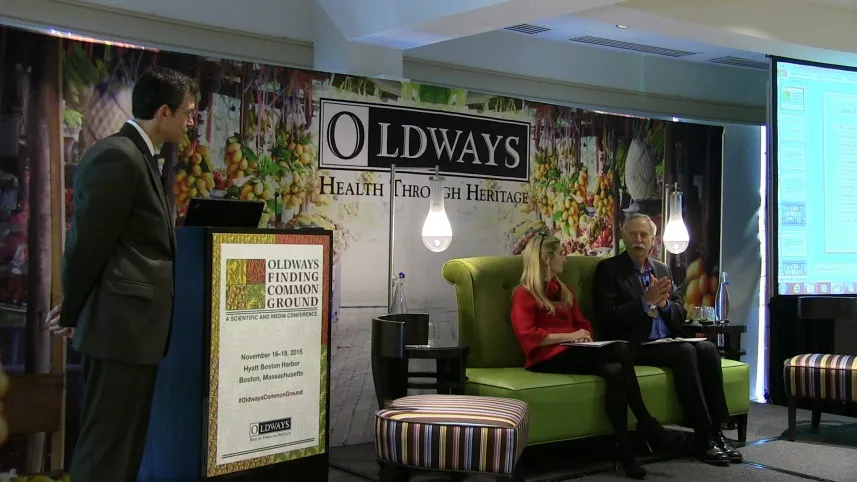
Image Resource 11 Points of consensus on what we should eat: Top scientists reach consensus on nutrition Over 75 top nutrition scientists and medical experts gathered in Boston in October 2015 at the Finding Common Ground Conference, convened by the non-profit Oldways to try to agree on principles for a healthy diet (primarily aimed at a U.S. audience). Oldways is a food and nutrition education organization aiming to inspire healthy eating through cultural food traditions and lifestyles. The meeting was attended by a diverse range of experts, many vocal proponents of particular types of diets (vegan, paleo, low-fat, Mediterranean etc.) and is described to have led to some heated debates. Read
Image Resource Book: Civic Engagement in Food System Governance - A comparative perspective of American and British local food movements The local food movement is one of the most active of current civil engagement social movements. This work presents primary evidence from over 900 documents, interviews, and participant observations, and provides the first descriptive history of local food movement national policy achievements in the US, from 1976 to 2013, and in the UK, from 1991 to 2013, together with reviews of both the American and British local food movements. It provides a US-UK comparative context, significantly updating earlier comparisons of American, British and European farm and rural policies. Read
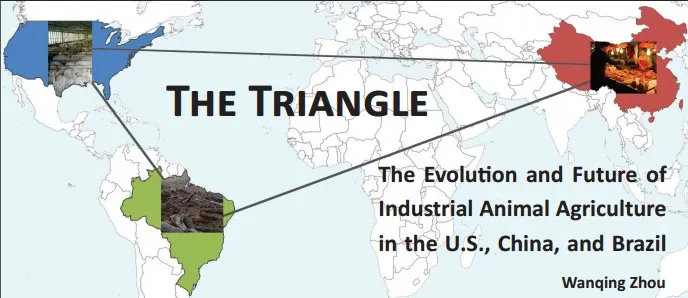
Image Resource The Triangle: The Evolution and Future of Industrial Animal Agriculture in the U.S., China, and Brazil This discussion paper entitled The Triangle: The Evolution and Future of Industrial Animal Agriculture in the U.S., China, and Brazil provides an analysis of the modern livestock industry and of so called factory farming. The paper focuses on the connections between the three most important countries in today´s meat and feed industries: the United States, China, and Brazil. The underlying emphasis of the paper is that as living standards improve in emerging economies, rising consumption of animal products is one of the factors fuelling the expansion of Western-style, large-scale, intensive animal farming and feed crop monoculture. Read
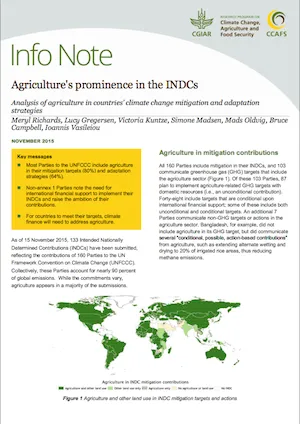
Image Resource Study exposes gap in global climate policy as countries commit to action on agriculture This brief from the CGIAR Research Program on Climate Change, Agriculture and Food Security (CCAFS) shows that a third of countries involved in COP21 and who have submitted Intended Nationally Determined Contributions (INDCs) have included targets for mitigating emissions from farming in their plans, but for developing countries such plans are conditional on receiving international financial support. Read
Resource WHO launches country profiles to help action on health and climate change WHO has released a first set of Climate Change and Health Country Profiles that provide a snapshot of up-to-date information about the current and future impacts of climate change on human health. The Climate and Health Country Profile project is an ongoing initiative that supports interested WHO Member States in finalising country profiles through a country consultation process. Read
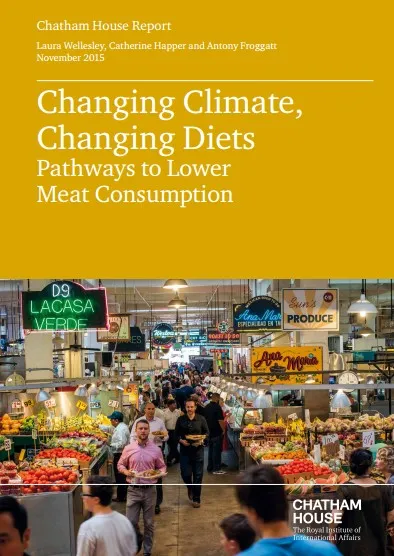
Image Resource Changing Climate, Changing Diets: Pathways to Lower Meat Consumption – new report by Chatham House Reducing global meat consumption will be critical to keeping global warming below the ‘danger level’ of two degrees Celsius, the main goal of the 2015 climate negotiations in Paris, according to this new report by Chatham House. Read
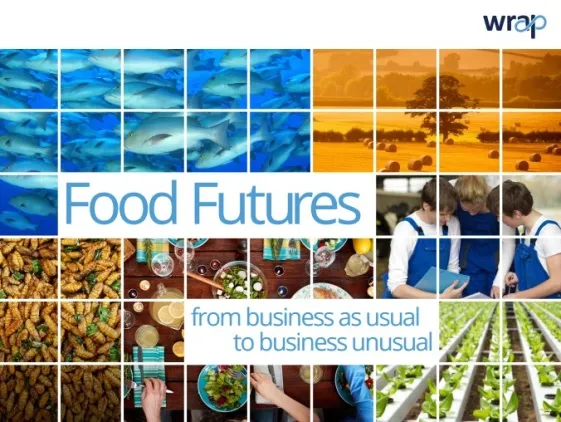
Image Resource WRAP report: Food futures – from business as usual to business unusual This report, Food Futures, by the UK’s waste agency WRAP, looks at a broad range of food sustainability challenges for the future and at possible solutions. Read
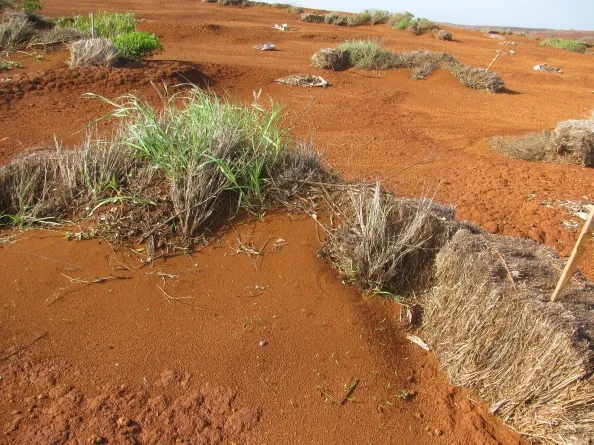
Image Resource Research specifies soil erosion’s contribution to soil carbon fluxes Research published in Nature Climate Change shows that accelerated erosion due to agricultural management is a major threat to food security and soil sustainability. Erosion is a natural process that continually shapes the land surface. The removal of soil also removes carbon contained in that soil. With erosion removing top soil it removes the layer of the soil that has the greatest concentration of carbon. Read