News and resources
War and watermelons
In Dubai, Trade Continues on the Front Lines of the Iran War. The flow of food from the Islamic Republic to the restaurants of the Gulf shows the difficulties involved in severing economic ties.
Publisher's summary
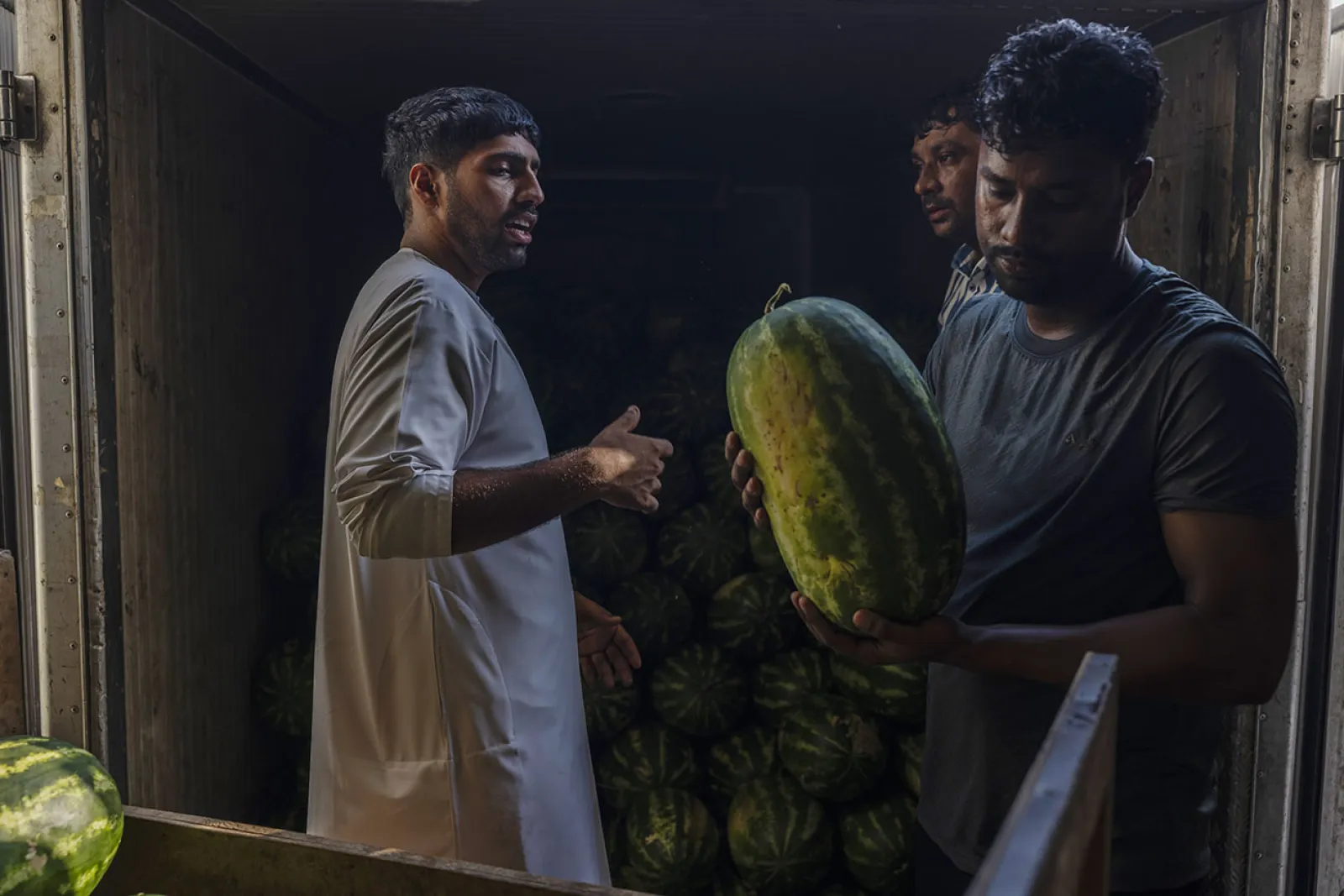
Rashed Aljabri swings a watermelon from the truck to his colleague standing on the floor of Al Aweer, Dubai’s largest fruit and vegetable market. After building up a pyramid-like stack, he slices one in half with a knife and cuts out a scarlet segment from the center.
The origin?
“Iran, Iran, Iran,” Aljabri chants. It is 6 a.m., and pallet trucks loaded with cauliflowers, boxes of tomatoes, bulbous pumpkins, eggplants and broccoli in ice-filled foam boxes whiz around the wholesale market, narrowly avoiding beeping tuk-tuks in near-orchestrated harmony. “Ninety percent of the produce in this market is from Iran,” Aljabri estimates. Containers marked with Tehran addresses reverse into the docking bays, traders unloading trolleys of salad and celery.
More than six months into the war with Iran, with no end in sight, the United Arab Emirates is once again ramping up pressure on its neighbor across the Gulf, announcing last month that it would halt all trade ties. The move, announced in response to Iranian strikes on Emirati ships, is seen as part of the Trump administration’s strategy of economically strangling Iran. But Iranian watermelons, and much more, are still flowing into Dubai’s markets, feeding its restaurants, supermarkets and hotels, and providing one small example of how difficult it would be to fully separate the two countries’ historically linked economies.

Comments (0)