Image Resources Our extensive research library contains thousands of summaries of journal articles, reports and news stories that can be searched by keyword and category RESOURCES CATEGORY Books Briefing paper Event recording Featured articles Featured report Game Journal articles News and resources Reports Think piece Video Working paper Workshop summary Year 2026 2025 2024 2023 2022 2021 2020 2019 2018 2017 2016 2015 2014 2013 2012 2011 2010 2009 2008 2007 2002 2001 Image Reports Four narratives used to support factory farming This report by the animal welfare campaign group Compassion in World Farming outlines and makes counterarguments to four narratives that it argues are being used to justify factory farming, i.e. intensive livestock farming based on high levels of edible crops as feed inputs. The four narratives are: that factory farming is necessary to feed a growing global population; that it is efficient; that it is a source of cheap food; and that it is compatible with climate mitigation targets. The report also examines the influence of large animal feed production companies on the food system. Read Image Reports Swedish supermarkets and the promotion of meat This report by the Dutch think tank Questionmark examines how Swedish supermarkets encourage the consumption of meat, notably by multi-buy discounts where customers only receive a discount if they buy multiple items. Furthermore, the types of meat that are promoted by the four biggest supermarkets are very rarely (in only 3% of meat promotions) rated “green” (i.e. most sustainable) by the Swedish WWF meat guide (see also the TABLE blog The Swedish Meat Guide – multidisciplinary research that reached society). Read Image Reports Hostile Environment: UK immigration policy and food insecurity This report by the UK’s Food Foundation examines the challenges faced by families in the UK who are unable to access certain public services as a result of the “No Recourse to Public Funds” (NRPF) conditions attached to their immigration status, for example while seeking asylum. Based on interviews with affected families, the study finds that the hostile environment towards immigrants created by UK government policy contributes to a “state of perpetual instability” in relation to people’s ability to access adequate shelter and income - and hence contributing to food insecurity and dietary inequalities. Read Image Journal articles Environmental sustainability in national dietary guidelines This article offers a global review of how different countries account for environmental sustainability within their food-based dietary guidelines (FBDGs). It finds that of the 83 countries assessed, 37 mention environmental sustainability but few give detailed advice on how to adopt a sustainable diet. The paper counts how many countries mention each of 16 different guiding principles for sustainable healthy diets - for example, 23 countries mention reducing the consumption of animal-based foods. The paper mentions Denmark and Belgium as demonstrating “exemplary” discussion of sustainability in their FBDGs. Read Image Journal articles Health impacts of Food Compass among US adults The Food Compass scoring system is an algorithm developed by researchers at Tufts University to assess the healthfulness of different food types. It has attracted some controversy on social media because of its counterintuitive rankings of some foods. This paper finds that following a diet that scores higher on the Food Compass system is linked to better outcomes on several aspects of health as well as all-cause mortality. Read Image Journal articles Protein quality in life cycle assessment Life cycle assessment (LCA) of food often uses mass of food as a functional unit, i.e. environmental impacts are reported per kg of food. Another common functional unit is weight of protein contained in the food, which is important for comparing different sources of protein, notably meat and its alternatives. This paper goes one step further and examines how protein quality, as opposed to protein quantity, can be accounted for in food LCAs, by using a scoring system to reflect the availability and digestibility of indispensable (i.e. essential) amino acids. Read Image News and resources Regulation of alternative proteins around the world In this piece, the Good Food Institute describes government regulation of alternative proteins (including plant-based, cultivated and fermentation-derived foods) in several countries around the world (including China, Singapore, Australia, Japan, Korea, India, Saudi Arabia, Canada, the United States and the European Union). Read Image News and resources The many meanings of 'regenerative' agriculture This blog post from the Sustainable Food Trust explores the history of the term “regenerative” agriculture, including the Rodale Institute’s use of the term in the 1970s, the longer indigenous histories of many of the practices that fall under the umbrella, and the resurgence of the term regenerative since around 2015. Read Image News and resources Newsletter: Sustainability by numbers by Hannah Ritchie Hannah Ritchie, Head of Research at Our World in Data, has launched a new email newsletter called Sustainability by numbers, which discusses the numbers and data that are important for building a sustainable world. TABLE readers may be particularly interested in the issues Eating local is still not a good way to reduce the carbon footprint of your diet and Are meat substitutes really better for the environment than meat? Read VIEW MORE
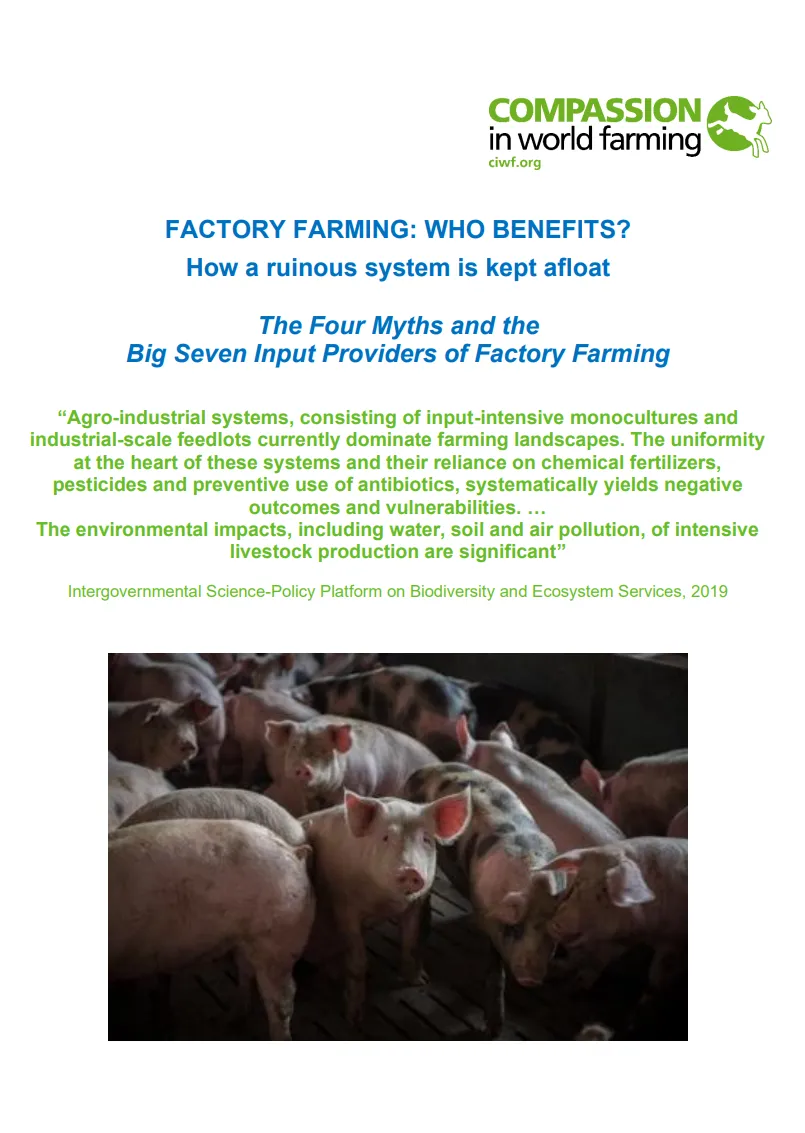
Image Reports Four narratives used to support factory farming This report by the animal welfare campaign group Compassion in World Farming outlines and makes counterarguments to four narratives that it argues are being used to justify factory farming, i.e. intensive livestock farming based on high levels of edible crops as feed inputs. The four narratives are: that factory farming is necessary to feed a growing global population; that it is efficient; that it is a source of cheap food; and that it is compatible with climate mitigation targets. The report also examines the influence of large animal feed production companies on the food system. Read
Image Reports Swedish supermarkets and the promotion of meat This report by the Dutch think tank Questionmark examines how Swedish supermarkets encourage the consumption of meat, notably by multi-buy discounts where customers only receive a discount if they buy multiple items. Furthermore, the types of meat that are promoted by the four biggest supermarkets are very rarely (in only 3% of meat promotions) rated “green” (i.e. most sustainable) by the Swedish WWF meat guide (see also the TABLE blog The Swedish Meat Guide – multidisciplinary research that reached society). Read
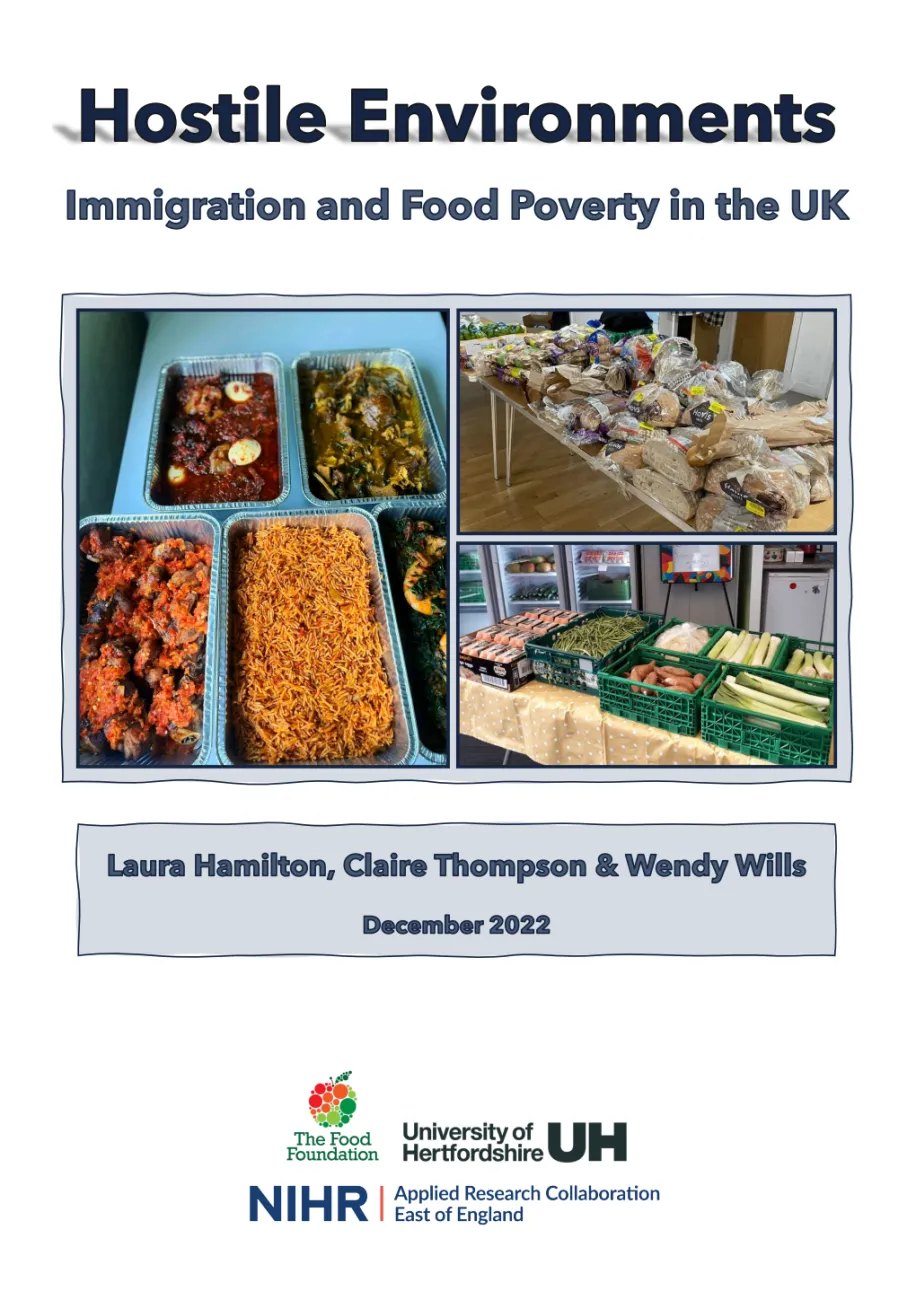
Image Reports Hostile Environment: UK immigration policy and food insecurity This report by the UK’s Food Foundation examines the challenges faced by families in the UK who are unable to access certain public services as a result of the “No Recourse to Public Funds” (NRPF) conditions attached to their immigration status, for example while seeking asylum. Based on interviews with affected families, the study finds that the hostile environment towards immigrants created by UK government policy contributes to a “state of perpetual instability” in relation to people’s ability to access adequate shelter and income - and hence contributing to food insecurity and dietary inequalities. Read
Image Journal articles Environmental sustainability in national dietary guidelines This article offers a global review of how different countries account for environmental sustainability within their food-based dietary guidelines (FBDGs). It finds that of the 83 countries assessed, 37 mention environmental sustainability but few give detailed advice on how to adopt a sustainable diet. The paper counts how many countries mention each of 16 different guiding principles for sustainable healthy diets - for example, 23 countries mention reducing the consumption of animal-based foods. The paper mentions Denmark and Belgium as demonstrating “exemplary” discussion of sustainability in their FBDGs. Read
Image Journal articles Health impacts of Food Compass among US adults The Food Compass scoring system is an algorithm developed by researchers at Tufts University to assess the healthfulness of different food types. It has attracted some controversy on social media because of its counterintuitive rankings of some foods. This paper finds that following a diet that scores higher on the Food Compass system is linked to better outcomes on several aspects of health as well as all-cause mortality. Read
Image Journal articles Protein quality in life cycle assessment Life cycle assessment (LCA) of food often uses mass of food as a functional unit, i.e. environmental impacts are reported per kg of food. Another common functional unit is weight of protein contained in the food, which is important for comparing different sources of protein, notably meat and its alternatives. This paper goes one step further and examines how protein quality, as opposed to protein quantity, can be accounted for in food LCAs, by using a scoring system to reflect the availability and digestibility of indispensable (i.e. essential) amino acids. Read
Image News and resources Regulation of alternative proteins around the world In this piece, the Good Food Institute describes government regulation of alternative proteins (including plant-based, cultivated and fermentation-derived foods) in several countries around the world (including China, Singapore, Australia, Japan, Korea, India, Saudi Arabia, Canada, the United States and the European Union). Read
Image News and resources The many meanings of 'regenerative' agriculture This blog post from the Sustainable Food Trust explores the history of the term “regenerative” agriculture, including the Rodale Institute’s use of the term in the 1970s, the longer indigenous histories of many of the practices that fall under the umbrella, and the resurgence of the term regenerative since around 2015. Read
Image News and resources Newsletter: Sustainability by numbers by Hannah Ritchie Hannah Ritchie, Head of Research at Our World in Data, has launched a new email newsletter called Sustainability by numbers, which discusses the numbers and data that are important for building a sustainable world. TABLE readers may be particularly interested in the issues Eating local is still not a good way to reduce the carbon footprint of your diet and Are meat substitutes really better for the environment than meat? Read