Image Resources Our extensive research library contains thousands of summaries of journal articles, reports and news stories that can be searched by keyword and category RESOURCES CATEGORY Books Briefing paper Event recording Featured articles Featured report Game Journal articles News and resources Reports Think piece Video Working paper Workshop summary Year 2026 2025 2024 2023 2022 2021 2020 2019 2018 2017 2016 2015 2014 2013 2012 2011 2010 2009 2008 2007 2002 2001 Image Books Dairy Farming in the 21st Century This book explores the ethical, environmental and social issues linked to different forms of dairy production around the world, including smallholder production and intensive feedlots. It also discusses the shift towards plant-based substitutes for dairy. Read Image Books Rewilding Food and the Self across Europe This book explores the conversations around rewilding, food, eating and identities that are currently happening across Europe. It has sections on hunting, “natural” products (such as wine) on the market, and rewilding in the context of cities and the self. Read Image Reports Emissions Impossible: Methane Edition The five largest meat companies and ten largest dairy companies have combined methane emissions of over 80% of the European Union’s methane footprint, according to this report by the Institute for Agriculture and Trade Policy (IATP) and the Changing Markets Foundation. The report recommends that governments set legally binding GHG and methane-specific reduction targets for the agriculture sector, with the aim to keep climate warming to less than 1.5°C. Read Image Reports 2022 Global Nutrition Report The 2022 edition of the Global Nutrition Report discusses the commitments on tackling malnutrition made by a range of stakeholders, including governments, donors, civil society, businesses and international organisations. Read Image Reports Farmers receive tiny profits for some everyday foods Farmers in the UK are receiving only a tiny fraction of the supermarket price of five common foods - often receiving less than a penny of the purchase price - according to this report from UK NGO Sustain. Other stages of the supply chain - notably processors and retailers - often receive a much greater portion of the profit. The report also notes that growers could receive more profit by supplying through alternative supply chains, such as non-profit food hubs. Read Image Reports Six briefings: Pastoralism and biodiversity Research programme PASTRES (Pastoralism, Uncertainty and Resilience) has released six short briefing papers on the links between extensive, mobile pastoralist systems, biodiversity and conservation. Each paper is available in English, French and Spanish. Read Image Journal articles Sustainable diets often linked to moderately lower cancer risk This paper reviews the evidence on how consumption of sustainable diets links to the risk of cancer in adults. It identified eight cohort studies, which were conducted in Europe and the United States and which used differing definitions of sustainable diets including definitions based on greenhouse gas emissions, food biodiversity, land use, pesticide exposure, adherence to the EAT-Lancet diet and score on a sustainability index. Most studies showed a modest correlation between higher adherence to sustainable diets and lower incidence of cancer and cancer mortality. However, most of the studies were considered to have a serious risk of bias because of confounding factors. Read Image Journal articles Agriculture for nutrition interventions are too narrow This paper argues that “agriculture for nutrition” interventions in low and middle income countries are overly narrow in scope and neglect the wider political, economic, social and cultural factors that affect food and (mal)nutrition. Read Image Journal articles How food lobbyists weakened Dutch overweight measures This paper explores how the food industry was able to influence and weaken the 2018 Dutch prevention agreement on overweight, using documents obtained through Freedom of Information requests. It argues that so-called voluntary agreements - a form of governance developed through negotiation between public and private stakeholders - is too susceptible to industry influence, and that stronger public regulation is a better alternative. Read VIEW MORE
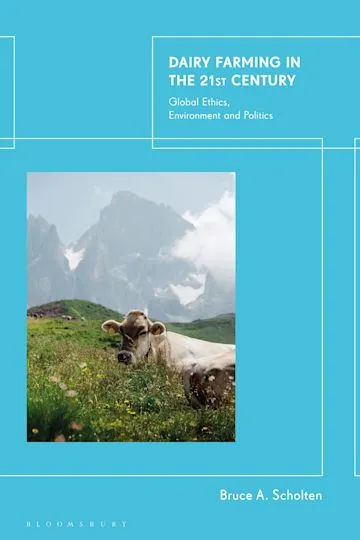
Image Books Dairy Farming in the 21st Century This book explores the ethical, environmental and social issues linked to different forms of dairy production around the world, including smallholder production and intensive feedlots. It also discusses the shift towards plant-based substitutes for dairy. Read
Image Books Rewilding Food and the Self across Europe This book explores the conversations around rewilding, food, eating and identities that are currently happening across Europe. It has sections on hunting, “natural” products (such as wine) on the market, and rewilding in the context of cities and the self. Read
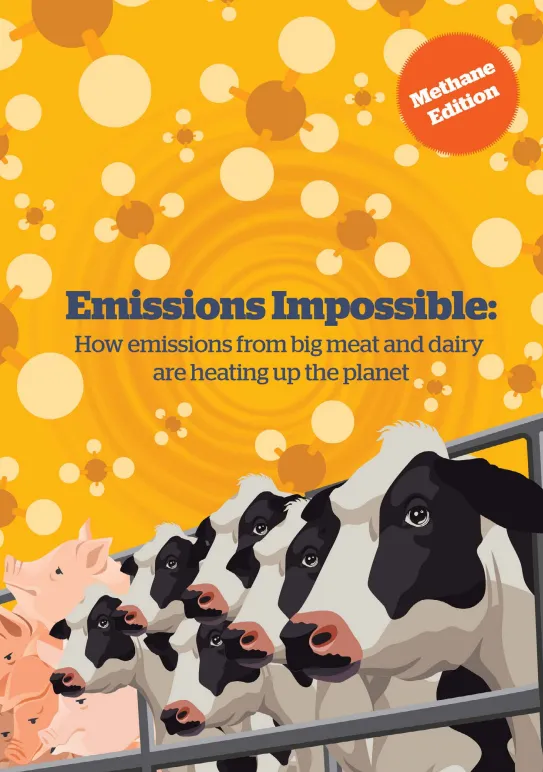
Image Reports Emissions Impossible: Methane Edition The five largest meat companies and ten largest dairy companies have combined methane emissions of over 80% of the European Union’s methane footprint, according to this report by the Institute for Agriculture and Trade Policy (IATP) and the Changing Markets Foundation. The report recommends that governments set legally binding GHG and methane-specific reduction targets for the agriculture sector, with the aim to keep climate warming to less than 1.5°C. Read
Image Reports 2022 Global Nutrition Report The 2022 edition of the Global Nutrition Report discusses the commitments on tackling malnutrition made by a range of stakeholders, including governments, donors, civil society, businesses and international organisations. Read
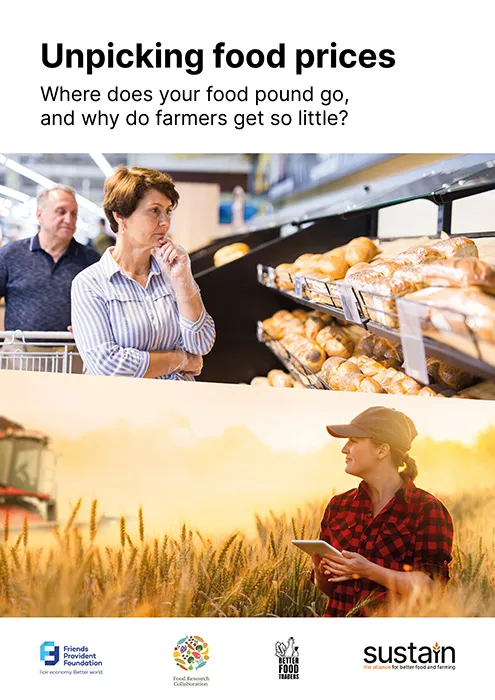
Image Reports Farmers receive tiny profits for some everyday foods Farmers in the UK are receiving only a tiny fraction of the supermarket price of five common foods - often receiving less than a penny of the purchase price - according to this report from UK NGO Sustain. Other stages of the supply chain - notably processors and retailers - often receive a much greater portion of the profit. The report also notes that growers could receive more profit by supplying through alternative supply chains, such as non-profit food hubs. Read
Image Reports Six briefings: Pastoralism and biodiversity Research programme PASTRES (Pastoralism, Uncertainty and Resilience) has released six short briefing papers on the links between extensive, mobile pastoralist systems, biodiversity and conservation. Each paper is available in English, French and Spanish. Read
Image Journal articles Sustainable diets often linked to moderately lower cancer risk This paper reviews the evidence on how consumption of sustainable diets links to the risk of cancer in adults. It identified eight cohort studies, which were conducted in Europe and the United States and which used differing definitions of sustainable diets including definitions based on greenhouse gas emissions, food biodiversity, land use, pesticide exposure, adherence to the EAT-Lancet diet and score on a sustainability index. Most studies showed a modest correlation between higher adherence to sustainable diets and lower incidence of cancer and cancer mortality. However, most of the studies were considered to have a serious risk of bias because of confounding factors. Read
Image Journal articles Agriculture for nutrition interventions are too narrow This paper argues that “agriculture for nutrition” interventions in low and middle income countries are overly narrow in scope and neglect the wider political, economic, social and cultural factors that affect food and (mal)nutrition. Read
Image Journal articles How food lobbyists weakened Dutch overweight measures This paper explores how the food industry was able to influence and weaken the 2018 Dutch prevention agreement on overweight, using documents obtained through Freedom of Information requests. It argues that so-called voluntary agreements - a form of governance developed through negotiation between public and private stakeholders - is too susceptible to industry influence, and that stronger public regulation is a better alternative. Read