Close
Login Register
Search
  • About
    • What We Do
    • Who We Are
    • FAQs
  • Our Writing
    • Explainers
    • Essays
    • Letterbox
    • More
  • Podcasts
  • Our Events
  • Projects
    • Power In The Food Systems
    • Local-Global Scale Project
    • MEAT: The Four Futures Podcast
    • Fuel To Fork
    • Nature
    • Reckoning with Regeneration
    • SHIFT
    • Rethinking the Global Soy Dilemma
  • Resources
  • Opportunities
    • Jobs
    • Funding
    • Courses
    • Collaborations
    • Events
  • Newsletter
  • TABLE (EN)
Search
Back

Meat

Image
Resource
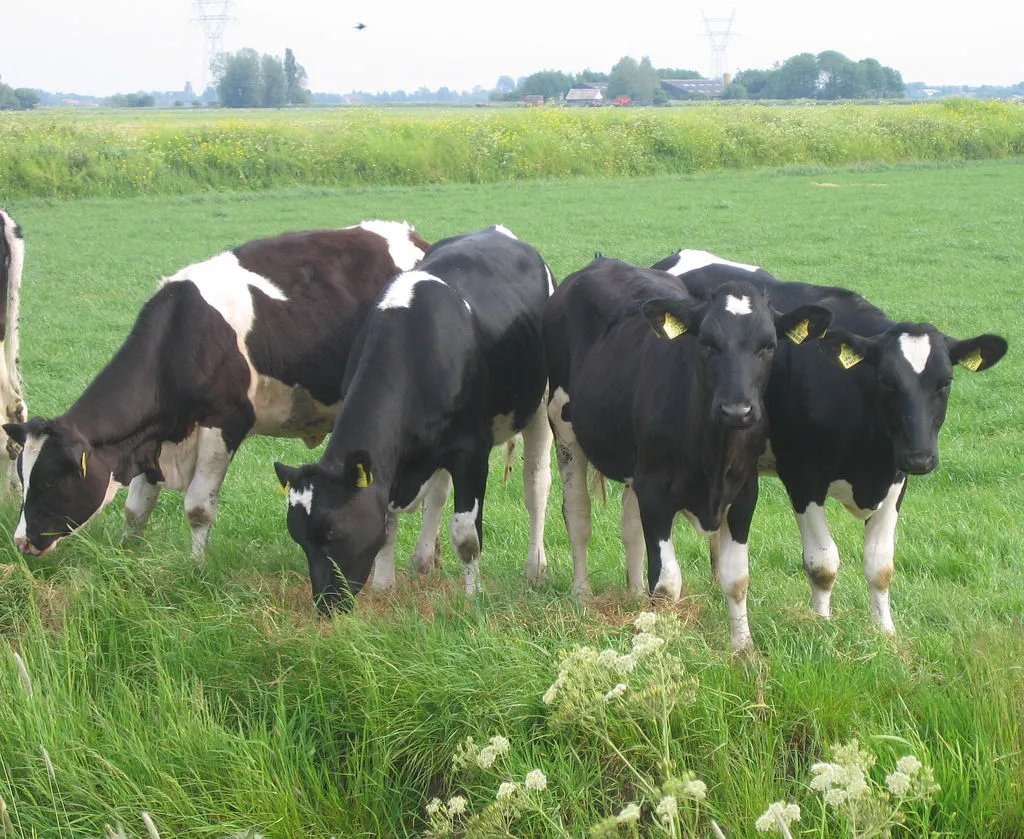
Intensification pathways for beef and dairy cattle production systems: Impacts on GHG emissions, land occupation and land use change
The authors of this paper compare the impact of intensification in the beef and dairy sectors via two pathways; either intensification within a system (e.g. a mixed crop-livestock system) or through transitioning to another more productive system (from pasture to mixed crop-livestock production) and assesses the mitigation potential that could arise.   It reviews the impacts of these forms of intensification on both GHG emissions, land occupation and land use change (LUC), the last of which has often been excluded in other similar analyses.  
Read
Image
Photo credit: Quinn Dombrowski, Flickr, Creative Commons License 2.0
Resource
Consumer perception and behaviour regarding sustainable protein consumption: A systematic review
This is a systematic review on consumer perception and behaviours in relation to meat, meat substitutes and the environment. It finds that both awareness of the environmental impact of meat consumption and a willingness to reduce meat consumption is low in the studied populations. The authors identify as a key research area the investigation of strategies that might help to motivate more moderate, sustainable meat consumption behaviour.
Read
Image
Resource
New technique using pluripotent stem cells to aid development of cultured pig meat
This article in Nature Scientific Reports details a new approach for generating skeletal muscle from pigs which can be used to make skeletal muscle – the main component of pork meat – in vitro. The techniques are potentially applicable to other types of muscle, such as heart muscle tissue, as well.
Read
Image
Resource
Report by GRAIN about cutting meat and dairy consumption
This report outlines the main - familiar - arguments for cutting meat and dairy consumption in high-income countries in order to significantly reduce GHG emissions. It specifically focuses on larger corporations and briefly touches on governance issues.
Read
Image
Resource
Letter to the European Commission with policy recommendations for reducing EU consumption of animal-based foods
Twenty-four cross-party European parliament members, together with HSI’s Planting Fresh Ideas, wrote a letter to the European Commission President, First Vice President, and Commissioners, with policy recommendations for reducing EU consumption of animal-based foods.
Read
Image
Resource
Conference proceedings from the Global Conference on Sustainable Beef 2016 available now
The Global Roundtable for Sustainable Beef (GRSB), a global, multi-stakeholder initiative developed to advance improvement in sustainability of the global beef value chain, held a conference in October 2016. 
Read
Image
Photo credit: Masahiro Ihara, Flickr, Creative Commons License 2.0
Resource
Systematic review on the impacts of dietary change on greenhouse gas emissions, land use, water use, and health
This paper by FCRN member Lukasz Aleksandrowicz and colleagues consolidates current evidence on the environmental impacts of dietary change, finding environmental benefits are possible from shifting typical Western diets to a variety of alternative dietary patterns. The results also highlight that there is still complexity in defining environmentally sustainable diets, though moderate reductions in meat consumption (particularly ruminant meat) replaced by plant-based foods, seem to reliably reduce greenhouse gas (GHG) emissions, land use, and water use, as well as improve health.
Read
Image
Photo credit: Alex, Flickr, Creative Commons License 2.0
Resource
Reducing meat consumption in developed and transition countries to counter climate change and biodiversity loss: a review of influence factors
FCRN members Prof. Dr. Susanne Stoll-Kleemann and Uta Schmidt (MSc.) have brought our attention to their recent article on reducing meat consumption.
Read
Image
Resource
New campaign, launch 10th November: Are you #vegcurious?
The Eating Better Alliance has launched a new campaign about eating less meat. The alliance have worked to create a new way of talking about eating less meat, through fun and positive messages and a set of adverts to inspire a new generation of men to be more daring with their food and give vegetarian options a chance. 
Read
  • VIEW MORE

Sign up for Fodder, our newsletter covering sustainable food news.

Sign up
  • Glossary
  • About
  • Our Writing
  • Podcasts
  • Resources

Social

YouTube Facebook Instagram

© Copyright 2025

A collaboration between: