Close
Login Register
Search
  • About
    • What We Do
    • Who We Are
    • FAQs
  • Our Writing
    • Explainers
    • Essays
    • Letterbox
    • Reports & More
  • Podcasts
  • Our Events
  • Projects
    • Power In The Food Systems
    • Local-Global Scale Project
    • MEAT: The Four Futures Podcast
    • Fuel To Fork
    • Nature
    • Reckoning with Regeneration
    • SHIFT
    • Rethinking the Global Soy Dilemma
  • Resources
  • Opportunities
    • Jobs
    • Funding
    • Courses
    • Collaborations
    • Events
  • Newsletter
  • TABLE (EN)
Search
Back

Livestock

Image
Resource
Scientists on meat taxation and climate change
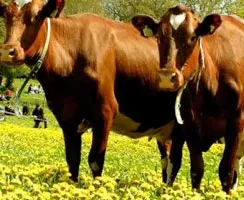
The international research team behind this article calls for an increased climate policy focus on reducing ruminant meat consumption. They argue that climate negotiations thus far have paid too little attention to the role of livestock when discussing greenhouse gas mitigation. Methane from ruminants is the largest human-related source of the greenhouse gasses. As such, reducing ruminant populations is the most effective way to cut methane emissions and would also reduce CO2 emissions resulting from forest clearance for livestock farming. The livestock sector as a whole contributes around 14.5 % of all human-caused GHGs according to the latest FAO report) – a figure that includes overall GHG emissions, not just methane.
Read
Image
Resource
The nitrogen footprint of food products in the European Union
Read
Image
Resource
New report on Solutions to Close the Global Food Gap
Read
Image
Resource
EU research funding to promote innovation in meat and livestock sector
The European Commission has announced funding for three major research projects designed to promote innovation in the meat and livestock sector. The funding will come from EU’s outgoing Seventh Framework Programme for Research and Technological Development.
Read
Image
Resource
ILRI interviews on livestock and fish ‘value chains’ in Uganda
Read
Image
Resource
Presentation: ILRI’s Jimmy Smith on global health and food security - Why developing-country livestock matter
Read
Image
Resource
Global Food Security Programme Food Waste report
Read
Image
Resource
New FAO report on livestock emissions
Read
Image
Resource
Tropical grass could tame global warming gases
New evidence suggests that a chemical mechanism operating in the roots of a tropical grass used for livestock feed holds enormous promise for reducing the emission of nitrous oxide. N2O is the most harmful of the warming gases, with a global warming potential 296 times that of carbon dioxide. According to the UN Food and Agriculture Organisation (FAO), the livestock sector accounts for 65 percent of the nitrous oxide emitted.
Read
  • VIEW MORE

Sign up for Fodder, our newsletter covering sustainable food news.

Sign up
  • Glossary
  • About
  • Our Writing
  • Podcasts
  • Resources

Social

YouTube Facebook Instagram

© Copyright 2025

A collaboration between: