Close
Login Register
Search
  • About
    • What We Do
    • Who We Are
    • FAQs
  • Our Writing
    • Explainers
    • Essays
    • Letterbox
    • Reports & More
  • Podcasts
  • Our Events
  • Projects
    • Power In The Food Systems
    • Local-Global Scale Project
    • MEAT: The Four Futures Podcast
    • Fuel To Fork
    • Nature
    • Reckoning with Regeneration
    • SHIFT
    • Rethinking the Global Soy Dilemma
  • Resources
  • Opportunities
    • Jobs
    • Funding
    • Courses
    • Collaborations
    • Events
  • Newsletter
  • TABLE (EN)
Search
Back

Governance, policy, and power

Image
Victory is in the Kitchen! Wartime lessons for today’s food systems? A blog by Eleanor Boyle
Essay
‘Victory is in the Kitchen’: Wartime lessons for today’s food systems?
During World War II, the British government transformed the domestic food system, implementing laws to cut food imports, encourage citizens to grow more of their own food, reduce food waste, and ration scarce foods such as meats, butter and sugar. In this blog post, educator and food writer Eleanor Boyle draws out the lessons that this historical case study offers for transforming today’s food systems in the face of the environmental crisis. She argues for reducing food waste, introducing modern versions of “British Restaurants” to offer low-cost meals and, controversially, rationing some foods including beef and dairy. About the author: Eleanor Boyle is an educator and writer in Vancouver, Canada. Formerly a journalist and college instructor, she holds a BSc in behavioural science, a PhD in neuroscience, and more recently, an MSc in food policy from City University London, working with Professors Tim Lang, David Barling, and Martin Caraher. Her publications include High Steaks: Why and How to Eat Less Meat (New Society 2012) and Mobilize Food! Wartime Inspiration for Environmental Victory Today (FriesenPress 2022). Eleanor has deep ties to Britain through family, study, and travel.
Read
Image
Chart 2050
News and resources
Audio documentary: Reflecting on the first animal welfare law
The Culture & Animals Foundation (CAF) has launched the first two episodes of “Martin’s Act at 200,” an audio documentary that explores the origins and legacy over two centuries of the Cruel Treatment of Cattle Act, which was signed into UK law 200 hundred years ago and is widely considered the first piece of animal welfare legislation from a modern political body. Three series of six episodes each will eventually be released, examining animal advocacy around the world.
Read
Image
‘To discuss business’: food and drink industry lobbying in the UK
Reports
UK food and drink industry lobbying lacks transparency
This discussion paper from the UK’s Food Research Collaboration examines meetings between food and drink businesses and UK policymakers. It finds that publicly declared meetings of government officials with food and drink lobbyists are often described in extremely broad terms, such as “to discuss business” or “to discuss trade and agriculture”, and that other interactions with lobbyists - such as phone calls or emails - are not disclosed. Ireland and Canada both used more detailed processes to disclose lobbying activities. The report makes recommendations for improving the transparency of lobbying in the UK.
Read
Image
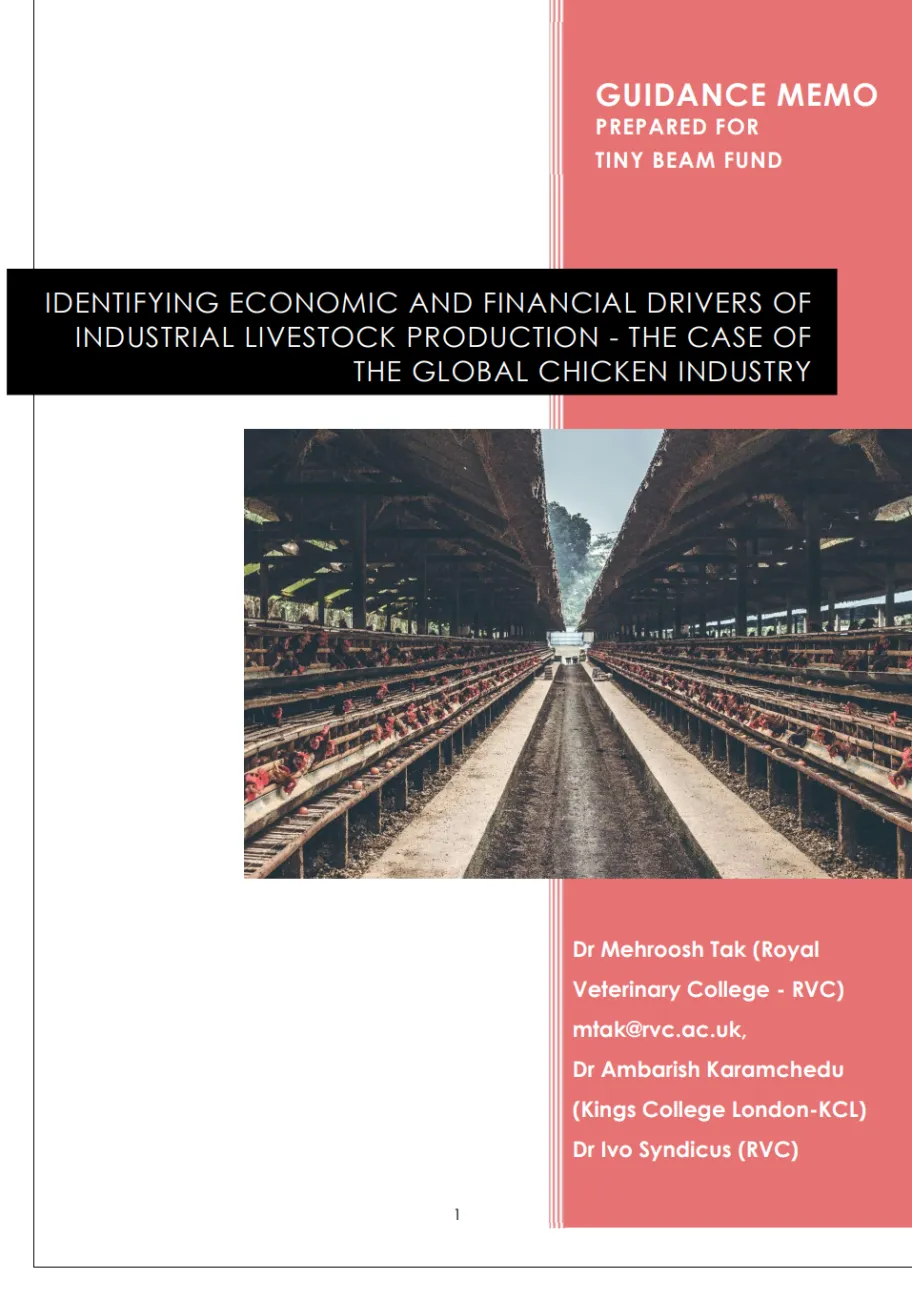
Identifying economic and financial drivers of industrial livestock production – the case of the global chicken industry
Reports
Economic and financial drivers of industrial chicken production
This memo from the One Health Poultry Hub explores the power dynamics that lead to corporate concentration in the livestock industries in low- and middle-income countries, using poultry in India as a case study. It uses an analytical framework that examines agricultural subsidies, financialisation, trade liberalisation and infrastructure at the global, national and subnational levels.
Read
Image
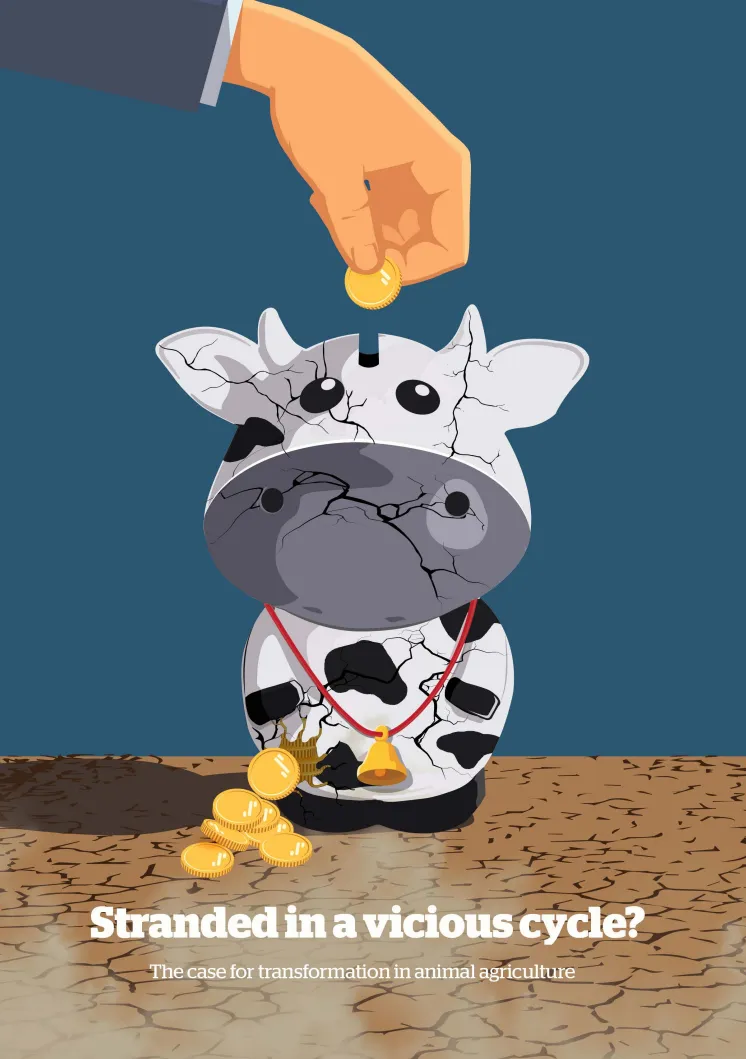
Stranded in a vicious cycle? The case for transformation in animal agriculture
Reports
Investors fear impacts of climate change on meat and dairy
This investor briefing by the Changing Markets Foundation surveyed over 200 respondents from the investment community on their perceptions of how climate change may affect the meat and dairy industry. 82% agreed that climate change presents risks to the industry. 84% are concerned that a lack of climate mitigation could lead to stranded assets (investments or resources that become unprofitable, in this case due to water shortages or temperature increases; the term is commonly used to refer to fossil fuel resources that cannot be burned). 94% think that reducing methane as well as carbon dioxide emissions is important.
Read
Image
FAIRR
News and resources
Investors ask FAO for clear roadmap to sustainable food
A group of 33 institutional investors, holding over US$14 trillion assets, have written to the Food and Agriculture Organization of the United Nations to ask for a clear global roadmap for the transition to a sustainable food system by 2050. They raise concern about the financial risks to which the food system is exposed as a result of environmental damage, and ask for clear targets on emissions reduction (including methane) within each food subsector. The letter is coordinated by the FAIRR Initiative.
Read
Image
Image: 16124683, Agriculture bale countryside, Pixabay, Pixabay Licence
News and resources
Reactions to England’s food strategy
The UK government has published its food strategy for England (note that other regions of the UK are not within the scope, since food policy is devolved). Reactions have generally been critical, with many noting that many of the recommendations in the National Food Strategy review led by Henry Dimbleby have not been included. We have rounded up some relevant reactions and resources.
Read
Image
Alternative Proteins Roadmap: identifying UK priorities
Reports
Alternative Proteins Roadmap: identifying UK priorities
This report from UK Research and Innovation discusses the future of the alternative protein sector in the UK, drawing on a workshop held with representatives of industry, research and policymaking. It discusses plant proteins (e.g. pulses, lupins), fermentation processes (algae, bacteria, fungi, mammalian cells) and novel systems such as insect proteins and new types of aquaculture.
Read
Image
American national competitiveness and the future of meat
Reports
American national competitiveness and the future of meat
This report, produced jointly by the Good Food Institute and the Breakthrough Institute, argues that the United States should attempt to take the lead in the rapidly developing alternative proteins sector, including cellular agriculture. It frames the move towards alternative proteins as being driven not just by technological developments and investment, but also by increased consumer demand for protein coupled with public concerns about health and sustainability. As we note in the TABLE explainer What is ecomodernism?, the ecomodernism movement (of which the Breakthrough Institute is part) tends not to seek to actively influence consumption patterns but rather seeks to meet demand sustainably.
Read
  • VIEW MORE

Sign up for Fodder, our newsletter covering sustainable food news.

Sign up
  • Glossary
  • About
  • Our Writing
  • Podcasts
  • Resources

Social

YouTube Facebook Instagram

© Copyright 2025

A collaboration between: