Close
Login Register
Search
  • About
    • What We Do
    • Who We Are
    • FAQs
  • Our Writing
    • Explainers
    • Essays
    • Letterbox
    • Reports & More
  • Podcasts
  • Our Events
  • Projects
    • Power In The Food Systems
    • Local-Global Scale Project
    • MEAT: The Four Futures Podcast
    • Fuel To Fork
    • Nature
    • Reckoning with Regeneration
    • SHIFT
    • Rethinking the Global Soy Dilemma
  • Resources
  • Opportunities
    • Jobs
    • Funding
    • Courses
    • Collaborations
    • Events
  • Newsletter
  • TABLE (EN)
Search
Back

Governance, policy, and power

Image
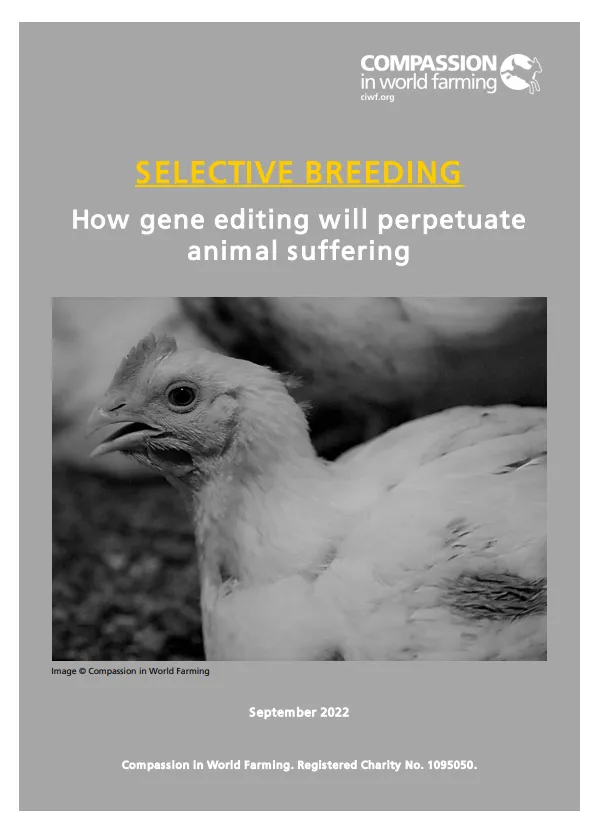
Selective breeding: How gene editing will perpetuate animal suffering
Reports
Gene editing and animal suffering
This report from Compassion in World Farming argues that the traditional selective breeding of livestock has led to great suffering for farmed animals, and that gene editing technologies are likely to exacerbate these welfare issues. It describes how traditional breeding has resulted in chickens that grow so quickly they suffer from leg disorders and heart disease, dairy cows that produce so much milk they experience lameness, mastitis and metabolic disorders, and turkeys that are so large they have joint deformations and cannot mate naturally. The report argues that gene editing should only be used in exceptional circumstances where (a) there is no negative impact on animal health and welfare, (b) no less intrusive methods are available and (c) it does not facilitate industrial livestock systems.
Read
Image
Image: Solein powder. Solar Foods Media Materials.
News and resources
Solar Foods receives microbial protein approval in Singapore
The Singapore Food Agency has approved the sale of food products containing Solein®, the microbial protein-rich powder produced by Finnish startup Solar Foods. The production process runs on electricity, carbon dioxide, hydrogen, oxygen and small amounts of other nutrients. Solar Foods is also seeking regulatory approval in the United States, the UK and the European Union.
Read
Image
Shaping the debate
Reports
Corporate lobbying and UK regulation of food marketing
This discussion paper from the UK’s Food Research Collaboration discusses meetings that happened between lobbyists and policymakers when the UK government was developing restrictions on promoting foods high in fat, sugar and salt (HFSS). It shows that most of the relevant meetings were with media and advertising interests as opposed to directly with food companies. It als notes that some exemptions and loopholes were introduced that made the final legislation less strict than the initial proposals.
Read
Image
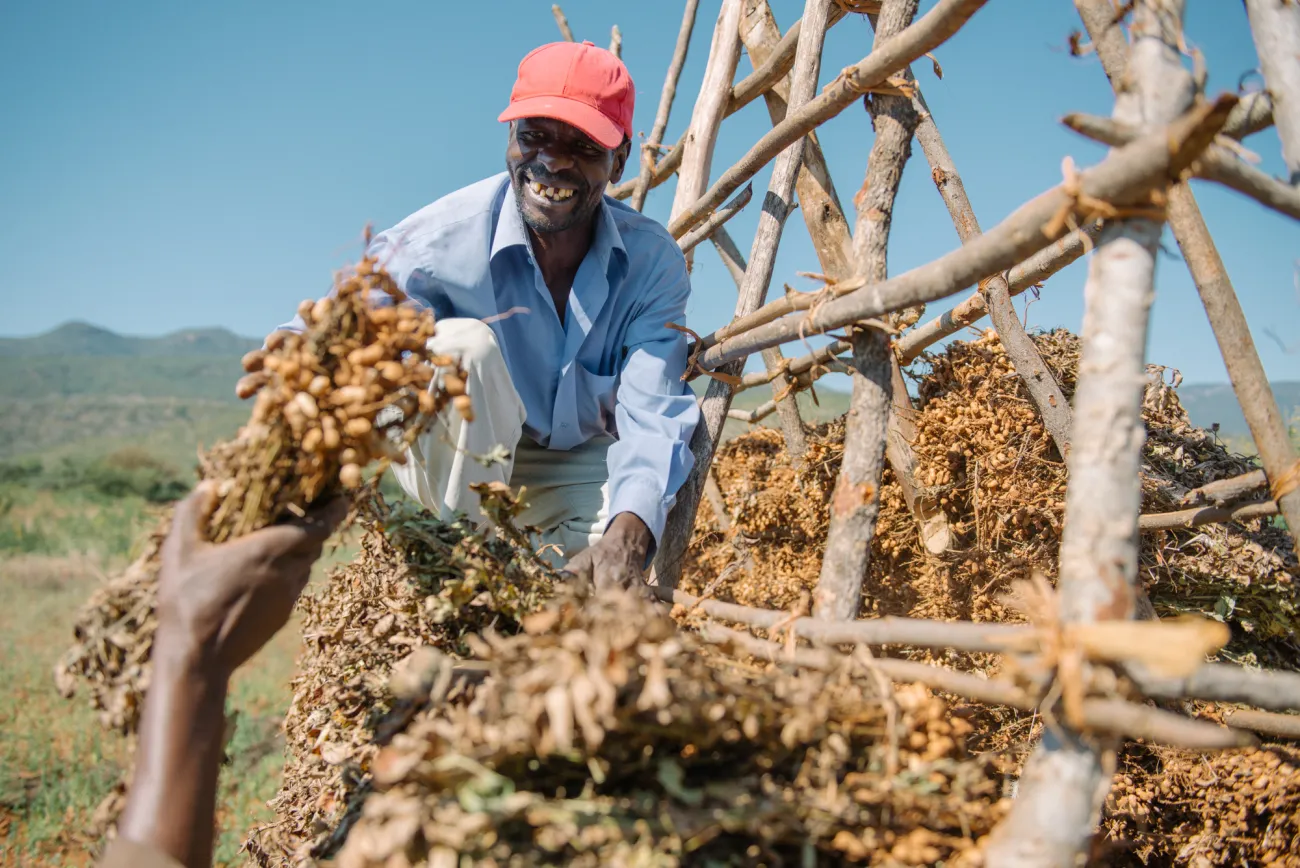
Image: Farmer Elias Chirinda drying his jugo bean (Bambara groundnut) crop in Chimanimani, TSURO, Zimbabwe. Credit: Xavier Vahed for Seed and Knowledge Initiative (SKI). SKI has granted authorisation to use the image in this article.
Essay
Essay: How power dynamics influence southern African seed and food systems
Access to seed is a vital factor in crop production, affecting which crops are grown and hence what food is available. This essay explores the power dynamics influencing three different seed provision systems in southern Africa, with a focus on Zimbabwe: formal seed systems involving commercial seed dealers and seed aid programmes; informal seed systems based on local markets, social networks and individual farmers saving seeds; and an intermediate system where seed is produced by community organisations. The author is Dr Bulisani L Ncube, senior programme officer at the Swiss Agency for Development and Cooperation, whose PhD thesis analysed the relationship between seed security and food security. He explains how different stakeholders perceive each of the seed provision systems and their benefits and drawbacks for reliability, traceability, income, knowledge transfer and more.
Read
Image
Routledge Handbook of Urban Food Governance
Books
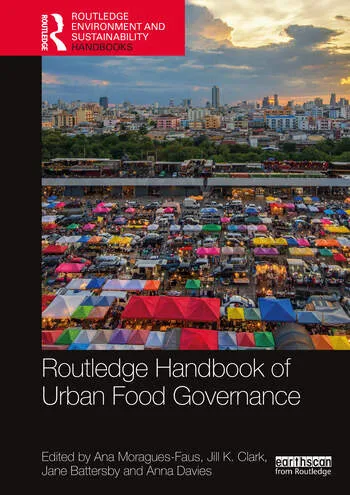
Routledge Handbook of Urban Food Governance
This book brings together a range of issues in the field of urban food governance, covering the history of the field, its frames, theories and concepts, practices in case studies including the United States, Brazil and Tanzania, different scales and actors, and envisaged futures for urban food governance.
Read
Image
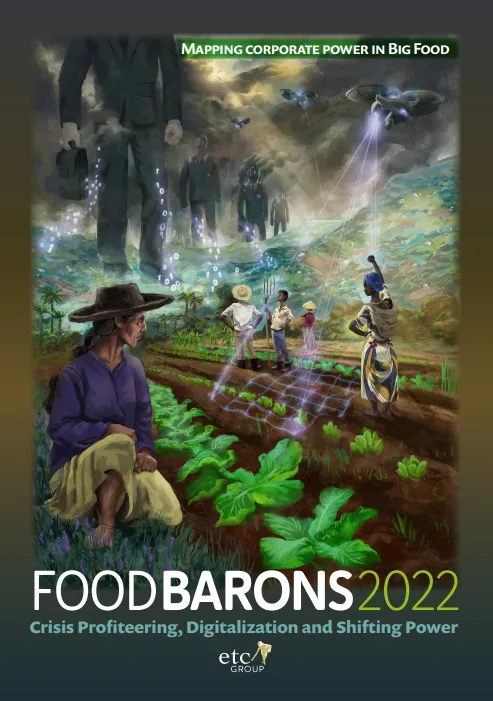
Food Barons 2022: Corporate concentration in agrifood
Reports
Food Barons 2022: Corporate concentration in agrifood
This report by the Canadian NGO the ETC Group profiles the world’s largest corporations in each of 11 agrifood sectors, including seeds, fertilisers, livestock genetics and food delivery. It shows that most of these sectors are dominated by just four to six large companies and argues that this “top heavy” structure threatens food sovereignty and gives large corporations outsize influence over markets, research and policy.
Read
Image
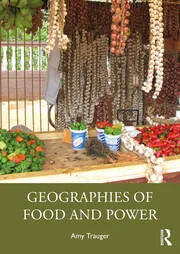
Geographies of Food and Power
Books
Geographies of Food and Power
This book, aimed at undergraduate students, gives an overview of how power dynamics, such as those linked to inequality and colonialism, affect global food systems and what we eat.
Read
Image
Furci
Podcast episode
Ep30: Giuliana Furci on "Without fungi we wouldn't have food"
What power do fungi have over humans and food systems?
Read
Image
Joachim von Braun
Podcast episode
Ep29: Joachim von Braun on an 'IP for Food'
What comes after the UN Food Systems Summit?
Read
  • VIEW MORE

Sign up for Fodder, our newsletter covering sustainable food news.

Sign up
  • Glossary
  • About
  • Our Writing
  • Podcasts
  • Resources

Social

YouTube Facebook Instagram

© Copyright 2025

A collaboration between: