Close
Login Register
Search
  • About
    • What We Do
    • Who We Are
    • FAQs
  • Our Writing
    • Explainers
    • Essays
    • Letterbox
    • Reports & More
  • Podcasts
  • Our Events
  • Projects
    • Power In The Food Systems
    • Local-Global Scale Project
    • MEAT: The Four Futures Podcast
    • Fuel To Fork
    • Nature
    • Reckoning with Regeneration
    • SHIFT
    • Rethinking the Global Soy Dilemma
  • Resources
  • Opportunities
    • Jobs
    • Funding
    • Courses
    • Collaborations
    • Events
  • Newsletter
  • TABLE (EN)
Search
Back

Governance, policy, and power

Image
Image: Goumbik, Equipment outdoors dirt, Pixabay, Pixabay Licence
Journal articles
Transformative potential of major food report recommendations
This paper assesses the extent to which the recommendations of 41 food reports could transform the food system. It argues that few reports are targeting “leverage points” that could result in the most change, and that reports often neglect the implications of power differences between actors.
Read
Image
TABLE logo
Essay
Process and power at TABLE
This piece is written by Tamsin Blaxter, researcher and writer at TABLE, as part of TABLE's work theme Power in the food system: what’s powering the future of protein? 
Read
Image
power event flyer
Event recording
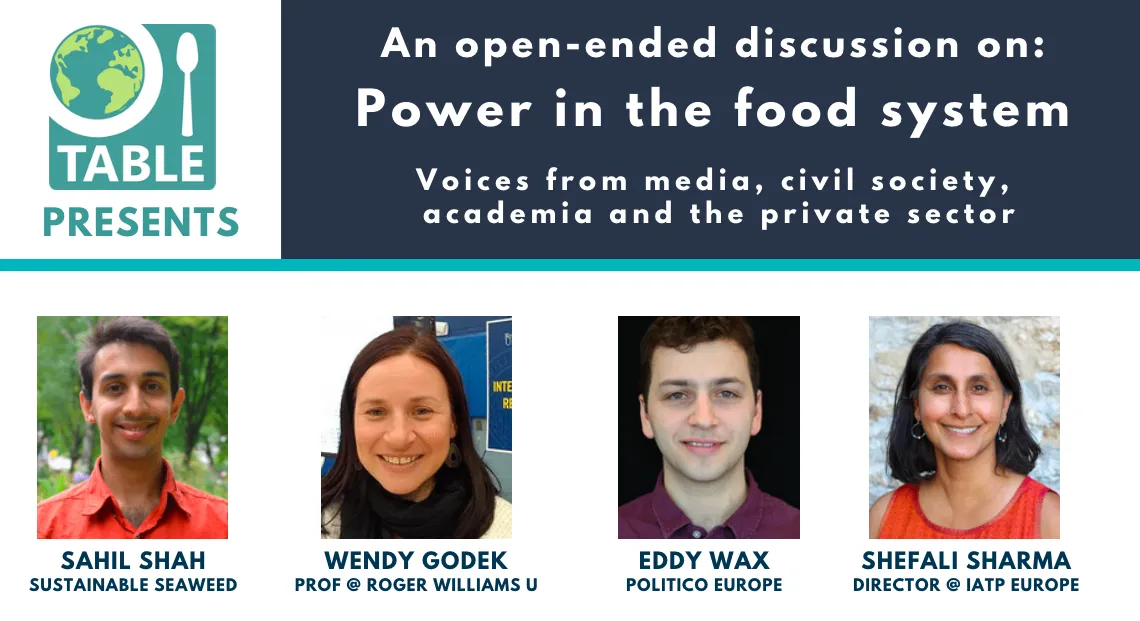
Recording: An open discussion on power in the food system
On 8 December 2021, TABLE hosted and recorded an open discussion about power in the food system with representatives from civil society, academia, media and the private sector.  At TABLE we recognise that our own biases and perspectives influence how we think about power in the food system. The purpose of this event was to hear a range of different views and understandings of power. This kick off event for our power theme helps us think about who and what shapes, controls and influences past, present and future food systems.  
Read
Image
Agroecological transitions: determinist and open-ended visions
Books
Agroecological transitions: determinist and open-ended visions
This open-access book looks at the approaches that people take towards agroecological transitions. It defines two clusters: a “determinist” perspective which focuses on achieving a predefined end goal for the transition to agroecology, and an “open-ended” perspective which leaves more room for changing goals.
Read
Image
International Journal of Health Policy and Management
Journal articles
Special issue on the political economy of food systems
The International Journal of Health Policy and Management has released a special issue on the political economy of food systems, including an editorial, eight review articles and 11 original articles. 
Read
Image
Image: pasja1000, The bottle plastic, Pixabay, Pixabay Licence
Journal articles
Engaging with Big Food: marriage or mirage?
This paper analyses the concept of “trust” in relation to engaging “Big Food” in food systems transformations. Drawing on case studies on plastic packaging and the United Nations Food Systems Summit, the authors argue that the role of large multinational corporations should be limited to responding to requests for information and adhering to regulation. “Big Food” should not be involved in setting research or policy agendas, says the paper.
Read
Image
Cop26
Podcast episode
Ep17: Why isn't food on the COP agenda? (part 1)
Why isn't food a part of the COP-26 climate agenda? We speak to activists, civil society, and politicians to find out.
Read
Image
Global Alliance for Improved Nutrition
News and resources
Open letter calls for policy action on healthy sustainable diets
A global youth coalition has published an open letter calling for governments and businesses to prioritise healthy and sustainable diets. It targets COP26, as well as the UN’s biodiversity COP, the Nutrition for Growth Summit, Stockholm+50 and other global fora. 
Read
Image
Image: TranDuyet, Farmers rice fields, Pixabay, Pixabay Licence
Journal articles
The UNFSS and the battle over authority and legitimacy
This article examines different visions about how global food systems should be governed, focusing on two main areas of contestation: authority and legitimacy. The authors use the United Nations Food Systems Summit (and its historical context) as a starting point for discussion; the 2021 UNFSS was heavily criticised by the food sovereignty movement for its perceived links to large corporations, philanthropic organisations and powerful states.
Read
  • VIEW MORE

Sign up for Fodder, our newsletter covering sustainable food news.

Sign up
  • Glossary
  • About
  • Our Writing
  • Podcasts
  • Resources

Social

YouTube Facebook Instagram

© Copyright 2025

A collaboration between: