Close
Login Register
Search
  • About
    • What We Do
    • Who We Are
    • FAQs
  • Our Writing
    • Explainers
    • Essays
    • Letterbox
    • Reports & More
  • Podcasts
  • Our Events
  • Projects
    • Power In The Food Systems
    • Local-Global Scale Project
    • MEAT: The Four Futures Podcast
    • Fuel To Fork
    • Nature
    • Reckoning with Regeneration
    • SHIFT
    • Rethinking the Global Soy Dilemma
  • Resources
  • Opportunities
    • Jobs
    • Funding
    • Courses
    • Collaborations
    • Events
  • Newsletter
  • TABLE (EN)
Search
Back

Consumption and production trends

Image
Resource
Recap of the Guardian hosted discussion on the "sustainable diets" paradigm
A summary of a discussion on sustainable diets, hosted by the Guardian, is now available on their website. It sought to take a holistic approach to the interlinked issues of food, farming, environment and health, focusing on the issues of how a sustainable diet should be defined and achieved.  Discussants included Jo Confino (Chair) Executive editor, the Guardian, Tim Lang Professor of Food Policy, City of London and David Nussbaum Chief executive, WWF, Tim Smith Group quality director, Tesco. You can read the summary here. See also FCRN discussion papers focusing on what a sustainable healthy diet is and how it can be achieved.
Read
Resource
The food waste hierarchy as a framework for managing food surpluses and waste
This research argues that we need to implement a food waste hierarchy approach to preventing and managing food surplus and waste. It argues that a distinction between food surplus and waste is crucial as is the distinction between avoidable and unavoidable waste. Its main message is that food waste can be prevented by adopting a sustainable production and consumption approach and by tackling food surplus and waste throughout the global food supply chain.
Read
Image
Resource
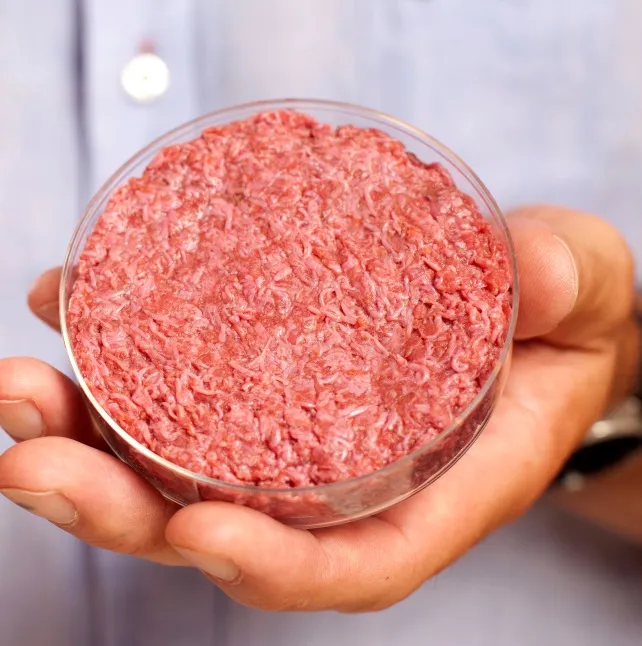
Cultured meat: every village its own factory?
This research from Wageningen University focuses on biotechnology and cultured meat. The same technology that is starting to be used to create new organs from stem cells, could in principle be used to produce meat. 
Read
Image
Resource
Seasonal Workers in Mediterranean Agriculture: The Social Costs of Eating Fresh
This book is the first to address global agro-migration complexes across the Mediterranean regions of south and west Europe.
Read
Resource
Environmental, Health and Welfare Challenges for a Changing China event –presentations now available
CHEW - China's Health, Environment and Welfare Research Group at the University of Oxford, recently held an event which sought to bring together work on health, environment.
Read
Image
Resource
Changing to healthier & more sustainable diets: how can this be achieved?
In April 2014 the Food Climate Research Network organised a workshop, funded and hosted by the Wellcome Trust with additional support from the Food Security programme of the UK research councils. Its aim was to bring people together to develop a research agenda on how our eating practices might be shifted in healthier and more sustainable directions.  Particular emphasis was placed on meat eating as an exemplar of an important, yet difficult aspect of our consumption practices, and one with a strong bearing on health and sustainability.
Read
Image
Resource
The influence of food choices on nitrogen emissions and the European environment - ENA special report
This report quantifies how much our food choices affect pollutant nitrogen emissions, climate change and land use across Europe.
Read
Image
Resource
Future Diets - ODI report
The ODI report 'Future Diets' traces how the changes in diet - more fat, more meat, more sugar and bigger portions - have led to a looming global health crisis. 
Read
Image
Resource
Reducing meat and dairy consumption to meet climate change targets
This open access article from Chalmers University, Sweden, argues that unless we reduce our consumption of meat and dairy, world temperatures will continue to rise and we will be unable to meet the goal of keeping global temperatures from rising more than 2˚C.
Read
  • VIEW MORE

Sign up for Fodder, our newsletter covering sustainable food news.

Sign up
  • Glossary
  • About
  • Our Writing
  • Podcasts
  • Resources

Social

YouTube Facebook Instagram

© Copyright 2025

A collaboration between: