Close
Login Register
Search
  • About
    • What We Do
    • Who We Are
    • FAQs
  • Our Writing
    • Explainers
    • Essays
    • Letterbox
    • Reports & More
  • Podcasts
  • Our Events
  • Projects
    • Power In The Food Systems
    • Local-Global Scale Project
    • MEAT: The Four Futures Podcast
    • Fuel To Fork
    • Nature
    • Reckoning with Regeneration
    • SHIFT
    • Games at TABLE
    • Rethinking the Global Soy Dilemma
  • Resources
  • Opportunities
    • Jobs
    • Funding
    • Courses
    • Collaborations
    • Events
  • Newsletter
  • TABLE (EN)
Search
Back

TABLE

Image
Forest, Land and Agriculture Science Based Target Setting Guidance
Reports
How to set land-based emissions reduction targets
The Science Based Targets initiative has published guidance for companies in land-intensive sectors on how to set science-based targets for reducing emissions from agriculture, forestry and other land use in line with the Paris Agreement’s climate goals. The key components include: setting near-term emissions reduction targets for the next 5-10 years; account for carbon sequestration options such as forest management and soil carbon sequestration; set long-term targets of cutting emissions by 74% by no later than 2050; set zero deforestation targets for no later than 2025; and set emissions reduction targets for both land use and fossil fuel use.
Read
Image
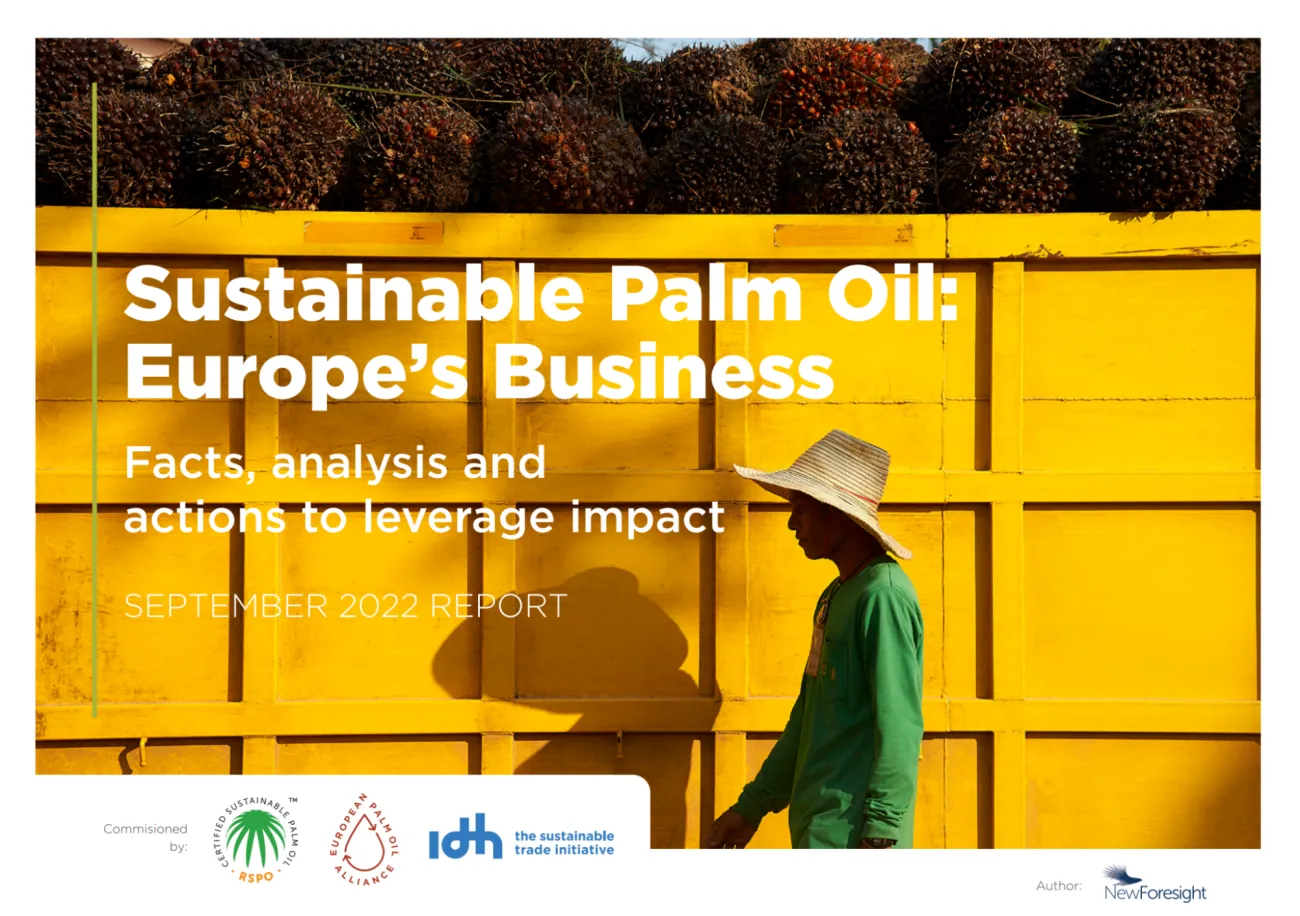
Sustainable Palm Oil: Europe’s Business
Reports
Sustainable Palm Oil: Europe’s Business
Europe’s imports of palm oil are decreasing while the region remains a top market for sustainable palm oil, according to this report which is targeted at Europe-based retailers and manufacturers of palm oil products. The report sets out how industry users of palm oil in Europe can strengthen the sustainable palm oil movement globally, including: improving traceability in their supply chains; committing to sustainable sourcing policies; joining a sustainable palm oil initiative; using certification schemes; and joining landscape-based sustainability initiatives.
Read
Image
 Assessing the financial impact of the land use transition on the food and agriculture sector
Reports
Food and agriculture investors must act on land use transition
This report by the UNFCCC-supported Race to Zero sets out the implications for financial institutions of the shift towards sustainable land use. It sets out the policy landscape around limiting deforestation and land conversion for commodity production, as well as the financial losses in the food and agriculture sector caused by climate-linked disasters. It argues that investors are overlooking the risks to the financial value of 40 of the world’s largest food and agriculture firms that could be caused by new policies and changing consumer attitudes. It concludes that financial institutions need to do more to eliminate deforestation and land conversion from their portfolios, invest in nature-based solutions and advocate for just rural transition policies.
Read
Image
Image: TheoCrazzolara, Burger party vegetarian, Pixabay, Pixabay Licence
Journal articles
Health and sustainability of plant-based alternatives
This paper reviews 43 existing studies on the environmental sustainability and nutritional characteristics of plant-based animal alternatives (PB-APAs) compared to animal products. PB-APAs, such as Beyond Meat and Oatly milk, are foods which seek to mimic animal products. They do not include minimally processed plant-based foods such as legumes and nuts.
Read
Image
Image: PublicDomainPictures, Concept document focus, Pixabay, Pixabay Licence
Journal articles
What do consumers read about meat?
This paper analyses the narratives linking meat and the environment that were found in 116 articles from eight online news outlets in the UK during 2019. It found that anti-meat narratives are most common: 54% of articles had anti-meat-consumption sentiments, while only 5% were mostly in favour of meat consumption or against a shift to plant-based diets; the remaining articles were neutral or contained mixed arguments. Sentiment varied by farming type: less than 10% of articles were against meat in general; 28% were against industrial farming but favoured more sustainable methods; and the remainder were neutral or balanced, with no articles being generally in favour of the meat industry. The eight news outlets studied were the BBC, the Guardian, MailOnline, Sky News, the Sun, the Mirror, LAD Bible and BuzzFeed.
Read
Image
Image: jplenio, Landscape nature grass, Pixabay, Pixabay Licence
Journal articles
Roadmap for net-zero global food systems by 2050
This paper presents a “roadmap” towards achieving net zero in global food systems by 2050 - a plan which has recently been called for by institutional investors. The authors explore 64 pathways to net zero based on implementing varying levels of four major food systems interventions: increasing production efficiency through shifting to low-emissions practices; sequestering carbon in croplands and grasslands; changing diets to reduce the global production of protein from livestock; and adopting a diverse range of “new-horizon” - i.e. emerging - technologies such as methane inhibitors and perennial row crops.
Read
Image
Image: Ralphs_Fotos, Chicken Hen Poultry, Pixabay, Pixabay Licence
Journal articles
Feeding by-products to livestock can increase food supply
The global availability of food calories for people could increase by 13%, and protein supply could increase by 15%, if livestock were fed more by-products and residues in place of some feed that is edible to humans, specifically cereals, pulses, vegetable oils and whole fish. This study combines data from several sources to trace feed composition throughout the global food system.
Read
Image
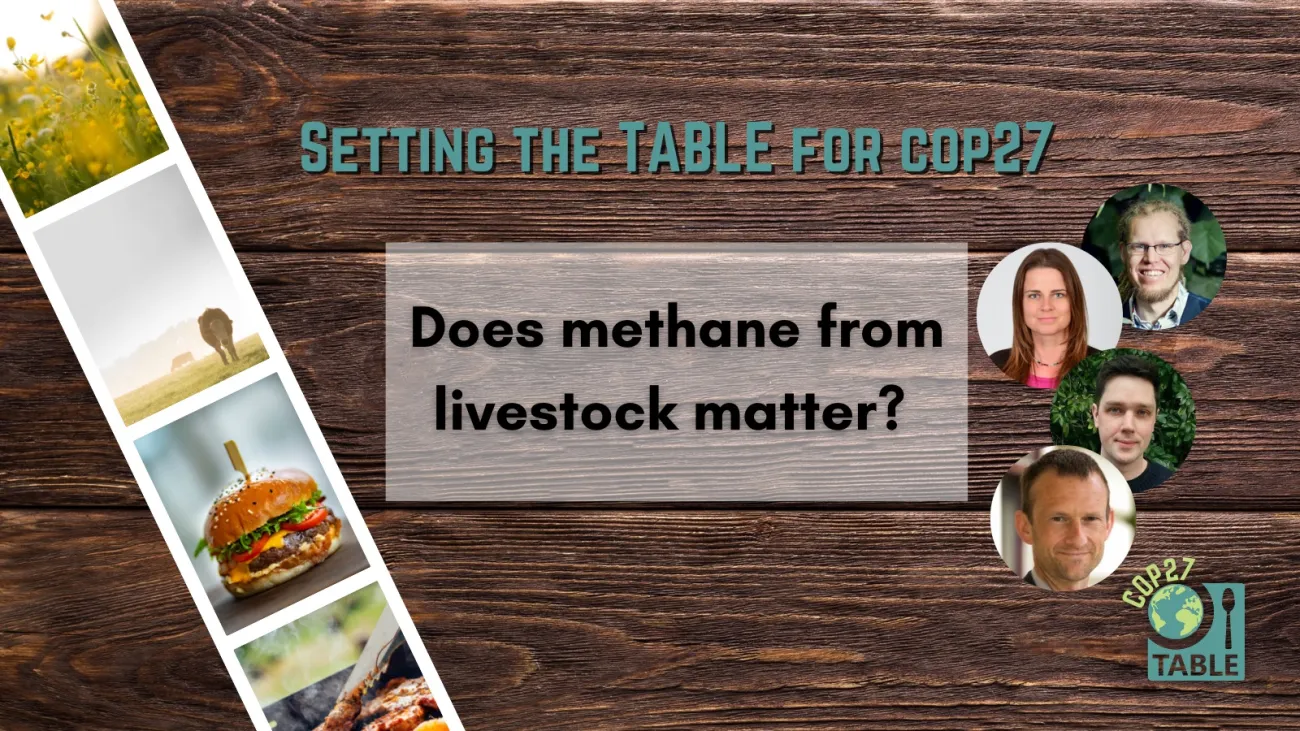
A flyer advertising the "Setting the Table for COP27" series and the event “Does methane from livestock matter?“ There is a photo strip of agricultural landscapes laying on a wooden table and the TABLE logo in the corner and photos of Martin Persson, Claudia Arndt, John Lynch, and Andy Reisinger.
Event recording
Event recording: Does methane from livestock matter?
This event was hosted by TABLE on 28 September 2022 and took the format of a panel discussion with: Dr Tara Garnett (director of TABLE and fellow of the Oxford Martin School); Andy Reisinger (IPCC Working Group III (mitigation)/New Zealand Climate Change Commission) Claudia Arndt (The International Livestock Research Institute [ILRI]) John Lynch (University of Oxford) Martin Persson (Chalmers University of Technology)
Read
Image
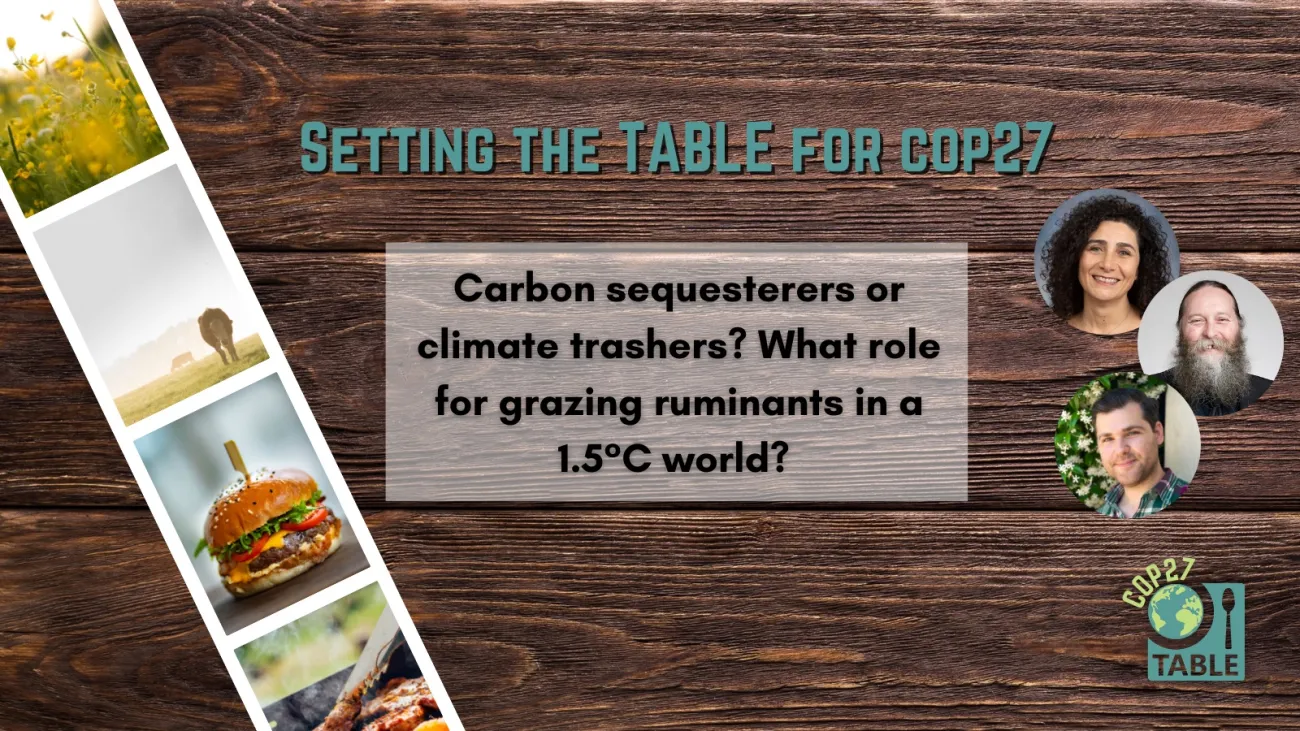
A flyer for the "Setting the Table for COP27: Carbon sequesterers or climate trashers? What role for grazing ruminants in a 1.5°C world?" event with photos of Francesca Cotrufo, Pete Smith and Matthew Hayek.
Event recording
Event recording: Carbon sequesterers or climate trashers? What role for grazing ruminants in a 1.5°C world?
This event was hosted by TABLE on 14 September 2022 and took the format of a panel discussion with: Dr Tara Garnett (director of TABLE and fellow of the Oxford Martin School); Professor Pete Smith (University of Aberdeen); Professor M. Francesca Cotrufo (Colorado State University); Assistant Professor Matthew Hayek (New York University).
Read
  • VIEW MORE

Sign up for Fodder, our monthly newsletter unpacking the future of food.

Tick below to opt-in to email communications.

You can change your mind at any time by clicking the unsubscribe link in the footer of any email you receive from us, or by contacting us at info@tabledebates.org.

We use Mailchimp as our marketing platform. By clicking below to subscribe, you acknowledge that your information will be transferred to Mailchimp for processing. Learn more about Mailchimp's privacy practices.
  • Glossary
  • About
  • Our Writing
  • Podcasts
  • Resources

Social

YouTube Facebook Instagram

© Copyright 2025

A collaboration between: