Close
Login Register
Search
  • About
    • What We Do
    • Who We Are
    • FAQs
  • Our Writing
    • Explainers
    • Essays
    • Letterbox
    • Reports & More
  • Podcasts
  • Our Events
  • Projects
    • Power In The Food Systems
    • Local-Global Scale Project
    • MEAT: The Four Futures Podcast
    • Fuel To Fork
    • Nature
    • Reckoning with Regeneration
    • SHIFT
    • Games at TABLE
    • Rethinking the Global Soy Dilemma
  • Resources
  • Opportunities
    • Jobs
    • Funding
    • Courses
    • Collaborations
    • Events
  • Newsletter
  • TABLE (EN)
Search
Back

TABLE

Image
Resource
New consumer choice study
Read
Image
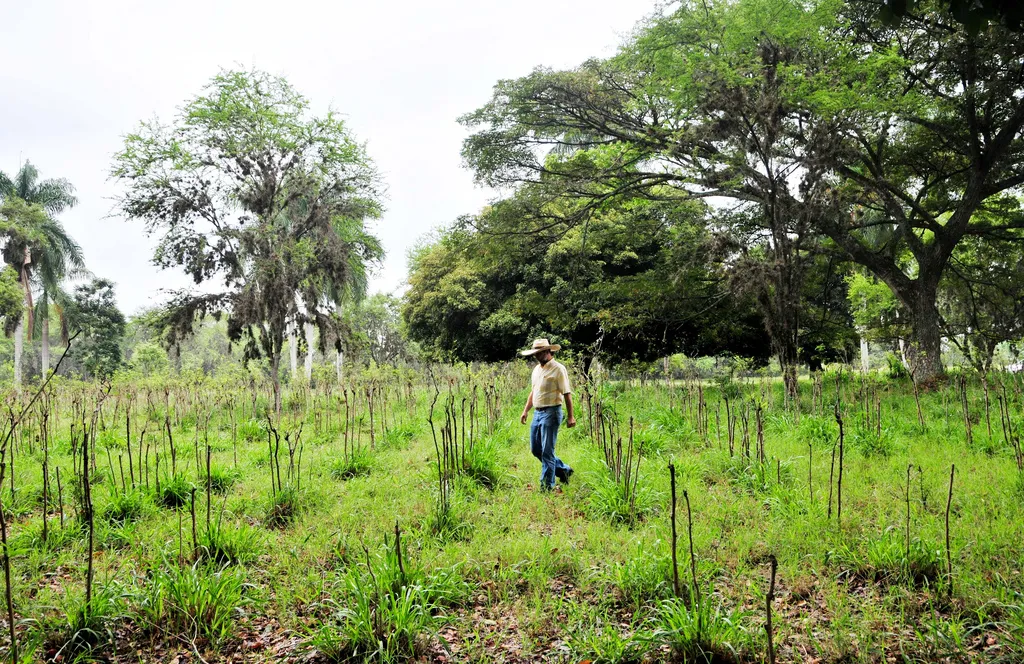
Photo: Neil Palmer CIAT, Flickr, creative commons licence 2.0
Resource
Three perspectives on sustainable food security
Achieving food system sustainability is a global priority but there are different views on how it might be achieved. Broadly three perspectives are emerging, defined here as: efficiency oriented, demand restraint and food system transformation. These reflect different conceptualisations on what is practically achievable, and what is desirable, underpinned by different values and ideologies about the role of technology, our relationship with nature and fundamentally what is meant by a ‘good life.’ 
Read
Image
Resource
Tara Garnett: Three perspectives on sustainable food security
The FCRN’s Tara Garnett has a new paper published in the Journal of Cleaner Production. In it, she looks at the very different ways in which stakeholders conceptualise the food sustainability problem and what constitutes a desirable ‘solution.’  She argues that these different views are underpinned by different values and ideologies and shows how different stakeholders select and interpret the evidence from life cycle assessment (LCA) to argue their positions.  
Read
Image
Resource
New strategy to boost UK agricultural industries
The UK Government has invested £160 million in a new Agricultural Technologies Strategy.  This Strategy is intended to boost agricultural science and technology and it is aimed at delivering sustainable, healthy and affordable food for future generations. Described by some as new “green revolution,” investments will be focused on developing cutting edge technologies and taking innovative products such as “cancer-fighting” broccoli from the field to the shopping aisle. The strategy includes £30m for four agri-science research and innovation campuses set up by the Biotechnolocy and Biological Sciences Research Council.
Read
Image
Resource
Mainstreaming Nutrition-Agriculture Linkages
Read
Image
Resource
Slides from interdisciplinary workshop available: Towards food system transparency
The workshop was carried out as part of an Oxford Martin Programme on the Future of Food project on consumer engagements with food governance. The Oxford Food Governance Group project aims to elucidate the emerging forms, roles, and uses of food-related information and communication technologies (ICT) at the consumer level, and how they might shape the EU food governance landscape in years to come.
Read
Image
Resource
Aquaculture myths
SEAT, the Sustaining Ethical Aquaculture Trade project have highlighted some key ‘myths’ around aquaculture on their website and sought to provide some clarity on the reality of the situation.
Read
Image
Resource
Making climate finance work for the poor
This policy brief from World Agroforestry Centre (ICRAF) addresses the major challenges of and opportunities for financing climate change mitigation and adaptation pathways for smallholder farmers in developing nations. It underlines the need for an innovative and integrated approach to climate finance that can connect rural farmers to public and private finance at the global level. It also provides recommendations for future actions that can meet adaptation, development and mitigation aims.
Read
Image
Resource
The water footprint of the EU for different diets
This paper models the water footprint requirements of different diets. It concludes that vegetarian diets are less water intensive (both in terms of overall water use and ‘blue’ or irrigated water use) than current average EU diets.
Read
  • VIEW MORE

Sign up for Fodder, our monthly newsletter unpacking the future of food.

Tick below to opt-in to email communications.

You can change your mind at any time by clicking the unsubscribe link in the footer of any email you receive from us, or by contacting us at info@tabledebates.org.

We use Mailchimp as our marketing platform. By clicking below to subscribe, you acknowledge that your information will be transferred to Mailchimp for processing. Learn more about Mailchimp's privacy practices.
  • Glossary
  • About
  • Our Writing
  • Podcasts
  • Resources

Social

YouTube Facebook Instagram

© Copyright 2025

A collaboration between: