Close
Login Register
Search
  • About
    • What We Do
    • Who We Are
    • FAQs
  • Our Writing
    • Explainers
    • Essays
    • Letterbox
    • Reports & More
  • Podcasts
  • Our Events
  • Projects
    • Power In The Food Systems
    • Local-Global Scale Project
    • MEAT: The Four Futures Podcast
    • Fuel To Fork
    • Nature
    • Reckoning with Regeneration
    • SHIFT
    • Games at TABLE
    • Rethinking the Global Soy Dilemma
  • Resources
  • Opportunities
    • Jobs
    • Funding
    • Courses
    • Collaborations
    • Events
  • Newsletter
  • TABLE (EN)
Search
Back

TABLE

Image
Resource
Topsy turvy: Sustainable cocoa efforts are upside down, says WWF
Discussing how a very small proportion of the world's cocoa producers is responsible for the negative impacts of the industry, Oliver Nieburg of WWF presents options for improving performance.
Read
Image
Resource
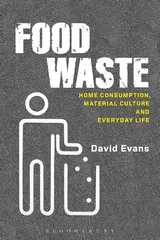
Book: Food Waste - Home Consumption, Material Culture and Everyday Life
In recent years, food waste has risen to the top of the political and public agenda, yet until now there has been no scholarly analysis applied to the topic as a complement and counter-balance to campaigning and activist approaches.
Read
Image
Resource
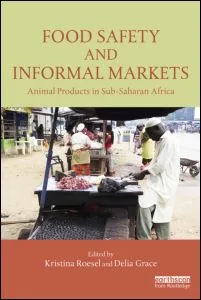
Food Safety and Informal Markets - Animal Products in Sub-Saharan Africa
Animal products are vital components of the diets and livelihoods of people across sub-Saharan Africa. They are frequently traded in local, unregulated markets and this can pose significant health risks.
Read
Image
Resource
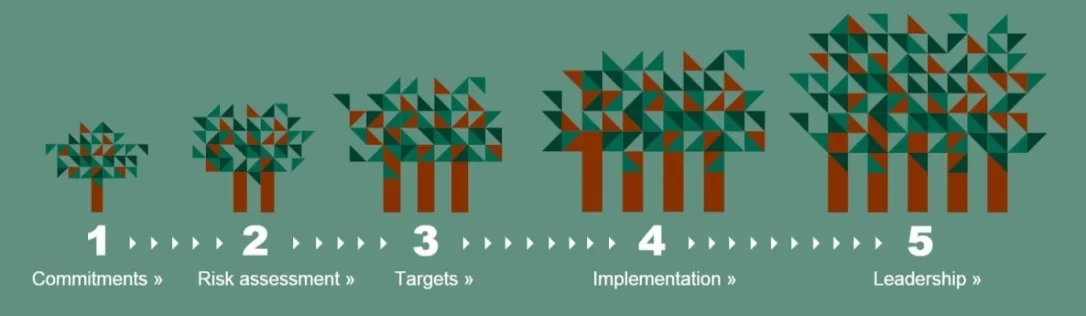
Report by CDP “Deforestation-free supply chains: From commitments to action”
The report Deforestation-free supply chains: From commitments to action, published by CDP, highlights ways in which industry can be part of tackling the deforestation crisis while still securing and maintaining access to their sources of profit.
Read
Image
Resource
Report: The Global Green Economy Index by Dualcitizen
This is the 4th edition of The Green Economy Index™ (GGEI): “Measuring National Performance in the Green Economy”. It is created by Dual Citizen and it measures the performance of 60 countries and 70 cities in the green economy and how experts assess that performance.
Read
Image
Resource
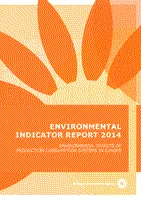
Environmental Indicator Report, 2014 from European Environment Agency (EEA)
To examine what the concept of the green economy means in practice for European countries, and to evaluate their progress in achieving such a transition, in 2012 the European Environment Agency (EEA) initiated a new series of environmental indicator reports. The first two reports in the series focused on green economy and the European environment, addressing resource efficiency and resilience and the links between European resource demand, environmental degradation and changes in human wellbeing.
Read
Image
Resource
Corporate Responsibility Programmes May Create a 'Health Halo'
This study reveals that consumers tend to underestimate calorie counts for companies with positive corporate responsibility programs, and then consume more of the foods produced by them. The study suggests that consumers may infer (often incorrectly), that if the company is engaged in doing ‘good deeds’, their products are healthy. For the research, they split participant groups between two fictional product launches, one company with a positive CSR profile, and the other with neutral CSR, and determined that participants consuming products from the positive CSR profile, ate more. Furthermore, these participants also underestimated the consumed calories for the company with the positive CSR.
Read
Image
Resource
No quick fix for global warming – “Disentangling the effects of CO2 and short-lived climate forcer mitigation”
Though politicians and scientists have disagreed about whether atmospheric warming can be delayed by reducing short-lived climate forcing (SLCF) agents, an international research team has confirmed that a reduction in carbon dioxide emissions is the only long-term solution. Previously, politicians and industry had been pushing for measures to reduce SLCF emissions as a way to buy time before needing to address CO2 emissions directly.
Read
Image
Resource
Nitrogen-neutrality: a step towards a sustainable nitrogen supply
Nitrogen is a necessary element for crop and livestock growth, and protein intake is essential for a balanced human diet. This study examines efforts to improve nitrogen use efficiency (NUE) in agriculture, and reduce unintended losses of nitrogen (N) to the environment. The paper particularly looks at how it is possible to offset reactive nitrogen (Nr) and achieve so called nitrogen-neutrality.
Read
  • VIEW MORE

Sign up for Fodder, our monthly newsletter unpacking the future of food.

Tick below to opt-in to email communications.

You can change your mind at any time by clicking the unsubscribe link in the footer of any email you receive from us, or by contacting us at info@tabledebates.org.

We use Mailchimp as our marketing platform. By clicking below to subscribe, you acknowledge that your information will be transferred to Mailchimp for processing. Learn more about Mailchimp's privacy practices.

  • Glossary
  • About
  • Our Writing
  • Podcasts
  • Resources

Social

YouTube Facebook Instagram

© Copyright 2025

A collaboration between: