Close
Login Register
Search
  • About
    • What We Do
    • Who We Are
    • FAQs
  • Our Writing
    • Explainers
    • Essays
    • Letterbox
    • Reports & More
  • Podcasts
  • Our Events
  • Projects
    • Power In The Food Systems
    • Local-Global Scale Project
    • MEAT: The Four Futures Podcast
    • Fuel To Fork
    • Nature
    • Reckoning with Regeneration
    • SHIFT
    • Games at TABLE
    • Rethinking the Global Soy Dilemma
  • Resources
  • Opportunities
    • Jobs
    • Funding
    • Courses
    • Collaborations
    • Events
  • Newsletter
  • TABLE (EN)
Search
Back

TABLE

Image
Resource
Two methods for jointly evaluating environmental impact and nutritional content of diets tested in new study on Swedish diets
This paper presents two ways of including environmental and nutritional aspects in the sustainability assessment of diets. Three diets were assessed using these two methods: a diet issued from the National Food Agency as a recommended diet reflecting food preferences in Sweden (SNÖ), a diet corresponding to current average food consumption in Sweden according to the latest food intake survey (Riksmaten) and a Low Carbohydrate-High Fat (LCHF) diet, which is a popular life-style diet in Sweden currently.
Read
Image
Resource
Transcript of online debate: Climate change, sustainability and animal welfare: What are the solutions?
Sentience Mosaic hosts live online debates where a variety of topics related to animal sentience are discussed. The description of the event was as follows: “Livestock production is responsible for a large proportion of global greenhouse gas emissions. Furthermore, livestock related gas emissions are expected to increase rapidly in coming years if no action is taken. Some propose that further intensification of animal production, in order to increase yield per animal, is the answer to reducing gas emissions. However, many argue that this is unethical and is not a solution.
Read
Image
Resource
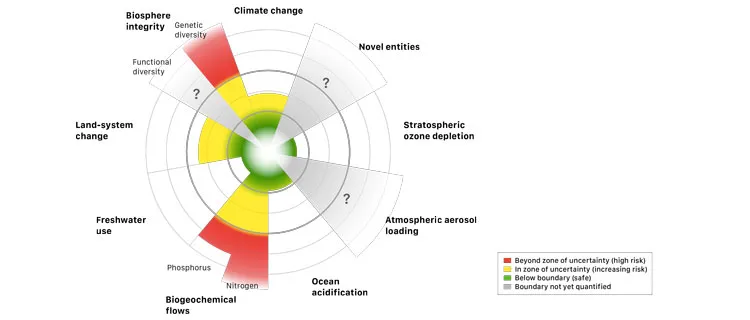
New update to planetary boundaries work - Planetary boundaries: Guiding human development on a changing planet
This updated version further develops the Planetary Boundaries concept, which was first published in 2009.  In their original outline of the concept the authors identified nine key global processes and systems that regulate the stability and resilience of the Earth System – the interactions of land, ocean, atmosphere and life that together provide conditions upon which our societies depend.  They argued that if these natural processes are disrupted beyond a certain ‘boundary’ point, the consequences could be irreversible and lead to abrupt environmental change, making life on earth very hard for humans.
Read
Image
Resource
New study calculates and compares the carbon footprint of food groups based on mass, calorie content and nutrient density
In this study, 483 food items (developed by the Casino Group retailer company) were grouped into 34 categories and then 5 major food groups; meat and meat products, milk and dairy products, processed fruits and vegetables, grains and other foods and sweets. The aggregated average carbon footprints of the categories and major food groups were presented per 100 gram of product, per 100 kcal of product and per two different nutrient density scores including six and 15 nutrients respectively.
Read
Image
Resource
New Food and Feed Life cycle analysis (LCA) database available from PE INTERNATIONAL
In December 2014 the Food and Feed LCA database from PE INTERNATIONAL was released.  It includes over 350 cradle-to-gate and gate-to-gate LCI datasets representing the most commonly used food and feed products in different geographical regions:
Read
Image
Resource
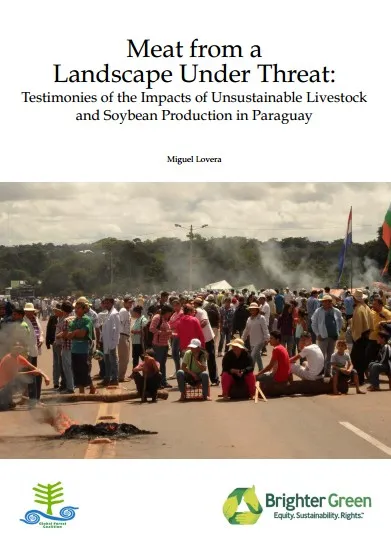
Meat from a Landscape Under Threat: Testimonies of the Impacts of Unsustainable Livestock and Soybean Production in Paraguay
Global Forest Coalition and Brighter Green have just released a new report, “Meat from a Landscape Under Threat: Testimonies of the Impacts of Unsustainable Livestock and Soybean Production in Paraguay.”  
Read
Image
Resource
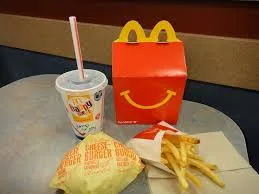
The Guardian Article: Will McDonald's ‘sustainable beef’ burgers really be any better?
McDonalds has announced that it will begin using “verified sustainable beef” in some of its hamburgers by 2016. In this article however, it is questioned “what exactly is so sustainable – or indeed verifiable – about the beef of the future”.
Read
Image
Resource
House of Commons - Environment, Food and Rural Affairs Committee report: Food security - demand, consumption and waste, Sixth Report of Session 2014–15
This report by the Environment, Food and Rural Affairs Committee focuses on food security. The report makes recommendations for managing consumer demand, such as by encouraging the purchase of sustainably sourced products or the most nutritious food in order to help deliver environmental and health goals. It does not argue that there should be any further degree of compulsion on individuals.
Read
Image
Resource
Farming overtakes deforestation and land use as a driver of climate change
This new study finds that GHG emissions from growing crops and raising livestock are now higher than from deforestation and land use change. It combines three global datasets of greenhouse gas emissions for the 'Agriculture, Forestry and Other Land Uses' (AFOLU) sector. It includes emissions from different sectors and human activities such as deforestation, clearing and burning biomass, and from raising and feeding livestock.
Read
  • VIEW MORE

Sign up for Fodder, our monthly newsletter unpacking the future of food.

Tick below to opt-in to email communications.

You can change your mind at any time by clicking the unsubscribe link in the footer of any email you receive from us, or by contacting us at info@tabledebates.org.

We use Mailchimp as our marketing platform. By clicking below to subscribe, you acknowledge that your information will be transferred to Mailchimp for processing. Learn more about Mailchimp's privacy practices.
  • Glossary
  • About
  • Our Writing
  • Podcasts
  • Resources

Social

YouTube Facebook Instagram

© Copyright 2025

A collaboration between: