Close
Login Register
Search
  • About
    • What We Do
    • Who We Are
    • FAQs
  • Our Writing
    • Explainers
    • Essays
    • Letterbox
    • Reports & More
  • Podcasts
  • Our Events
  • Projects
    • Power In The Food Systems
    • Local-Global Scale Project
    • MEAT: The Four Futures Podcast
    • Fuel To Fork
    • Nature
    • Reckoning with Regeneration
    • SHIFT
    • Games at TABLE
    • Rethinking the Global Soy Dilemma
  • Resources
  • Opportunities
    • Jobs
    • Funding
    • Courses
    • Collaborations
    • Events
  • Newsletter
  • TABLE (EN)
Search
Back

TABLE

Image
Resource
From individual to collective action: exploring the business cases for addressing sustainable food security - new WWF-UK and Food Ethics Council report
In this report WWF-UK and Food Ethics Council outline business interpretations of food security, assess the different business cases for food security and puts forward suggestions for action. The report finds that businesses want government intervention to avoid long term risk and they are in favour of bold actions to create a food system that serves citizens, the economy and planet alike. Businesses emphasise that the government needs to do more to provide a level playing field for businesses, including allowing them to collaborate more effectively.
Read
Image
Resource
Launch of the second Global nutrition report by IFPRI
This second annual nutrition report by IFPRI is a comprehensive summary and scorecard on both global and country level progress on all forms of nutrition. It covers nutrition status and program coverage—as well as underlying determinants such as food security; water, sanitation, and hygiene; resource allocations; and institutional and policy changes—globally (for 193 countries).  The 2015 edition highlights the critical relationship between climate change and nutrition and the pivotal role business can play.
Read
Image
Resource
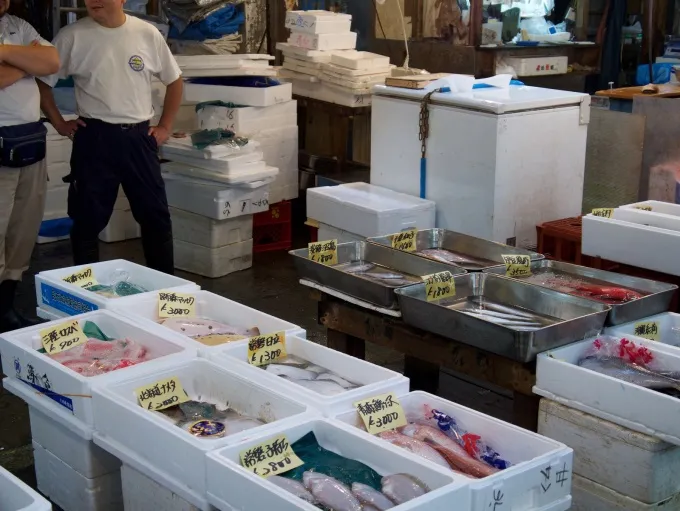
World-wide overfishing will not be solved by aquaculture expansion alone – tackling economic driving forces key
This paper finds that increasing global demand for fish (due to increasing incomes and worldwide population growth) and developments in fishing methods together threaten to further increase pressure on the most popular fish types. It considers improvements in two areas that may decrease this pressure; increasing the production of farmed fish (aquaculture) and improving the effectiveness of fisheries management. The authors assess how various scenarios of change would affect future wild stock status and simulate the stock development until the year 2048. Through different scenarios they outline ways that the fishery and aquaculture sectors might develop in the coming decades for four popular types of edible fish that are the most important for the world market;  sea bass, salmon, cod and tuna.
Read
Image
Resource
Resolving Conflicts between Agriculture and the Natural Environment –financial incentives and land sparing versus land sharing
New research from Cambridge University finds that providing farmers and farmer industries with financial incentives to mitigate agriculture’s impact on the environment positively effects greenhouse gas reduction and increased biodiversity at the aggregate level. The study analysed investment in two key types of agri-environment schemes: measures to spare land for conservation, and measures (such as taxation) intended to limit fertiliser use. The research team plotted this against national trends for farmland bird populations and emissions from synthetic fertiliser across the US, Canada, Australia and Europe.
Read
Image
Resource
Lean, green, mean, obscene…? What is efficiency? And is it sustainable?
We all know that the food system today is undermining the environment upon which future food production depends. But while we generally agree that we need do something to make food systems more sustainable, we do not necessarily agree about what, exactly, should be done. This paper explores these questions by considering how stakeholders think about efficiency in relation to animal production and consumption, both terrestrial and aquatic. It takes as its starting point three broadly discernible views. 
Read
Image
Resource
50 expert presentations on climate –smart agriculture published by FAO
Over 50 expert presentations have been given on different aspects of climate change and agriculture in the MICCA Programme webinars during the past 3 years. Examples include recent webinars on conservation agriculture and climate-smart & gender-sensitive aquaculture.
Read
Image
Resource
Summary of Bonn Climate Talks
Read
Image
Resource
Product Sustainability Information: State of Play and Way Forward – report by UNEP’s Life Cycle Initiative
Unsustainable patterns of consumption and production threaten global development and environmental well-being. Ensuring sustainable consumption and production should take a life cycle approach, and central to this is the development of product sustainability information (PSI). This publication provides four key recommendations in order to advance a coherent and context-relevant use of PSI that is useful for consumer decision-making:
Read
Image
Resource
The forgotten 10%: Climate mitigation in agricultural supply chains
A new analysis by global non-profit CDP, formerly the Carbon Disclosure Project, looks at how some of the most recognizable household brands are managing climate change. Their report argues that many of the world’s biggest food, beverage and tobacco brands are missing their biggest opportunity to mitigate climate risks.
Read
  • VIEW MORE

Sign up for Fodder, our monthly newsletter unpacking the future of food.

Tick below to opt-in to email communications.

You can change your mind at any time by clicking the unsubscribe link in the footer of any email you receive from us, or by contacting us at info@tabledebates.org.

We use Mailchimp as our marketing platform. By clicking below to subscribe, you acknowledge that your information will be transferred to Mailchimp for processing. Learn more about Mailchimp's privacy practices.
  • Glossary
  • About
  • Our Writing
  • Podcasts
  • Resources

Social

YouTube Facebook Instagram

© Copyright 2025

A collaboration between: