Close
Login Register
Search
  • About
    • What We Do
    • Who We Are
    • FAQs
  • Our Writing
    • Explainers
    • Essays
    • Letterbox
    • Reports & More
  • Podcasts
  • Our Events
  • Projects
    • Power In The Food Systems
    • Local-Global Scale Project
    • MEAT: The Four Futures Podcast
    • Fuel To Fork
    • Nature
    • Reckoning with Regeneration
    • SHIFT
    • Games at TABLE
    • Rethinking the Global Soy Dilemma
  • Resources
  • Opportunities
    • Jobs
    • Funding
    • Courses
    • Collaborations
    • Events
  • Newsletter
  • TABLE (EN)
Search
Back

TABLE

Image
Resource
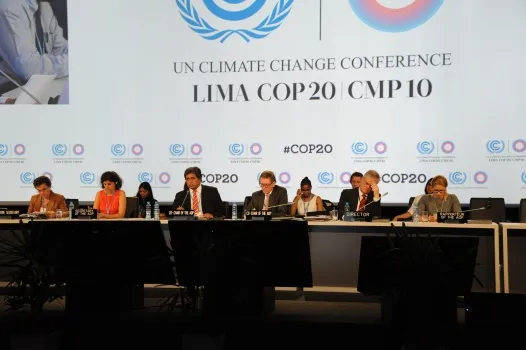
Emissions pledges ahead of UN climate summit are not ambitious enough to avoid dangerous climate change according to new policy paper
Tracking intended nationally determined contributions (INDCs):  what are the implications for greenhouse gas emissions in 2030? is the title of a policy paper produced by the Grantham Research Institute on Climate Change and the Environment and the ESRC Centre for Climate Change Economics and Policy at London School of Economics and Political Science.  Parties to the UNFCCC agreed to set out their Intended Nationally Determined Contributions (INDCs) at the 20th Conference of the Parties (COP20) in Lima, Peru, in December 2014. The policy paper, which is intended to inform decision-makers in the public, private and third sectors, considers whether the INDCs submitted so far are consistent with the 2°C limit.
Read
Image
Resource
Meat and dairy production largest contributor to the expansion of global agricultural land
A new paper published in Global Environmental Change analyses 50 years of data from FAO (from 1961 to 2011) to try to understand the drivers for global agricultural land use change. Pasture forms the largest component of agricultural land globally, but previous research on agricultural land use has focused disproportionately on the role of arable crops. 
Read
Image
Resource
Nature commentary: Energy policy- Push renewables to spur carbon pricing
In this comment piece in Nature, a group of researchers argue that putting a price on carbon dioxide and other greenhouse gases to curb emissions must form the centrepiece of any comprehensive climate-change policy. They point out that the current price of carbon remains much too low relative to the hidden environmental, health and societal costs of burning a tonne of coal or a barrel of oil. The global average price is below zero, once half a trillion dollars of fossil-fuel subsidies are factored in.
Read
Image
Resource
The importance of mixed crop & livestock farming systems in sub-Saharan Africa
This article in Nature Climate Change argues that the global climate and agriculture research community needs to put increased emphasis on mixed crop-livestock farm systems and their interplay with climate adaptation and mitigation. Written by authors from CGIAR Research Program on Climate Change, Agriculture and Food Security (CCAFS) and the International Livestock Research Institute (ILRI), the piece outlines mixed farming systems' value to national development, climate adaptation and resilience building, farmers’ livelihoods and the globe’s food demand.
Read
Image
Resource
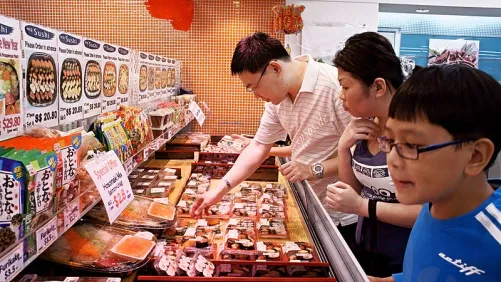
New paper into feral meat eating in Australia
The demand for meat is expected to double by 2050. Projections indicate that expanding the livestock industry to meet this demand would exceed biophysical limitations, dangerously exacerbating climate change and biodiversity loss. This paper uses an anthropological approach to explore an alternative meat source that not only avoids livestock’s pitfalls, but targets introduced pest species that have a history of profound destruction within Australian ecosystems.
Read
Image
Resource
Global Farm Registry - a global identification registration service for farms to report on sustainability
This report highlights the development and roll-out of a new Global Farm Registry, which will provide a framework to support the global identification, traceability and sustainability performance of farms and producers around the world. It will allow individual producers to voluntarily share their sustainability standards certification status and other production information, to determine their compliance status against other sustainability standards (international, national and retailer, Hospitality and Food Service and brand-owner-specific standards) and to increase their access to new customer and markets.
Read
Image
Resource
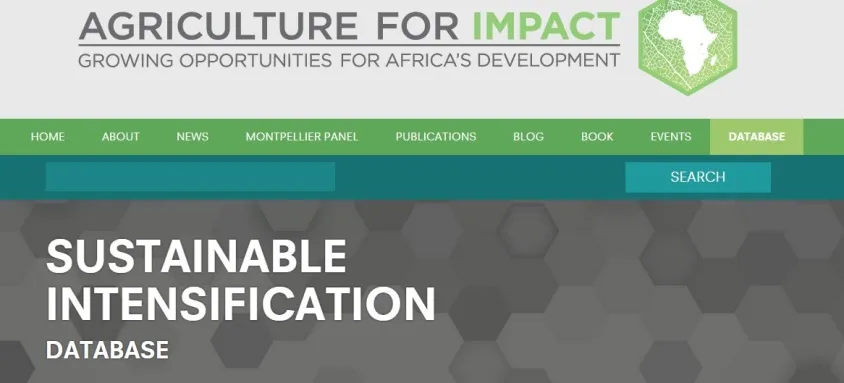
Online database on Sustainable Intensification in African agriculture.
Agriculture for Impact has just released an online database on Sustainable Intensification  in African agriculture. The database explores innovations and practices from the fields of ecology, genetics and socio-economics to build environmentally sustainable, equitable, productive and resilient ecosystems that improve the well-being of farms, farmers and families.
Read
Image
Resource
Major survey shows Britons overestimate the bad behaviour of other people
This report by Ipsos MORI and the British Behavioural Insights Team (who work on behavioural change and nudge-type policies) looks at how our behaviour is largely influenced by what we think others are doing.  The international study based on research from 6 countries (UK, USA, Canada, Australia, France and Germany) shows that people in the UK often overestimate the bad behaviours of other people. It says that British people often think more people are avoiding tax than is really the case, and that they think that more people eat more than the recommended daily amount of sugar than really do.
Read
Image
Resource
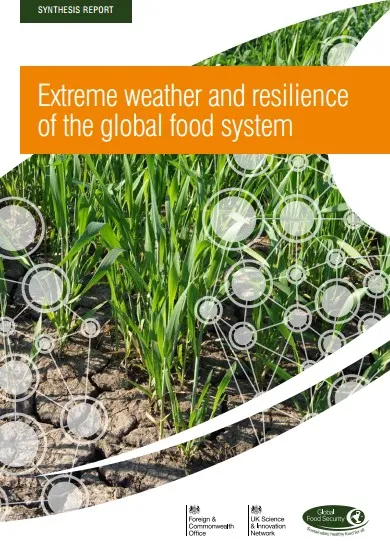
Food production shocks will happen more often because of extreme weather, Final report from UK-US Taskforce on Extreme Weather and Global Food System Resilience.
This report is the result of the work of a Taskforce of academics, industry and policy experts commissioned to examine the resilience of the global food system to extreme weather. The summary report is built on three detailed reports: Climate and global production shocks (Annex A); Review of the responses to production shocks (Annex B) and the Country-level impacts of global grain production shocks (Annex C). The report concludes that the global food system is vulnerable to production shocks caused by extreme weather, and that this risk is growing. It suggests that climate change and a growing population will increase the likelihood of food "shocks" - where the production of staple crops such as rice, wheat and soybean fall by 5-7%, arguing that it will triple in likelihood in just 25 years. The preliminary analysis of limited existing data suggests that the risk of a 1-in-100 year production shock is likely to increase to 1-in-30 or more by 2040.
Read
  • VIEW MORE

Sign up for Fodder, our monthly newsletter unpacking the future of food.

Tick below to opt-in to email communications.

You can change your mind at any time by clicking the unsubscribe link in the footer of any email you receive from us, or by contacting us at info@tabledebates.org.

We use Mailchimp as our marketing platform. By clicking below to subscribe, you acknowledge that your information will be transferred to Mailchimp for processing. Learn more about Mailchimp's privacy practices.
  • Glossary
  • About
  • Our Writing
  • Podcasts
  • Resources

Social

YouTube Facebook Instagram

© Copyright 2025

A collaboration between: