Close
Login Register
Search
  • About
    • What We Do
    • Who We Are
    • FAQs
  • Our Writing
    • Explainers
    • Essays
    • Letterbox
    • Reports & More
  • Podcasts
  • Our Events
  • Projects
    • Power In The Food Systems
    • Local-Global Scale Project
    • MEAT: The Four Futures Podcast
    • Fuel To Fork
    • Nature
    • Reckoning with Regeneration
    • SHIFT
    • Games at TABLE
    • Rethinking the Global Soy Dilemma
  • Resources
  • Opportunities
    • Jobs
    • Funding
    • Courses
    • Collaborations
    • Events
  • Newsletter
  • TABLE (EN)
Search
Back

TABLE

Image
Precision Fermentation Alliance
News and resources
Precision Fermentation Alliance founded
Nine members of the precision fermentation industry have announced the founding of a new trade organisation, the Precision Fermentation Alliance, to promote precision fermentation as a contributor to a resilient, sustainable food system. The technology, which reprogrammes microbes to make particular molecules, is well-established for making vaccines and enzymes such as rennet. It has recently been applied in the food sector, for example the dairy-identical whey protein made by Perfect Day (one of the founding partners) is already used in some products available in the United States, including ice cream and cream cheese.
Read
Image
Cycle to Farms
News and resources
Cycle to Farms documents regenerative agriculture
As part of the Cycle to Farms project, political scientist Aisha Hassan and agribusiness professional Lukas Paltanavičius are cycling 7,000 km from farm to farm in the EU, the Middle East, and Africa. Their aim is to document regenerative agriculture practices and share their findings with policymakers. They are in the process of making a documentary.
Read
Image
The Landscapes of Italian Food: Local Development and Healthy Practice
Books
The Landscapes of Italian Food
This book explores contemporary food systems in Italy, covering landscapes, local practices and cultural history. It examines alternative supply chains, such as food cooperatives and community gardens, as well as the responses of large retailers to the environmental concerns of their customers.
Read
Image
Our Future Proteins: A Diversity of Perspectives
Books
Our Future Proteins: A Diversity of Perspectives
Former TABLE intern Wendy Jenkins has recently contributed to an open-access book looking at the many visions on the protein transition, in which over 100 experts present their views on the transition to sustainable protein production and consumption. Their visions cover a wide range of transition directions, from radically rethinking protein production systems to levers of change in shifting protein consumption.
Read
Image
Sourcing Better Checked Out
Reports
Assessing “less and better” sourcing in UK supermarkets
This report from Eating Better assesses the meat and dairy sourcing policies of 10 supermarkets in the UK against the “Sourcing Better” framework. It finds that progress is uneven across different impact categories, and that there are no commitments to raise fewer animals or reduce the amount of meat and dairy sold. Broadly, the report finds that retailers are more active in aiming for responsible antibiotic use, good animal welfare and no deforestation, and less active in areas including local pollution, water use, soil health and using less land for feed.
Read
Image
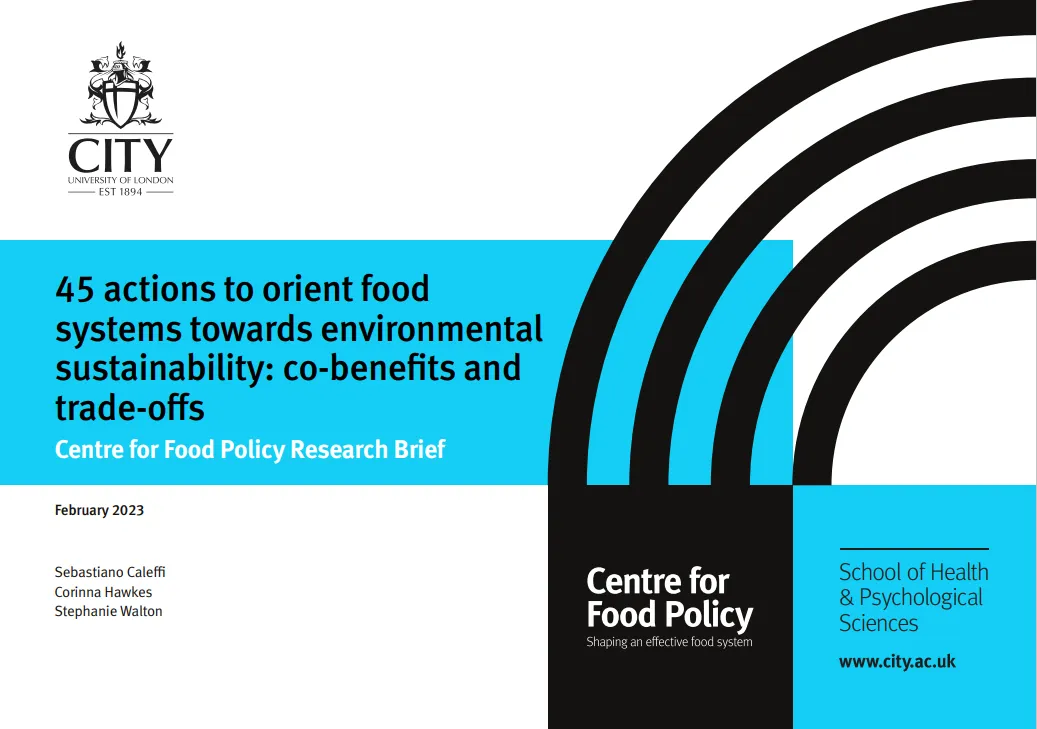
45 actions to orient food systems towards environmental sustainability: co-benefits and trade-offs
Reports
45 actions for environmental sustainability in food systems
This Research Brief from the Centre for Food Policy, aimed primarily at policymakers, lists 45 actions that have a direct pathway to impact across five environmental sustainability dimensions (greenhouse gas emissions, chemical pollution, freshwater resources, biodiversity and soil health). It groups the actions into five domains: land use in agriculture; the environmental impacts of agriculture; wild fishery and aquaculture sustainability; food loss and waste; and dietary change.
Read
Image
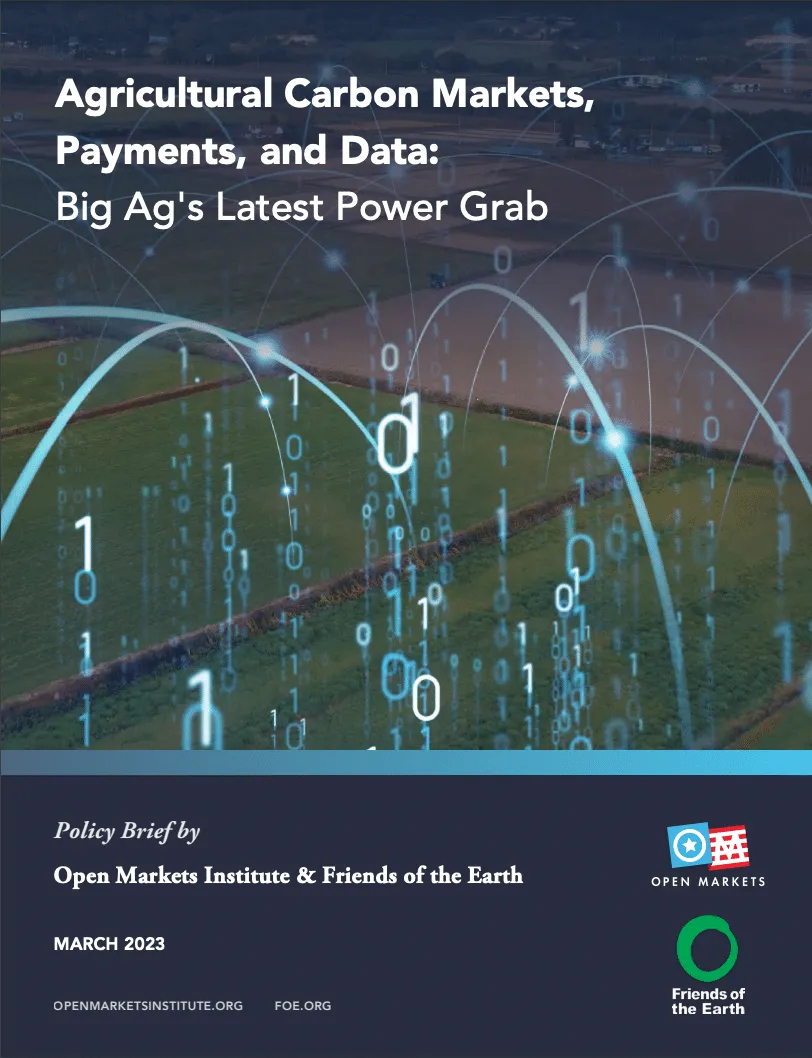
Agricultural Carbon Markets, Payments, and Data: Big Ag’s Latest Power Grab
Reports
Agricultural carbon markets in the US
This report by Friends of the Earth United States and the Open Markets Institute criticises US policies aimed at creating agricultural carbon markets where farmers can be paid for carbon sequestration. It argues that the scheme is unlikely to generate genuine emissions reductions because there is no cap on the emissions allowed, unlike in cap-and-trade schemes, and because the science around soil carbon sequestration is not yet fully settled. Furthermore, it notes that in some cases, farmers are paid by large companies to adopt farming practices that rely on data platforms or proprietary technology owned by those companies, potentially entrenching both their market power and “chemical-dependent” farming methods.
Read
Image
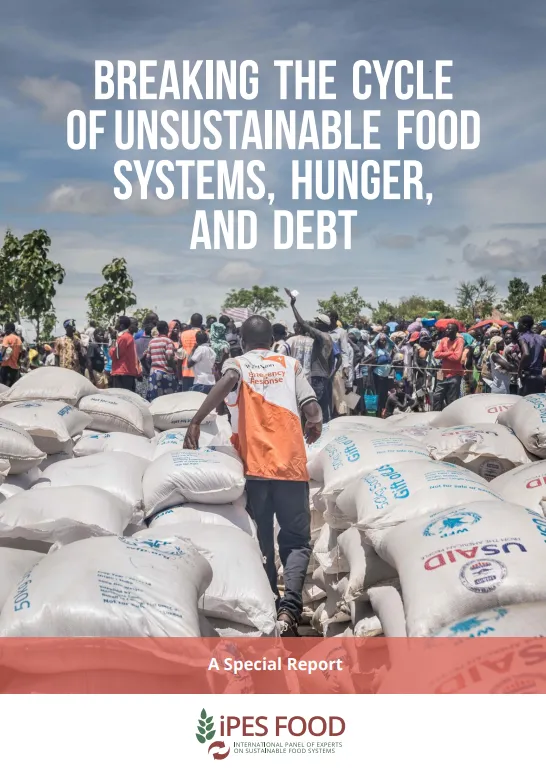
Breaking the Cycle of Unsustainable Food Systems, Hunger and Debt: A Special Report
Reports
Special report on the debt and food crisis
This report from IPES-Food finds that 60% of low-income countries and 30% of middle-income countries are in or are at risk of debt distress, with 21 countries facing both debt distress and food insecurity. The report identifies four ways in which food systems are contributing to pressure on public finances: dependencies on imports and the dollar; extractive financial flows; boom-bust commodity cycles; and climate change. It calls for policymakers to provide debt relief as well as support for food system reform.
Read
Image
Cooked tempeh on a dish surrounded by chillies and slices of lime. Image credits: dyahahsina, Pixabay, Pixabay Licence.
Journal articles
Microbial foods for improving human and planetary health
This paper reviews the potential contribution of microbial foods to a healthy, resilient and sustainable food system. It covers three main categories: traditional fermented foods such as wine, yoghurt and kimchi; microbial biomass, where the microbes themselves are directly consumed, for example the mycoprotein used in Quorn products; and “cell factories”, otherwise known as precision fermentation, where microbes are genetically modified to produce certain molecules.
Read
  • VIEW MORE

Sign up for Fodder, our monthly newsletter unpacking the future of food.

Tick below to opt-in to email communications.

You can change your mind at any time by clicking the unsubscribe link in the footer of any email you receive from us, or by contacting us at info@tabledebates.org.

We use Mailchimp as our marketing platform. By clicking below to subscribe, you acknowledge that your information will be transferred to Mailchimp for processing. Learn more about Mailchimp's privacy practices.
  • Glossary
  • About
  • Our Writing
  • Podcasts
  • Resources

Social

YouTube Facebook Instagram

© Copyright 2025

A collaboration between: