Close
Login Register
Search
  • About
    • What We Do
    • Who We Are
    • FAQs
  • Our Writing
    • Explainers
    • Essays
    • Letterbox
    • Reports & More
  • Podcasts
  • Our Events
  • Projects
    • Power In The Food Systems
    • Local-Global Scale Project
    • MEAT: The Four Futures Podcast
    • Fuel To Fork
    • Nature
    • Reckoning with Regeneration
    • SHIFT
    • Games at TABLE
    • Rethinking the Global Soy Dilemma
  • Resources
  • Opportunities
    • Jobs
    • Funding
    • Courses
    • Collaborations
    • Events
  • Newsletter
  • TABLE (EN)
Search
Back

TABLE

Image
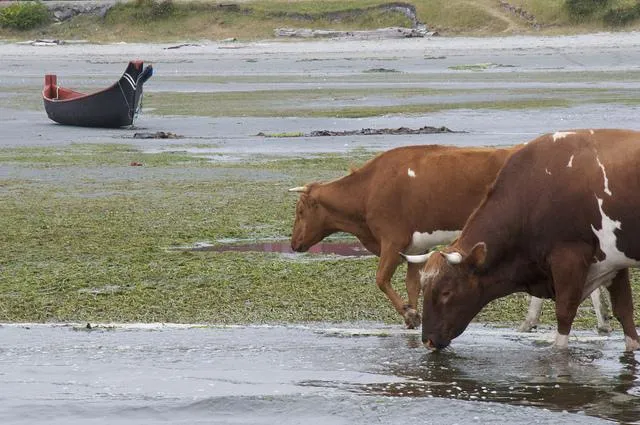
Photo credit: Sam Beebe, Cows n Canoe, Flickr, Creative Commons licence 2.0
Resource
Feeding cows seaweed could slash global greenhouse gas emissions, researchers say
A chance discovery was made in Canada 11 years ago, when it was observed that cattle in a paddock near the sea are more productive. This led to research showing that feeding cows seaweed not only helped improve their health and growth, but also reduced their enteric methane emissions by about 20%.
Read
Image
Photo credit: SarahTz, Flickr, Creative Commons License 2.0
Resource
Transforming Gender and Food Security in the Global South
Drawing on studies from Africa, Asia and South America, this book provides empirical evidence and conceptual explorations of the gendered dimensions of food security. It investigates how food security and gender inequity are conceptualized within interventions, assesses the impacts and outcomes of gender-responsive programs on food security and gender equity and addresses diverse approaches to gender research and practice that range from descriptive and analytical to strategic and transformative. 
Read
Image
Photo credit: ItzaFineDay, Flickr, Creative Commons License 2.0
Resource
Shifting food consumption to mitigate climate change is critical to fulfilling the Paris Agreement, but how?
Researchers at CGIAR/CCAFS have written a report about different demand side measures aimed at changing food consumption so as to reduce GHG emissions. In particular, they placed their analysis in the context of the Paris climate agreement which aims to limit the increase of global temperatures due to anthropogenic climate change to below 2ºC.
Read
Image
Photo credit: Gregor Sieböck, Flickr, Creative Commons License
Resource
Questioning the Ecological Footprint
Opponents in an academic discussion on the relevance and the validity of the ‘Ecological Footprint approach’ have come together to write an article in which they challenge each other’s views. 
Read
Image
Photo credit: Stacey, Hurricane Francis, Flickr, Creative Commons licence 2.0
Resource
Governments agree IPCC special report to scrutinise ‘feasibility’ of 1.5C climate goal
Governments meeting in Bangkok have given a green light to the production of a new IPCC special report to assess the feasibility of achieving a 1.5˚C goal. The report is due to be completed on in 2018 and will also look at the likely impacts of a 1.5˚C temperature rise.
Read
Image
Photo credit: Port of San Diego, Port of San Diego's Top Green Chef Cook-off, Flickr, Creative Commons licence 2.0
Resource
Blog: Let’s eat out more! Re-configuring a feminist vision for a sustainable future
In this blog Jessica Paddock and Alan Warde outline a feminist vision of how we might change our eating habits in order to meet our food climate mitigation requirements. 
Read
Image
Photo credit: Scion_cho, Junked, Flickr, Creative Commons licence 2.0
Resource
Junking tropical forests for junk food?
A key ingredient in junk food is vegetable oil. 60% of this oil is from oil palm and soybean, production of which has been expanding in Southeast Asia and South America, resulting in widespread deforestation and biodiversity loss. In this article, the authors calculate the amount of current deforestation due to vegetable oil consumption (through junk food) and extrapolate vegetable oil demand to predict the deforestation future consumption patterns would cause by 2050.
Read
Image
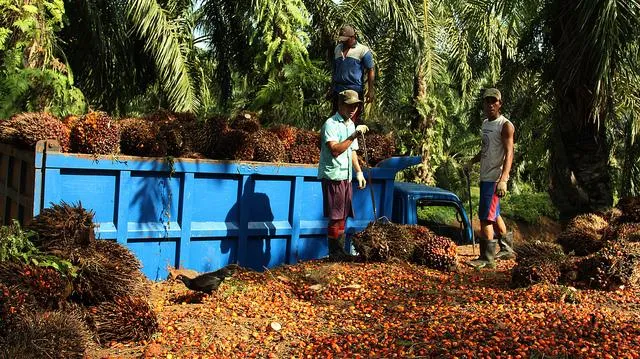
Photo credit: James Anderson, photo-oil-palm-fruit-original, Flickr, Creative Commons licence 2.0
Resource
Tropical smallholders prioritise economic profitability over ecological functioning
The largest share of agricultural land in tropical landscapes is managed, not as large-scale industrial plantations, but by smallholders. This Nature Communications article integrates the interdisciplinary research of more than 20 research groups, and seeks to address gaps in our understanding of the ecological impacts of this smallholder-managed agricultural land. The study uses a multifaceted approach to investigating the crop choices that farmers make and how these choices impact on ecological and economic outcomes.
Read
Image
Photo: Susan Lucas Hoffman, Greek Salad, Flickr, creative commons licence 2.0)
Resource
A Systematic Review of the Measurement of Sustainable Diets
At a time when interest in the sustainability of food is increasing, the need for well-defined, interdisciplinary metrics of the sustainability of diets is evident. In this study, a group of researchers from Michigan performed a systematic literature review of empirical research studies on sustainable diets to identify the components of sustainability that were measured and the methods applied to do so.
Read
  • VIEW MORE

Sign up for Fodder, our monthly newsletter unpacking the future of food.

Tick below to opt-in to email communications.

You can change your mind at any time by clicking the unsubscribe link in the footer of any email you receive from us, or by contacting us at info@tabledebates.org.

We use Mailchimp as our marketing platform. By clicking below to subscribe, you acknowledge that your information will be transferred to Mailchimp for processing. Learn more about Mailchimp's privacy practices.
  • Glossary
  • About
  • Our Writing
  • Podcasts
  • Resources

Social

YouTube Facebook Instagram

© Copyright 2025

A collaboration between: