Close
Login Register
Search
  • About
    • What We Do
    • Who We Are
    • FAQs
  • Our Writing
    • Explainers
    • Essays
    • Letterbox
    • Reports & More
  • Podcasts
  • Our Events
  • Projects
    • Power In The Food Systems
    • Local-Global Scale Project
    • MEAT: The Four Futures Podcast
    • Fuel To Fork
    • Nature
    • Reckoning with Regeneration
    • SHIFT
    • Games at TABLE
    • Rethinking the Global Soy Dilemma
  • Resources
  • Opportunities
    • Jobs
    • Funding
    • Courses
    • Collaborations
    • Events
  • Newsletter
  • TABLE (EN)
Search
Back

TABLE

Resource
FCRN members write on food security, food systems, and environmental change
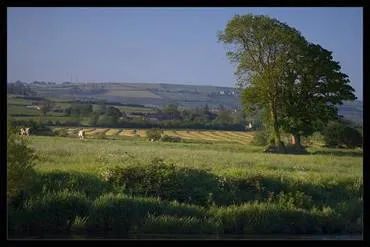
This new article published in Solutions, whose authorship includes several FCRN members, briefly outlines current food system issues. The work is based on discussions in the session ‘Sustainable nutrient management in the Anthropocene’ at the IARU Sustainability Science Congress 2014.
Read
Image
Neil Tackaberry, Spring: North Kerry, Flickr, Creative Commons License Attribution-NoDerivs 2.0 Generic
Resource
Changing agriculture and environment conversation
In this Nature Comment article, Elena Bennett of the McGill School of Environment and the Department of Natural Resource Sciences, Québec, argues against the underlying premise of the ‘land-sparing’ vs ‘land-sharing’ debate that has dominated the agriculture-environment discourse for decades, and advocates a new and more holistic approach that focuses on maximising human well-being.
Read
Image
Photo credit: Policy exchange, Flickr, Creative Commons License 2.0
Resource
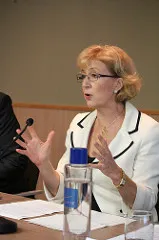
Britain’s new environment secretary Andrea Leadsom promises major removal of regulation for farmers following Brexit
As Britain is preparing for the task of disentangling its laws from those of the European Union, a first light has been shown on potential future agricultural policies after Brexit. Andrea Leadsom, the new Conservative environment secretary, has stated that many EU laws and regulation in this area will be scrapped, allowing for a ‘Year Zero’ approach to regulation of the agricultural sector after Brexit.
Read
Image
Resource
Video of debate on the role of livestock at the Sustainable Food Trust
The FCRN’s Tara Garnett gave a short presentation at an event held in November by the Sustainable Food Trust. The question posed was ‘Do livestock hold the key to a healthy planet and population?’ 
Read
Image
Resource
Short BBC radio programme: Can we eat our way out of climate change?
Tara Garnett (FCRN) and Sue Dibb (Eating Better) spoke on BBC World Service’s Inquiry programme about food consumption in relation to climate change.
Read
Image
Resource
Report by the Global Forest Coalition on the impact of beef production
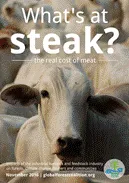
This report, entitled ‘What’s at Steak? The Real Cost of Meat’ published by the Global Forest Coalition in December 2016, emphasises the negative impact of industrial livestock production on forests, using five detailed case studies, in Bolivia, Brazil, India, Paraguay, and Russia. In South America, for example, the report states that 71% of deforestation in the region has been driven by demand for livestock products.
Read
Image
Resource
Index aiming to reflect both climate impact and nutritional impact of food products
This paper by FCRN member Corné van Dooren and colleagues reports that higher greenhouse gas emissions tend to be generated in the production of energy dense foods and lower in nutrient dense foods, and that emissions show significant correlations with 15 nutrients, including saturated fat, animal protein and sodium. Using these finding, the authors propose a ‘Sustainable Nutrient Rich Foods’ (SNRF) index, which summarises both climate and nutritional impacts of individual foods.
Read
Image
Resource
Consideration of the potential for micronutrient fertilisers to fight hidden hunger in sub-Saharan Africa
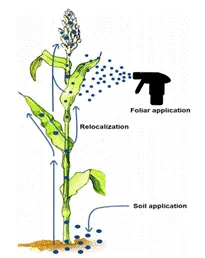
In this evidence review, co-written by FCRN member Ken Giller, the authors assess the extent to which agronomic fortification, the application of micronutrient fertiliser to crops, can improve the nutritional quality of diets in sub-Saharan Africa. They find that, while the technique has been shown to be effective in increasing the nutritional content and yield of crops, more research is required to establish the degree to which it can alleviate micronutrient deficiencies in humans.
Read
Image
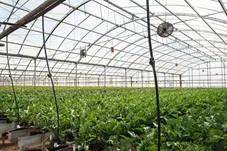
Image credit: USDA, Kitayama Brothers, Inc. (KBI) hydroponic greenhouses, Flickr, Creative Commons licence 2.0
Resource
High yields realised by a pilot bubble-insulated ‘Food to Waste to Food’ growing system, while also cutting energy demand by 80%
This paper describes the operation of a bubble-insulated greenhouse system that recycles organic waste, through its anaerobic conversion into biogas and digestate, into inputs for new food. It reports that commercial crop yields were repeatedly matched and bettered, while an 80% reduction in heat energy demand and 95% reduction in CO2eq emissions was realised compared to conventional greenhouse production.
Read
  • VIEW MORE

Sign up for Fodder, our monthly newsletter unpacking the future of food.

Tick below to opt-in to email communications.

You can change your mind at any time by clicking the unsubscribe link in the footer of any email you receive from us, or by contacting us at info@tabledebates.org.

We use Mailchimp as our marketing platform. By clicking below to subscribe, you acknowledge that your information will be transferred to Mailchimp for processing. Learn more about Mailchimp's privacy practices.
  • Glossary
  • About
  • Our Writing
  • Podcasts
  • Resources

Social

YouTube Facebook Instagram

© Copyright 2025

A collaboration between: