Close
Login Register
Search
  • About
    • What We Do
    • Who We Are
    • FAQs
  • Our Writing
    • Explainers
    • Essays
    • Letterbox
    • Reports & More
  • Podcasts
  • Our Events
  • Projects
    • Power In The Food Systems
    • Local-Global Scale Project
    • MEAT: The Four Futures Podcast
    • Fuel To Fork
    • Nature
    • Reckoning with Regeneration
    • SHIFT
    • Games at TABLE
    • Rethinking the Global Soy Dilemma
  • Resources
  • Opportunities
    • Jobs
    • Funding
    • Courses
    • Collaborations
    • Events
  • Newsletter
  • TABLE (EN)
Search
Back

TABLE

Image
Resource
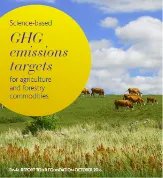
Science-based GHG emissions targets for agriculture and forestry commodities
This report details the methodology used to create a new online tool which can help companies set science-based emission targets and incorporate land-use change into their mitigation strategies. It is part of the Science Based Targets initiative run by the Carbon Disclosure Project (CDP) CDP, UN Global Compact, the World Resources Institute (WRI) and World Wildlife Fund (WWF).
Read
Image
Photo credit: Amy West, Flickr, Creative Commons License 2.0
Resource
Modeling Sustainability: Population, Inequality, Consumption, and Bidirectional Coupling of the Earth and Human Systems.
This paper argues that the strength of the linkages between the ‘Human System’ and the Earth system warrants a new paradigm of modeling which incorporates key factors in one system as variables of a model of the other.
Read
Image
Image credit: Hernán García Crespo, ‘Refrescos’, Flickr, Creative commons licence
Resource
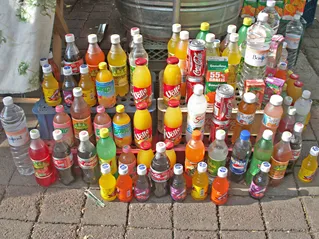
Is trade liberalisation a vector for the spread of sugar-sweetened beverages? A cross-national longitudinal analysis of 44 low- and middle-income countries
Concerns about the links between trade and investment agreements and the spread of sugar-sweetened beverages (SSBs) have seen increasing scholarly attention in the past years. Reviewing 44 low- and middle-income countries over 13 years, this paper aims to provide a generalizable analysis of how trade and investment liberalisation has affected the growth in sales of SSBs, contributing to the evidence base on how international trade impacts health.
Read
Image
Resource
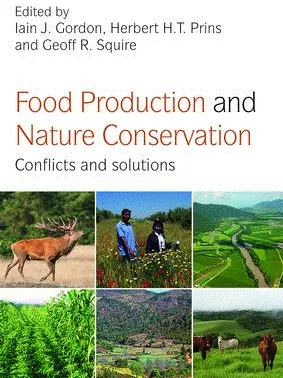
Food Production and Nature Conservation: Conflicts and Solutions
This book considers the main links between global conservation of the environment and food production.
Read
Image
Resource
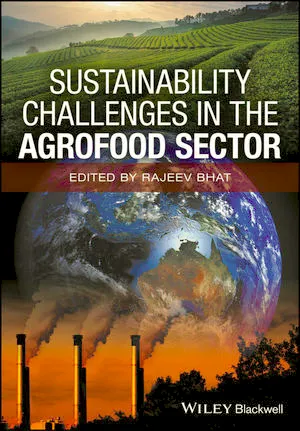
Sustainability Challenges in the Agrofood Sector
This new 712 page book in 28 chapters is edited by Rajeev Bhat. It addresses a very wide range of topics on agriculture, food and sustainability.
Read
Image
Resource
The role of private sector in city region food systems
This 120-page report by the RUAF Foundation aims to provide suggestions for private sector actors in city regions’ food systems based on an extensive study of three cities. It presents knowledge on policy support mechanisms and identifies key lessons learned in the three case studies, which were conducted in Rotterdam, the Netherlands; Quito, Ecuador; and Bristol, UK.
Read
Image
Photo credit: World Trade Organization, Flickr, Creative Commons License 2.0
Resource
Nutrition labelling is a trade policy issue: lessons from an analysis of specific trade concerns at the World Trade Organization
In international trade agreements, restrictions on goods or demands for labelling which differ from country to country can be ‘barriers to trade’, effectively restricting the free movement of goods. Trade organisations which manage such agreements, such as the World Trade Organisation (WTO), have mechanisms in place to ensure that environmental or public health measures are not in fact ‘disguised restrictions on international trade’ which aim to protect national industries. Formal processes exist in the WTO to query public health and environment regulations for their ‘trade restrictiveness’, their necessity and the possibility of using alternatives.
Read
Image
Resource
Launch of crowdfunding campaign to support UK farmers in adopting ‘Carbon Farming’ techniques
The Farm Carbon Cutting Toolkit (FCCT) has launched a crowdfunding campaign to support UK farmers in adopting Carbon Farming techniques. This approach aims to minimise carbon emissions and maximise carbon sequestration on farms, particularly in soils.
Read
Image
Photo credit: Leslie De Blasio, Flickr, Creative Commons License 2.0
Resource
Agronomy and the Sustainability of Crop Production
This chapter by Elias Fereres and Francisco J. Villalobos in the book Principles of Agronomy for Sustainable Agriculture argues that sustainable intensification of production would be best achieved through continuous, small productivity improvements rather than through a few revolutionary discoveries, at least in the medium term.
Read
  • VIEW MORE

Sign up for Fodder, our monthly newsletter unpacking the future of food.

Tick below to opt-in to email communications.

You can change your mind at any time by clicking the unsubscribe link in the footer of any email you receive from us, or by contacting us at info@tabledebates.org.

We use Mailchimp as our marketing platform. By clicking below to subscribe, you acknowledge that your information will be transferred to Mailchimp for processing. Learn more about Mailchimp's privacy practices.
  • Glossary
  • About
  • Our Writing
  • Podcasts
  • Resources

Social

YouTube Facebook Instagram

© Copyright 2025

A collaboration between: