Image Resources Our extensive research library contains thousands of summaries of journal articles, reports and news stories that can be searched by keyword and category RESOURCES CATEGORY Books Briefing paper Event recording Featured articles Featured report Game Journal articles News and resources Reports Think piece Video Working paper Workshop summary Year 2026 2025 2024 2023 2022 2021 2020 2019 2018 2017 2016 2015 2014 2013 2012 2011 2010 2009 2008 2007 2002 2001 Image Reports Evaluating cell grazing versus set stocking This report by Rothamsted Research provides evidence on the impact of grazing management on a range of outcomes as well as on the importance of field scale, long-term research. It seeks to provide more rigorous assessment of livestock grazing practices which are usually reported as having positive economic and environmental outcomes but which often rely on anecdotal reports. It provides detailed data comparisons of the two systems related to system productivity, soil structure and health, environmental impacts, pasture growth and use and animal behaviour and performance, which may be valuable to growers and researchers exploring the impact of different livestock grazing management systems. Read Image Reports What do agroecological farmers think about agritech? This report by A Bigger Conversation as part of its Agroecological Intelligence project explores agroecological farmers’ and growers’ perception of agri-technology. The report finds that farmers and growers are not anti-technology, but they are suspicious of top-down, developer-driven technology. These often fail to consider farmer’s and growers’ interests and do not address wider reforms needed for a more sustainable, fair and resilient food system. The report does find, however, that farmers and growers are enthusiastic about agri-innovations when they have been designed and developed with them, their values and their needs in mind. The report also includes a guide to help practitioners assess agricultural technologies whether they are compatible with the principles and practices of agroecology. It also offers recommendations for how agritech could be better developed, regulated, financed and promoted. Read Image Reports The 2024 Europe report of the Lancet Countdown This report is part of the Lancet Countdown in Europe, which is an on-going effort to assess the health impacts of climate change in Europe to reinvigorate social and political will for urgent climate mitigation and adaptation actions. The initial report, in 2022, tracked 33 indicators across five domains. This report tracks 42 indicators related to the impacts of climate change to human health, the response of European countries and the opportunities to better health and climate action attuned to health issues. It finds that whilst scientific and the corporate sector are increasingly engaging with these issues, the media, the political sector and individuals have low levels of engagement with the interplay between health and climate change in Europe. The report notes that significant political and public support is needed to stimulate further action Read Image Journal articles Accounting for diversity of practices in conservation agriculture This article assesses the diversity of practices being implemented in Walloon, Belgium, which are considered to align with conservation agriculture’s three agronomic pillars (or principles): (i) minimum mechanical soil disturbance, (ii) permanent soil organic cover, and (iii) species diversification (FAO 2023). The authors aimed to determine the diversity of practices in a given area to understand the impacts of these practices and why farmers adopt them. They also sought to guide policy decisions and improve communication within the scientific community and between science and field actors. The authors present a novel classification method to categorise the diversity of CA practices on a regional scale that they present as applicable for comparing and assessing CA in different regions and other agricultural systems such as regenerative farming and organic farming. Read Image Journal articles Multi-method evaluation to understand food system interventions This article uses a mixed methods approach to evaluate food system interventions which aim to raise consumption of nutritious foods. The researchers assess the Marketplace for Nutritious Foods (MNF) project which was implemented by the Global Alliance for Improved Nutrition (GAIN) in Kenya. The project is used as a case study to open up a broader discussion on the impact of complex food system interventions and the methods used to evaluate these interventions. The author's main call is for an expansion of methods used for similar interventions, methods which build from food systems approaches. They also call for exploration of new methodological approaches from outside traditional economic and nutrition studies Read Image Journal articles Demystifying food systems transformation This article examines the scholarly literature in English and Spanish to outline a series of insights related to the development and evolution of the term food system transformation. The authors find a rising use of the term in the literature but note a lack of coherent and consistent definition and an underpinning theoretical framework of change. The authors warn against the possible loss of the term’s meaning as it becomes increasingly popular and used without specific intention. The authors seek to provide insights into the complex and overlapping body of literature and offer a unique definition which attempts to fill gaps identified through the review process. Read Image News and resources World Bank tip-toes into fiery debate over meat emissions There has been much media spotlight on the World Bank’s entry into the meat debate with its new report calling on governments in wealthier countries to shift subsidies from high-emitting red meat and dairy to lower-emitting poultry, vegetables and fruits. POLITICO said the report was bound to make conservatives apoplectic, while Climate Home News analysed why the meat has become a “political hot potato”. TABLE’s explainer, Meat, metrics and mindset, and the podcast Meat: The Four Futures explores the meat debate and why it’s about more than science, it’s about emotions. Read Image Books Young Changemakers This book by Access Agriculture, a non-profit organisation supporting agroecology and organic farming supported by the European Commission and the FAO, details youth engagement in agriculture as a critical area in Africa and India. The book provides an introduction of the importance of young entrepreneurs in agriculture and follows with a substantial number of case studies and stories from young entrepreneurs from many African nations and Indian states. Read Image Books Practising Food Studies This book offers an introduction to food studies, a multidisciplinary field concerned with animal welfare, the impact of climate change on food production, the nutrition of various food items, and fair, equitable and just working conditions for food labourers and workers. The book is a collection of essays from faculty members and graduates of the NYU Food Studies program Read VIEW MORE
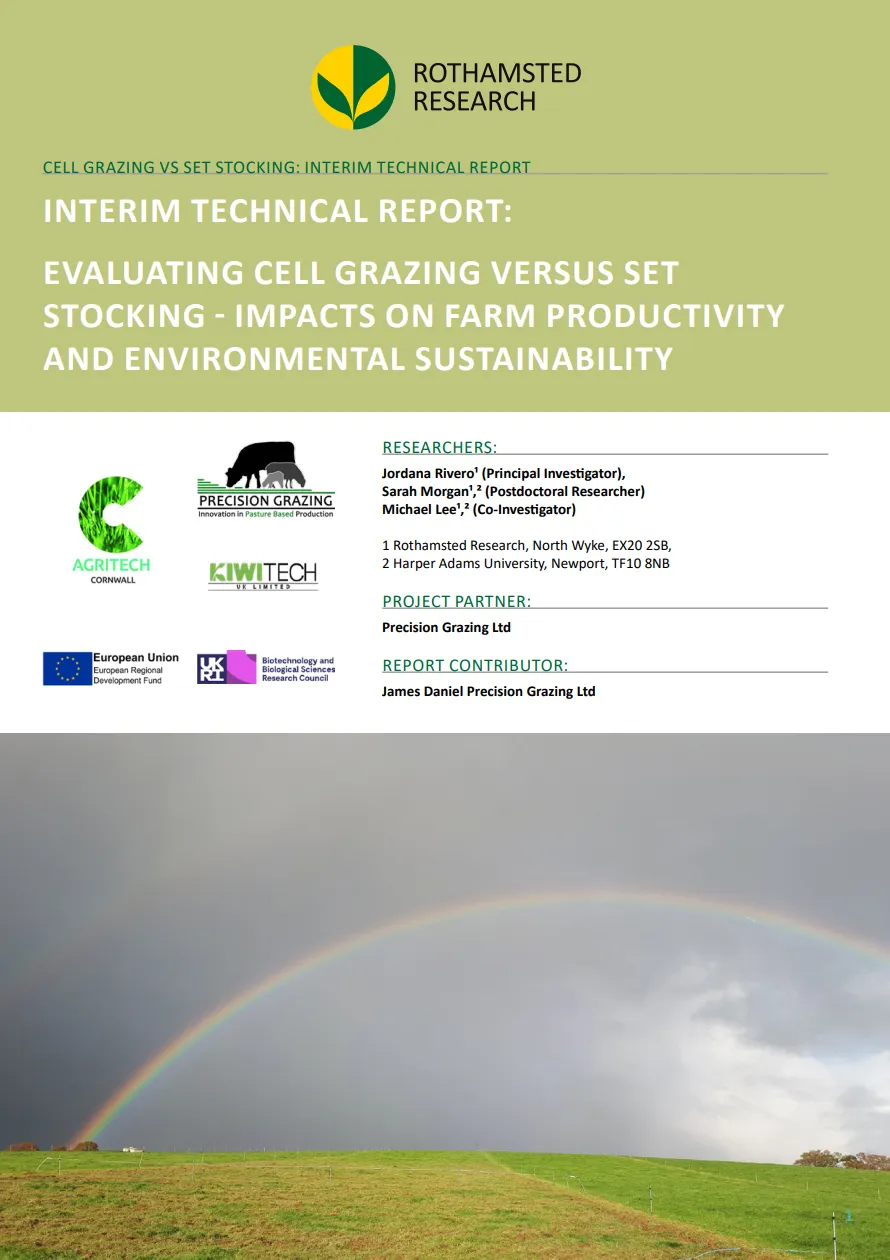
Image Reports Evaluating cell grazing versus set stocking This report by Rothamsted Research provides evidence on the impact of grazing management on a range of outcomes as well as on the importance of field scale, long-term research. It seeks to provide more rigorous assessment of livestock grazing practices which are usually reported as having positive economic and environmental outcomes but which often rely on anecdotal reports. It provides detailed data comparisons of the two systems related to system productivity, soil structure and health, environmental impacts, pasture growth and use and animal behaviour and performance, which may be valuable to growers and researchers exploring the impact of different livestock grazing management systems. Read
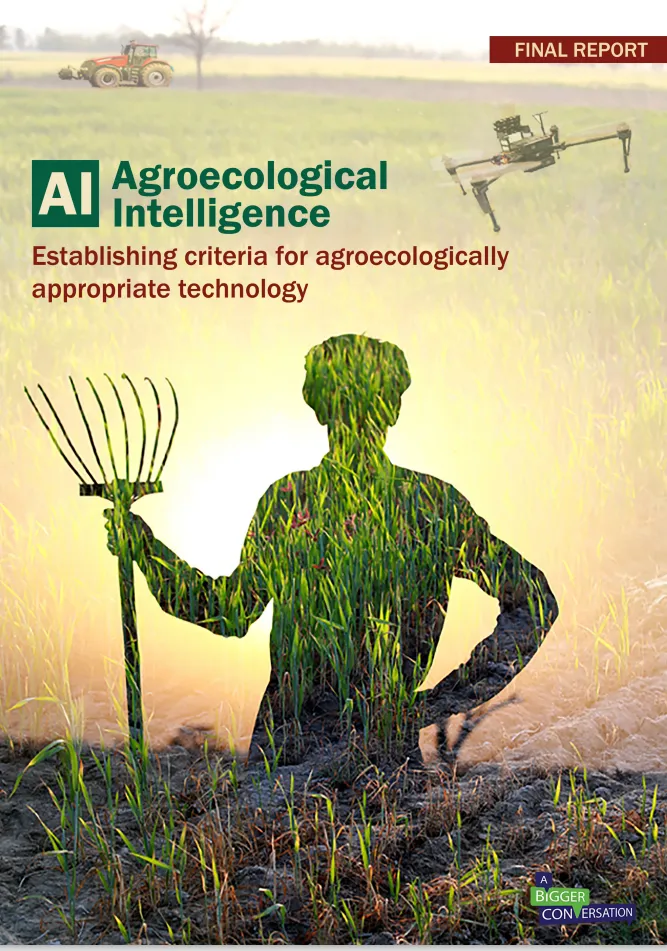
Image Reports What do agroecological farmers think about agritech? This report by A Bigger Conversation as part of its Agroecological Intelligence project explores agroecological farmers’ and growers’ perception of agri-technology. The report finds that farmers and growers are not anti-technology, but they are suspicious of top-down, developer-driven technology. These often fail to consider farmer’s and growers’ interests and do not address wider reforms needed for a more sustainable, fair and resilient food system. The report does find, however, that farmers and growers are enthusiastic about agri-innovations when they have been designed and developed with them, their values and their needs in mind. The report also includes a guide to help practitioners assess agricultural technologies whether they are compatible with the principles and practices of agroecology. It also offers recommendations for how agritech could be better developed, regulated, financed and promoted. Read
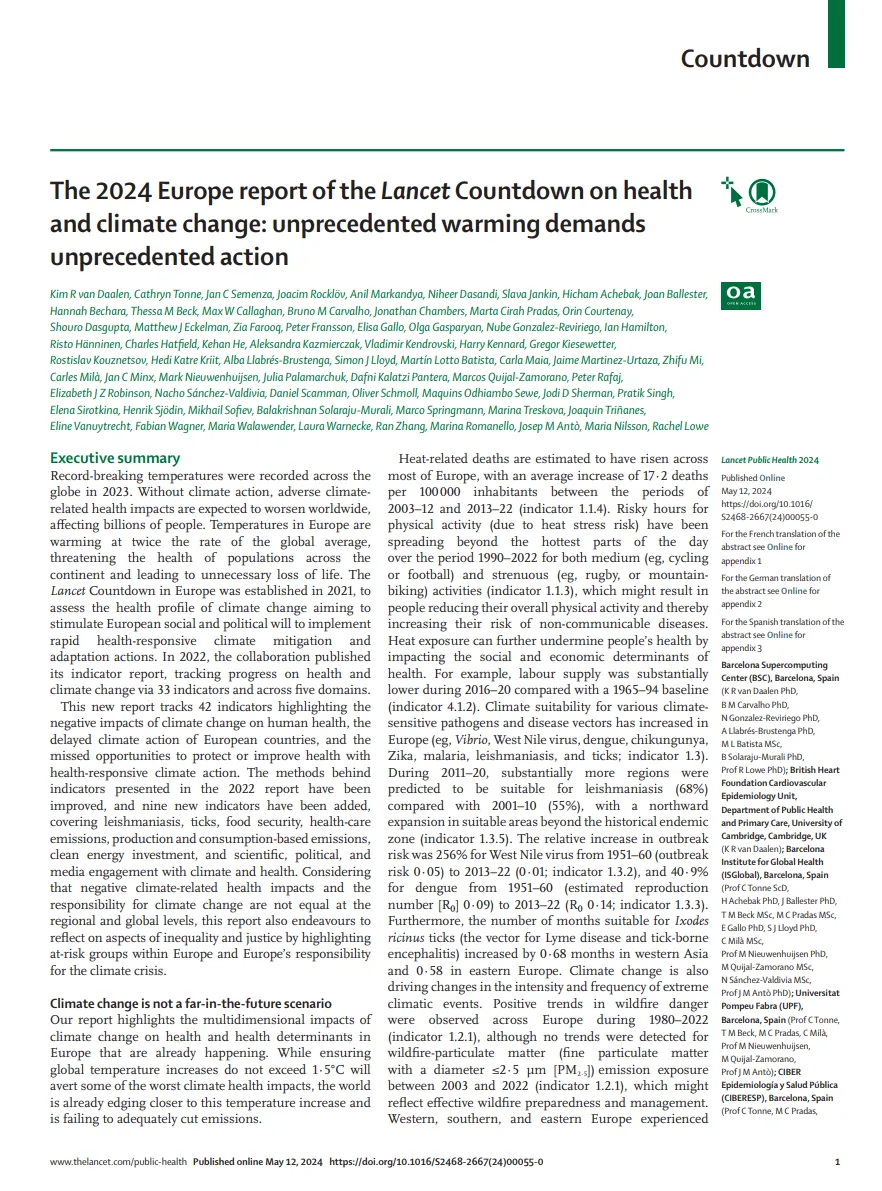
Image Reports The 2024 Europe report of the Lancet Countdown This report is part of the Lancet Countdown in Europe, which is an on-going effort to assess the health impacts of climate change in Europe to reinvigorate social and political will for urgent climate mitigation and adaptation actions. The initial report, in 2022, tracked 33 indicators across five domains. This report tracks 42 indicators related to the impacts of climate change to human health, the response of European countries and the opportunities to better health and climate action attuned to health issues. It finds that whilst scientific and the corporate sector are increasingly engaging with these issues, the media, the political sector and individuals have low levels of engagement with the interplay between health and climate change in Europe. The report notes that significant political and public support is needed to stimulate further action Read
Image Journal articles Accounting for diversity of practices in conservation agriculture This article assesses the diversity of practices being implemented in Walloon, Belgium, which are considered to align with conservation agriculture’s three agronomic pillars (or principles): (i) minimum mechanical soil disturbance, (ii) permanent soil organic cover, and (iii) species diversification (FAO 2023). The authors aimed to determine the diversity of practices in a given area to understand the impacts of these practices and why farmers adopt them. They also sought to guide policy decisions and improve communication within the scientific community and between science and field actors. The authors present a novel classification method to categorise the diversity of CA practices on a regional scale that they present as applicable for comparing and assessing CA in different regions and other agricultural systems such as regenerative farming and organic farming. Read
Image Journal articles Multi-method evaluation to understand food system interventions This article uses a mixed methods approach to evaluate food system interventions which aim to raise consumption of nutritious foods. The researchers assess the Marketplace for Nutritious Foods (MNF) project which was implemented by the Global Alliance for Improved Nutrition (GAIN) in Kenya. The project is used as a case study to open up a broader discussion on the impact of complex food system interventions and the methods used to evaluate these interventions. The author's main call is for an expansion of methods used for similar interventions, methods which build from food systems approaches. They also call for exploration of new methodological approaches from outside traditional economic and nutrition studies Read
Image Journal articles Demystifying food systems transformation This article examines the scholarly literature in English and Spanish to outline a series of insights related to the development and evolution of the term food system transformation. The authors find a rising use of the term in the literature but note a lack of coherent and consistent definition and an underpinning theoretical framework of change. The authors warn against the possible loss of the term’s meaning as it becomes increasingly popular and used without specific intention. The authors seek to provide insights into the complex and overlapping body of literature and offer a unique definition which attempts to fill gaps identified through the review process. Read
Image News and resources World Bank tip-toes into fiery debate over meat emissions There has been much media spotlight on the World Bank’s entry into the meat debate with its new report calling on governments in wealthier countries to shift subsidies from high-emitting red meat and dairy to lower-emitting poultry, vegetables and fruits. POLITICO said the report was bound to make conservatives apoplectic, while Climate Home News analysed why the meat has become a “political hot potato”. TABLE’s explainer, Meat, metrics and mindset, and the podcast Meat: The Four Futures explores the meat debate and why it’s about more than science, it’s about emotions. Read
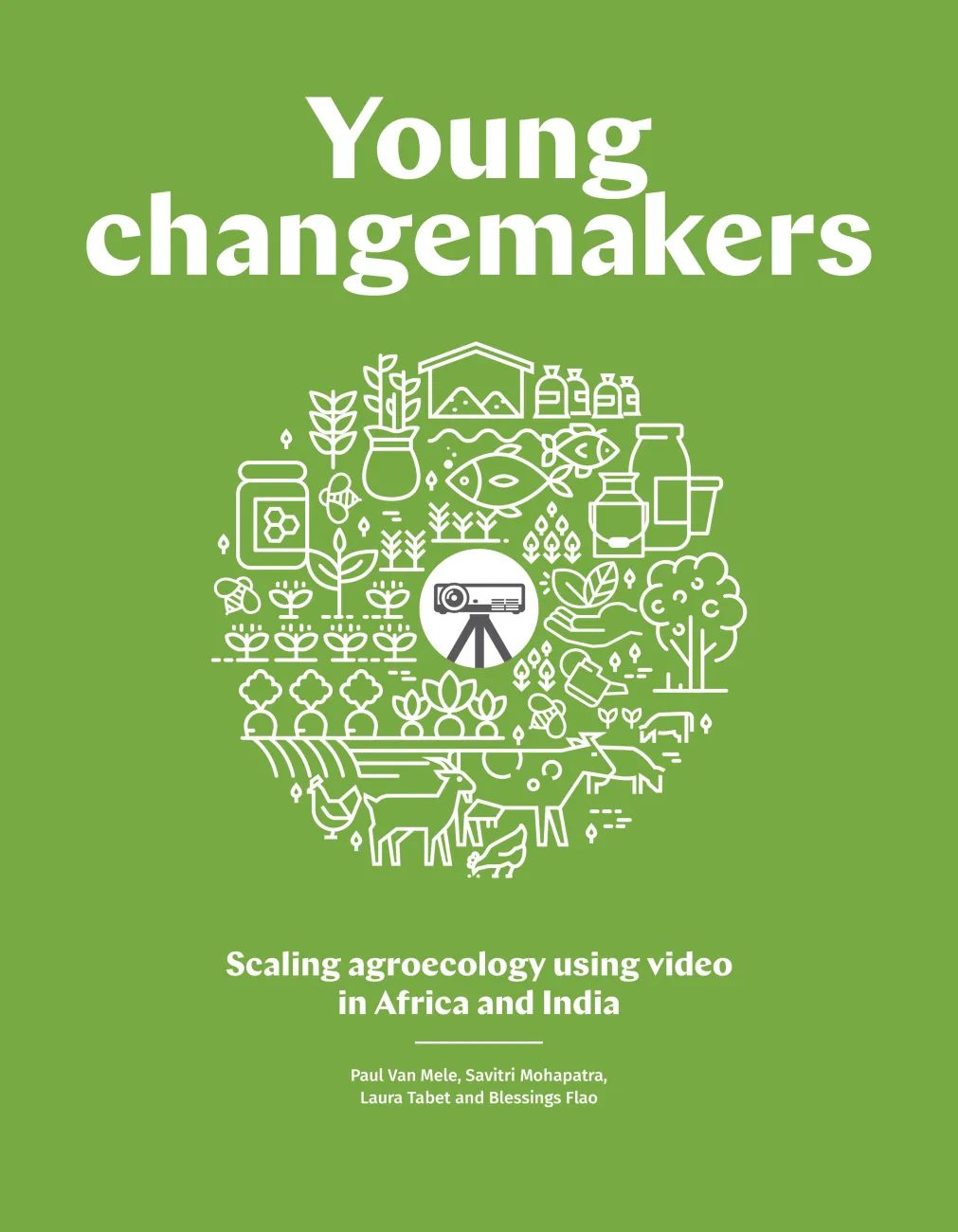
Image Books Young Changemakers This book by Access Agriculture, a non-profit organisation supporting agroecology and organic farming supported by the European Commission and the FAO, details youth engagement in agriculture as a critical area in Africa and India. The book provides an introduction of the importance of young entrepreneurs in agriculture and follows with a substantial number of case studies and stories from young entrepreneurs from many African nations and Indian states. Read
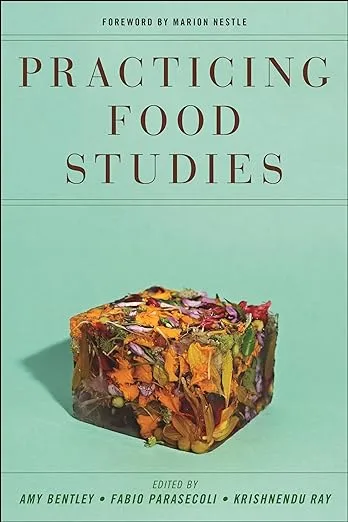
Image Books Practising Food Studies This book offers an introduction to food studies, a multidisciplinary field concerned with animal welfare, the impact of climate change on food production, the nutrition of various food items, and fair, equitable and just working conditions for food labourers and workers. The book is a collection of essays from faculty members and graduates of the NYU Food Studies program Read