Image Resources Our extensive research library contains thousands of summaries of journal articles, reports and news stories that can be searched by keyword and category RESOURCES CATEGORY Books Briefing paper Event recording Featured articles Featured report Game Journal articles News and resources Reports Think piece Video Working paper Workshop summary Year 2026 2025 2024 2023 2022 2021 2020 2019 2018 2017 2016 2015 2014 2013 2012 2011 2010 2009 2008 2007 2002 2001 Resource Higher levels of multiple ecosystem services are found in forests with more tree species A new study from the Swedish University of Agricultural Sciences (SLU) and Future Forests shows that mixed forests, in comparison with monocultures, have positive effects on several different areas, including production. The study, which was published in the journal Nature Communications, is based on material from the Swedish National Forest Inventory and the Swedish Forest Soil Inventory and examined the relationships between multiple ecosystem services and both tree species richness and tree biomass in boreal and temperate forest. By examining the role played by the occurrence of diverse tree species for six different ecosystem services (tree growth, carbon storage, berry production, food for wildlife, occurrence of dead wood, and biological diversity), the study demonstrates that all six services were positively related to the number of tree species. Read Resource Major cuts to surging CO2 emissions are needed now, not down the road A perspective paper published by Environmental Research Letters revisits the 2004 study by Pacala and Socolow that deployed seven wedges of different existing energy technologies to address climate change. At the time of that paper’s publication, each wedge would avoid one billion tons of carbon (1 GtC) emissions per year after 50 years. In this new perspective paper, its authors show that as a result of increased emissions, merely achieving what was considered "business-as-usual" in 2004 would require the development and deployment of 12 wedges; stabilizing emissions at current levels would require another 9 wedges; decreasing emissions to the level needed to prevent climate change would need an additional 10 wedges. Altogether, 31 wedges would be required to stabilize the Earth's climate. Read Image Resource Livestock and Food Security The journal Animal Frontiers is running a two-part series on livestock and food security. The first installment (second installment to run in July) covers a range of issues, including: the role of animal (including fish) production in food security in developing countries, trade in livestock products; the links between animal product consumption and chronic diseases; pastoralism; and livestock breeding. Read Image Resource IMECHE report on Food Waste The Institution of Mechanical Engineers (IMECHE) has produced a report entitled “Global Food Waste Not, Want Not,” which highlights the challenge of feeding a growing population, in a world where up to 50% of food is wasted. The report looks at where food waste takes place, the need to produce more food with finite resources (land use, water, and energy), and provides recommendations as to what the engineering should do to yield greater productivity. Read Image Resource Principles of Sustainable Aquaculture: Promoting Social, Economic and Environmental Resilience A new book entitled “Principles of Sustainable Aquaculture: Promoting Social, Economic and Environmental Resilience” by Stuart W. Bunting of the Centre for Environment and Society at the University of Essex serves as an advanced level textbook focusing on developing more sustainable aquaculture practices. Read Resource Climate Change and Energy Security: Assessing the impact of information and its delivery on attitudes and behaviour The UK Energy Research Centre (UKERC), in collaboration with the Glasgow University Media Group and Chatham House has released findings from a qualitative study of audience beliefs and behaviours in relation to climate change and energy security. Read Image Resource Peak Farmland and the Prospect for Land Sparing The Program for the Human Environment at the Rockefeller University has released a report suggesting that farmland useage might have peaked and the land required for agriculture will start to shrink. The authors predict that in the next half-century, a geographical area more than twice the size of France will return to its natural state from farmland. The Rockefeller researchers say factors such as slower population growth, declines in deforestation, and improved agricultural yields have spared the “unimaginable destruction of nature.” Read Resource Environmental Impacts of Dietary Recommendations and Dietary Styles: Germany as an example You may be interested in this study co-authored by FCRN network member Toni Meier on diets and environmental impacts, published in the Journal of Environmental Science & Technology. Read Resource Mealworms as a Protein Source for Humans A study regarding the efficiency of beetle larvae (mealworms) as a potential protein source was published in the journal PLOS ONE by researchers at the University of Wageningen in Netherlands. The researchers compared the environmental impact of meat production on a mealworm farm to traditional animal farms using three parameters: land usage, energy needs, and greenhouse gas emissions. From the start of the process to the point that the meat left the farm, they found that mealworms scored better than the other foods. Per unit of edible protein produced, mealworm farms required less land and similar amounts of energy. Read VIEW MORE
Resource Higher levels of multiple ecosystem services are found in forests with more tree species A new study from the Swedish University of Agricultural Sciences (SLU) and Future Forests shows that mixed forests, in comparison with monocultures, have positive effects on several different areas, including production. The study, which was published in the journal Nature Communications, is based on material from the Swedish National Forest Inventory and the Swedish Forest Soil Inventory and examined the relationships between multiple ecosystem services and both tree species richness and tree biomass in boreal and temperate forest. By examining the role played by the occurrence of diverse tree species for six different ecosystem services (tree growth, carbon storage, berry production, food for wildlife, occurrence of dead wood, and biological diversity), the study demonstrates that all six services were positively related to the number of tree species. Read
Resource Major cuts to surging CO2 emissions are needed now, not down the road A perspective paper published by Environmental Research Letters revisits the 2004 study by Pacala and Socolow that deployed seven wedges of different existing energy technologies to address climate change. At the time of that paper’s publication, each wedge would avoid one billion tons of carbon (1 GtC) emissions per year after 50 years. In this new perspective paper, its authors show that as a result of increased emissions, merely achieving what was considered "business-as-usual" in 2004 would require the development and deployment of 12 wedges; stabilizing emissions at current levels would require another 9 wedges; decreasing emissions to the level needed to prevent climate change would need an additional 10 wedges. Altogether, 31 wedges would be required to stabilize the Earth's climate. Read
Image Resource Livestock and Food Security The journal Animal Frontiers is running a two-part series on livestock and food security. The first installment (second installment to run in July) covers a range of issues, including: the role of animal (including fish) production in food security in developing countries, trade in livestock products; the links between animal product consumption and chronic diseases; pastoralism; and livestock breeding. Read
Image Resource IMECHE report on Food Waste The Institution of Mechanical Engineers (IMECHE) has produced a report entitled “Global Food Waste Not, Want Not,” which highlights the challenge of feeding a growing population, in a world where up to 50% of food is wasted. The report looks at where food waste takes place, the need to produce more food with finite resources (land use, water, and energy), and provides recommendations as to what the engineering should do to yield greater productivity. Read
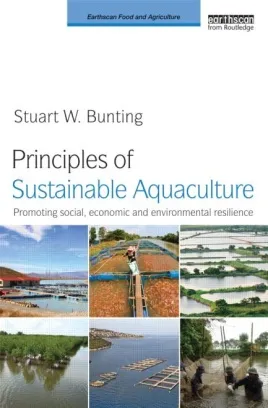
Image Resource Principles of Sustainable Aquaculture: Promoting Social, Economic and Environmental Resilience A new book entitled “Principles of Sustainable Aquaculture: Promoting Social, Economic and Environmental Resilience” by Stuart W. Bunting of the Centre for Environment and Society at the University of Essex serves as an advanced level textbook focusing on developing more sustainable aquaculture practices. Read
Resource Climate Change and Energy Security: Assessing the impact of information and its delivery on attitudes and behaviour The UK Energy Research Centre (UKERC), in collaboration with the Glasgow University Media Group and Chatham House has released findings from a qualitative study of audience beliefs and behaviours in relation to climate change and energy security. Read
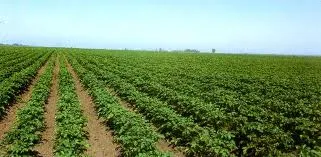
Image Resource Peak Farmland and the Prospect for Land Sparing The Program for the Human Environment at the Rockefeller University has released a report suggesting that farmland useage might have peaked and the land required for agriculture will start to shrink. The authors predict that in the next half-century, a geographical area more than twice the size of France will return to its natural state from farmland. The Rockefeller researchers say factors such as slower population growth, declines in deforestation, and improved agricultural yields have spared the “unimaginable destruction of nature.” Read
Resource Environmental Impacts of Dietary Recommendations and Dietary Styles: Germany as an example You may be interested in this study co-authored by FCRN network member Toni Meier on diets and environmental impacts, published in the Journal of Environmental Science & Technology. Read
Resource Mealworms as a Protein Source for Humans A study regarding the efficiency of beetle larvae (mealworms) as a potential protein source was published in the journal PLOS ONE by researchers at the University of Wageningen in Netherlands. The researchers compared the environmental impact of meat production on a mealworm farm to traditional animal farms using three parameters: land usage, energy needs, and greenhouse gas emissions. From the start of the process to the point that the meat left the farm, they found that mealworms scored better than the other foods. Per unit of edible protein produced, mealworm farms required less land and similar amounts of energy. Read