Image Resources Our extensive research library contains thousands of summaries of journal articles, reports and news stories that can be searched by keyword and category RESOURCES CATEGORY Books Briefing paper Event recording Featured articles Featured report Game Journal articles News and resources Reports Think piece Video Working paper Workshop summary Year 2026 2025 2024 2023 2022 2021 2020 2019 2018 2017 2016 2015 2014 2013 2012 2011 2010 2009 2008 2007 2002 2001 Resource Tea 2030: Future scenarios for the tea industry Tea 2030 project, run by the UK’s Forum for the Future, has published a report identifying 19 factors likely to drive future development of value chain – and it seeks your views. Read Resource Book: Diversifying Food and Diets Currently 925 million people are undernourished and 195 million children under five years of age are stunted. At the same time, over 1 billion people are overweight and obese in both the developed and developing world. Diseases previously associated with affluence, such as cancer, diabetes and cardio-vascular disease, are on the rise. Read Image Resource Report: Livestock and Poultry: world markets and trade The latest United States Department of Agriculture report on global trade in livestock and poultry has been published. The report provides a snapshot of the current situation among the major players in world beef, pork, broiler meat, and turkey meat trade. Read Image Resource Report: India’s changing food production and consumption patterns A new report by the Confederation of Indian Industry (CII) and McKinsey & Company looks at how India’s food production and consumption patterns are changing and argues that action is needed to close the yield gap and improve overall supply chain efficiency. Read Image Resource Keeping EU biofuels policy alive costs society €10bn a year, study shows Europe is reforming its biofuels policy due to concerns raised about its impact on global land use change patterns and global food markets. The negative environmental impacts of the biofuels policy have been well demonstrated, but what is less clear are the economic implications. Read Image Resource Study: smaller plate sizes in buffet-style restaurants reduce food waste The authors of this study looked at the impact of measures introduced by Scandinavia’s largest hotel chain to reduce food waste. Plate sizes were reduced while signs were also posted encouraging customers to help themselves to food more than once (ie. signalling that they didn’t have to overload their plates the first time because they could always come back for more): the effect of these measures in combination was a 20% reduction in food waste. Read Image Resource Food as a Commodity, Human Right or Common Good? Implications for Hunger Eradication The United Nations Research Institute for Social Development (UNRISD) has released a podcast and power point presentation following a seminar held last week on the theme of "Food as a Commodity, Human Right or Common Good? Implications for Hunger Eradication". Read Resource Food, scarcity and abundance Louise Fresco provides an overview of historical and future food security trends in her speech at the 200th commemorative meeting of the Royal Swedish Academy of Agriculture and Forestry entitled Food, scarcity and abundance. Read Image Resource Vertical farming: World's largest indoor vertical farm opens A new 90,000-square-foot indoor farm called FarmedHere has recently opened in Chicago and is expected to produce 1 million pounds a year of organic greens like basil, lettuce, mint, and spinach. It is also expected that it will provide hundreds of local jobs. Read VIEW MORE
Resource Tea 2030: Future scenarios for the tea industry Tea 2030 project, run by the UK’s Forum for the Future, has published a report identifying 19 factors likely to drive future development of value chain – and it seeks your views. Read
Resource Book: Diversifying Food and Diets Currently 925 million people are undernourished and 195 million children under five years of age are stunted. At the same time, over 1 billion people are overweight and obese in both the developed and developing world. Diseases previously associated with affluence, such as cancer, diabetes and cardio-vascular disease, are on the rise. Read
Image Resource Report: Livestock and Poultry: world markets and trade The latest United States Department of Agriculture report on global trade in livestock and poultry has been published. The report provides a snapshot of the current situation among the major players in world beef, pork, broiler meat, and turkey meat trade. Read
Image Resource Report: India’s changing food production and consumption patterns A new report by the Confederation of Indian Industry (CII) and McKinsey & Company looks at how India’s food production and consumption patterns are changing and argues that action is needed to close the yield gap and improve overall supply chain efficiency. Read
Image Resource Keeping EU biofuels policy alive costs society €10bn a year, study shows Europe is reforming its biofuels policy due to concerns raised about its impact on global land use change patterns and global food markets. The negative environmental impacts of the biofuels policy have been well demonstrated, but what is less clear are the economic implications. Read
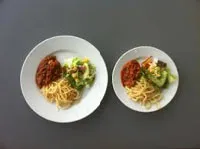
Image Resource Study: smaller plate sizes in buffet-style restaurants reduce food waste The authors of this study looked at the impact of measures introduced by Scandinavia’s largest hotel chain to reduce food waste. Plate sizes were reduced while signs were also posted encouraging customers to help themselves to food more than once (ie. signalling that they didn’t have to overload their plates the first time because they could always come back for more): the effect of these measures in combination was a 20% reduction in food waste. Read
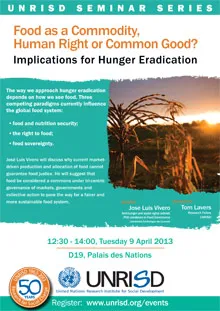
Image Resource Food as a Commodity, Human Right or Common Good? Implications for Hunger Eradication The United Nations Research Institute for Social Development (UNRISD) has released a podcast and power point presentation following a seminar held last week on the theme of "Food as a Commodity, Human Right or Common Good? Implications for Hunger Eradication". Read
Resource Food, scarcity and abundance Louise Fresco provides an overview of historical and future food security trends in her speech at the 200th commemorative meeting of the Royal Swedish Academy of Agriculture and Forestry entitled Food, scarcity and abundance. Read
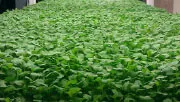
Image Resource Vertical farming: World's largest indoor vertical farm opens A new 90,000-square-foot indoor farm called FarmedHere has recently opened in Chicago and is expected to produce 1 million pounds a year of organic greens like basil, lettuce, mint, and spinach. It is also expected that it will provide hundreds of local jobs. Read