Image Resources Our extensive research library contains thousands of summaries of journal articles, reports and news stories that can be searched by keyword and category RESOURCES CATEGORY Books Briefing paper Event recording Featured articles Featured report Game Journal articles News and resources Reports Think piece Video Working paper Workshop summary Year 2026 2025 2024 2023 2022 2021 2020 2019 2018 2017 2016 2015 2014 2013 2012 2011 2010 2009 2008 2007 2002 2001 Image Resource IIED briefing: Sustainable intensification revisited Sustainable intensification is receiving growing attention as a way to address the challenge of feeding an increasingly populous and resource-constrained world. But are we asking too much of it? Nearly 20 years after the concept was developed, this briefing revisits the term and asks what sustainable intensification is — a useful guiding framework for raising agricultural productivity on existing arable land in a sustainable manner; and what it is not -a paradigm for achieving food security overall. Read Image Resource Briefing paper: Climate Change and Food Safety The 2015 World Health Day took place on April 7th, and it focused on the theme of Food Safety. With this day in mind, the Global Climate and Health Alliance has published a new briefing paper on climate change and food safety. Read Image Resource WHO: Using price policies to promote healthier diets This publication provides information on using price policies to promote healthy diets and explores policy developments from around the WHO European Region. It examines the economic theory underpinning the use of subsidies and taxation and explores the available evidence. Read Image Resource UN Global Sustainable Development Report (GSDR) Brief: Synergies between healthy and sustainable diets In a recent brief for the UN Global Sustainable Development Report (GSDR) a group of researchers, including Tara Garnett of the FCRN, proposed that well-designed policies targeting the demand for particular foods could simultaneously improve the health of the global population and achieve environmental sustainability. Read Image Resource High-fat dairy products linked to reduced type 2 diabetes risk – and high meat consumption to increased risk This paper finds that consumption of high-fat yoghurt and cheese are linked to reduced risks of developing type 2 diabetes – reducing these risks by as much as a fifth. High meat consumption, on the other hand, is linked to a higher risk, regardless of the fat content of the meat. These results are in line with previous studies of eating habits that indicated a link between high consumption of dairy products and a reduced risk of type 2 diabetes. Read Resource Addressing China’s grand challenge of achieving food security while ensuring environmental sustainability This short article discusses policies for achieving food security and environmental objectives in China. Rural development has been placed at the top of the policy agenda in China but recently the Chinese leadership has also included an ambition to achieve environmental sustainability. This is presented as part of the plans for an “ecological civilization”, presented at the 18th Plenary Congress of the Communist Party of China. Read Image Resource The dynamics of the contemporary governance of the world’s food supply and the challenges of policy redirection This paper focuses on the governance of food supplies and specifically discusses the increasing policy focus on engaging food industry in the international pursuit of sustainability. The researchers also look at policy actions aimed at achieving sustainable consumption and production of food. Read Image Resource Australia’s beef industry reduces environmental impact Meat and Livestock Australia (MLA) reports that the Australian beef industry has reduced its environmental footprint over the past 30 years. The results are presented in a new paper in Agricultural Systems, and in a press-release MLA writes that: Read Image Resource Exploring controversy's place in science In a new video published by the Royal Society in their 'Science stories' series (which charts 350 years of scientific publishing at the Royal Society) Dr Paul Williams, a meteorologist in NERC's National Centre for Atmospheric Science at the University of Reading, considers why it is that scientific questions so often turn into full-blown and acrimonious controversies. Read VIEW MORE
Image Resource IIED briefing: Sustainable intensification revisited Sustainable intensification is receiving growing attention as a way to address the challenge of feeding an increasingly populous and resource-constrained world. But are we asking too much of it? Nearly 20 years after the concept was developed, this briefing revisits the term and asks what sustainable intensification is — a useful guiding framework for raising agricultural productivity on existing arable land in a sustainable manner; and what it is not -a paradigm for achieving food security overall. Read
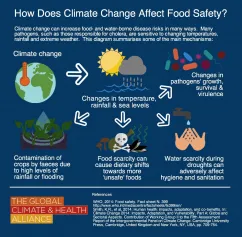
Image Resource Briefing paper: Climate Change and Food Safety The 2015 World Health Day took place on April 7th, and it focused on the theme of Food Safety. With this day in mind, the Global Climate and Health Alliance has published a new briefing paper on climate change and food safety. Read
Image Resource WHO: Using price policies to promote healthier diets This publication provides information on using price policies to promote healthy diets and explores policy developments from around the WHO European Region. It examines the economic theory underpinning the use of subsidies and taxation and explores the available evidence. Read
Image Resource UN Global Sustainable Development Report (GSDR) Brief: Synergies between healthy and sustainable diets In a recent brief for the UN Global Sustainable Development Report (GSDR) a group of researchers, including Tara Garnett of the FCRN, proposed that well-designed policies targeting the demand for particular foods could simultaneously improve the health of the global population and achieve environmental sustainability. Read
Image Resource High-fat dairy products linked to reduced type 2 diabetes risk – and high meat consumption to increased risk This paper finds that consumption of high-fat yoghurt and cheese are linked to reduced risks of developing type 2 diabetes – reducing these risks by as much as a fifth. High meat consumption, on the other hand, is linked to a higher risk, regardless of the fat content of the meat. These results are in line with previous studies of eating habits that indicated a link between high consumption of dairy products and a reduced risk of type 2 diabetes. Read
Resource Addressing China’s grand challenge of achieving food security while ensuring environmental sustainability This short article discusses policies for achieving food security and environmental objectives in China. Rural development has been placed at the top of the policy agenda in China but recently the Chinese leadership has also included an ambition to achieve environmental sustainability. This is presented as part of the plans for an “ecological civilization”, presented at the 18th Plenary Congress of the Communist Party of China. Read
Image Resource The dynamics of the contemporary governance of the world’s food supply and the challenges of policy redirection This paper focuses on the governance of food supplies and specifically discusses the increasing policy focus on engaging food industry in the international pursuit of sustainability. The researchers also look at policy actions aimed at achieving sustainable consumption and production of food. Read
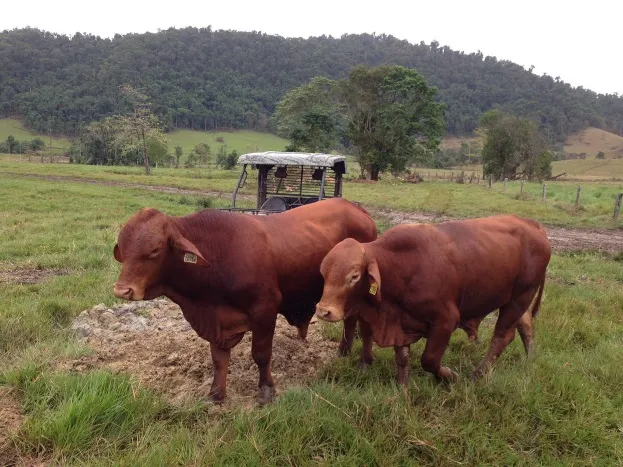
Image Resource Australia’s beef industry reduces environmental impact Meat and Livestock Australia (MLA) reports that the Australian beef industry has reduced its environmental footprint over the past 30 years. The results are presented in a new paper in Agricultural Systems, and in a press-release MLA writes that: Read
Image Resource Exploring controversy's place in science In a new video published by the Royal Society in their 'Science stories' series (which charts 350 years of scientific publishing at the Royal Society) Dr Paul Williams, a meteorologist in NERC's National Centre for Atmospheric Science at the University of Reading, considers why it is that scientific questions so often turn into full-blown and acrimonious controversies. Read