Image Resources Our extensive research library contains thousands of summaries of journal articles, reports and news stories that can be searched by keyword and category RESOURCES CATEGORY Books Briefing paper Event recording Featured articles Featured report Game Journal articles News and resources Reports Think piece Video Working paper Workshop summary Year 2026 2025 2024 2023 2022 2021 2020 2019 2018 2017 2016 2015 2014 2013 2012 2011 2010 2009 2008 2007 2002 2001 Image Journal articles Global effect of extreme weather events on nutrient supply This paper uses data from 1961 to 2010 to assess the effects that extreme weather events had on nutrient supplies (micronutrients, macronutrients and fibre) in different countries. Extreme weather generally had a small but negative impact on nutrient availability. The effects were more pronounced in both land-locked developing countries and in low-income food deficit countries, with nutrient supply decreasing by between 1% and 8%. Read Image Featured articles Defining hyper‐palatable foods This paper sets out a definition of so-called hyper-palatable foods (HPF), i.e. foods designed to contain combinations of fat, sugar, carbohydrates, and/or sodium at levels that make it likely that people will continue eating these foods for longer (compared to other foods where they stop eating sooner through the mechanism of sensory‐specific satiety). Read Image News and resources The Long Read: Why do people hate vegans? This feature from the Guardian newspaper explores why veganism attracts hostility from some commenters. The piece suggests that opposition to veganism can be driven by concerns about malnutrition and fear of loss of personal freedom, and may also be linked to certain ideas about traditional gender roles. Read Image News and resources Op-ed: “Big Food” vs. sustainable, healthy diets This op-ed by FCRN member Mia MacDonald and Judy Bankman, both of US think tank Brighter Green, argues that affordable, accessible, sustainable and healthy diets for everyone can only be achieved with the commitment of everyone, including policymakers, industry influencers, city planners, local business owners and consumers. Read Image Books Adaptation to climate change in agriculture This book gives examples of practices and tools that can help agriculture adapt to climate change, focusing on Japan and other nearby Asian countries. Read Image Books Animal Agriculture: Sustainability, challenges and innovations This book addresses sustainability problems in modern animal agriculture and proposes solutions on topics such as biotechnology, feed production techniques and disease management. Read Image Reports Sustainable healthy diets: Guiding principles The Food and Agriculture Organisation of the United Nations (FAO) and the World Health Organisation (WHO) have published this set of guiding principles for sustainable healthy diets, aimed at policymakers. Read Image Reports Soy and environmental compliance in Brazil This brief from Trase (a partnership between the Stockholm Environment Institute and Global Canopy) examines soy grown on unregistered farms in Brazil. Legally, farms in Brazil should be registered with the Rural Environmental Registry as the first step of complying with the Forest Code, which stipulates how much native vegetation should be left intact on private properties. Read Image Reports Case study: Moving to deforestation free animal feed This case study from UK sustainability consultancy 3Keel describes 3Keel’s work with seven European retailers to quantify the amount of soymeal used for animal feed in these supply chains, identify where the soy was produced and determine whether any of that soy was certified as being deforestation-free. Read VIEW MORE
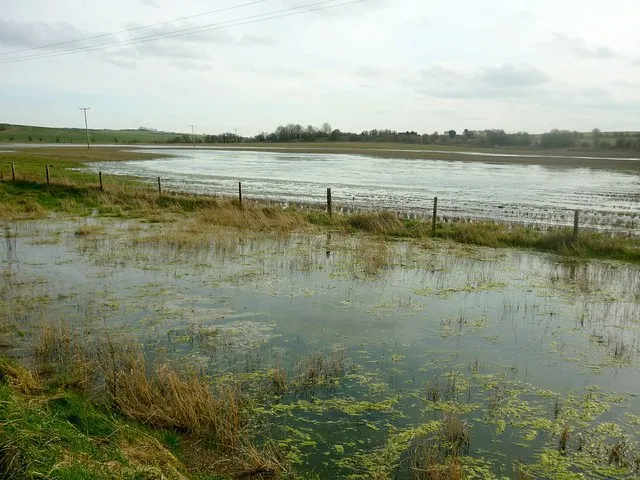
Image Journal articles Global effect of extreme weather events on nutrient supply This paper uses data from 1961 to 2010 to assess the effects that extreme weather events had on nutrient supplies (micronutrients, macronutrients and fibre) in different countries. Extreme weather generally had a small but negative impact on nutrient availability. The effects were more pronounced in both land-locked developing countries and in low-income food deficit countries, with nutrient supply decreasing by between 1% and 8%. Read
Image Featured articles Defining hyper‐palatable foods This paper sets out a definition of so-called hyper-palatable foods (HPF), i.e. foods designed to contain combinations of fat, sugar, carbohydrates, and/or sodium at levels that make it likely that people will continue eating these foods for longer (compared to other foods where they stop eating sooner through the mechanism of sensory‐specific satiety). Read
Image News and resources The Long Read: Why do people hate vegans? This feature from the Guardian newspaper explores why veganism attracts hostility from some commenters. The piece suggests that opposition to veganism can be driven by concerns about malnutrition and fear of loss of personal freedom, and may also be linked to certain ideas about traditional gender roles. Read
Image News and resources Op-ed: “Big Food” vs. sustainable, healthy diets This op-ed by FCRN member Mia MacDonald and Judy Bankman, both of US think tank Brighter Green, argues that affordable, accessible, sustainable and healthy diets for everyone can only be achieved with the commitment of everyone, including policymakers, industry influencers, city planners, local business owners and consumers. Read
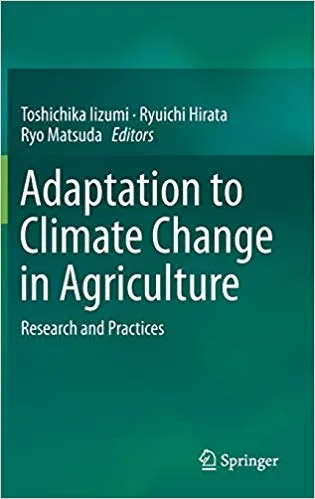
Image Books Adaptation to climate change in agriculture This book gives examples of practices and tools that can help agriculture adapt to climate change, focusing on Japan and other nearby Asian countries. Read
Image Books Animal Agriculture: Sustainability, challenges and innovations This book addresses sustainability problems in modern animal agriculture and proposes solutions on topics such as biotechnology, feed production techniques and disease management. Read
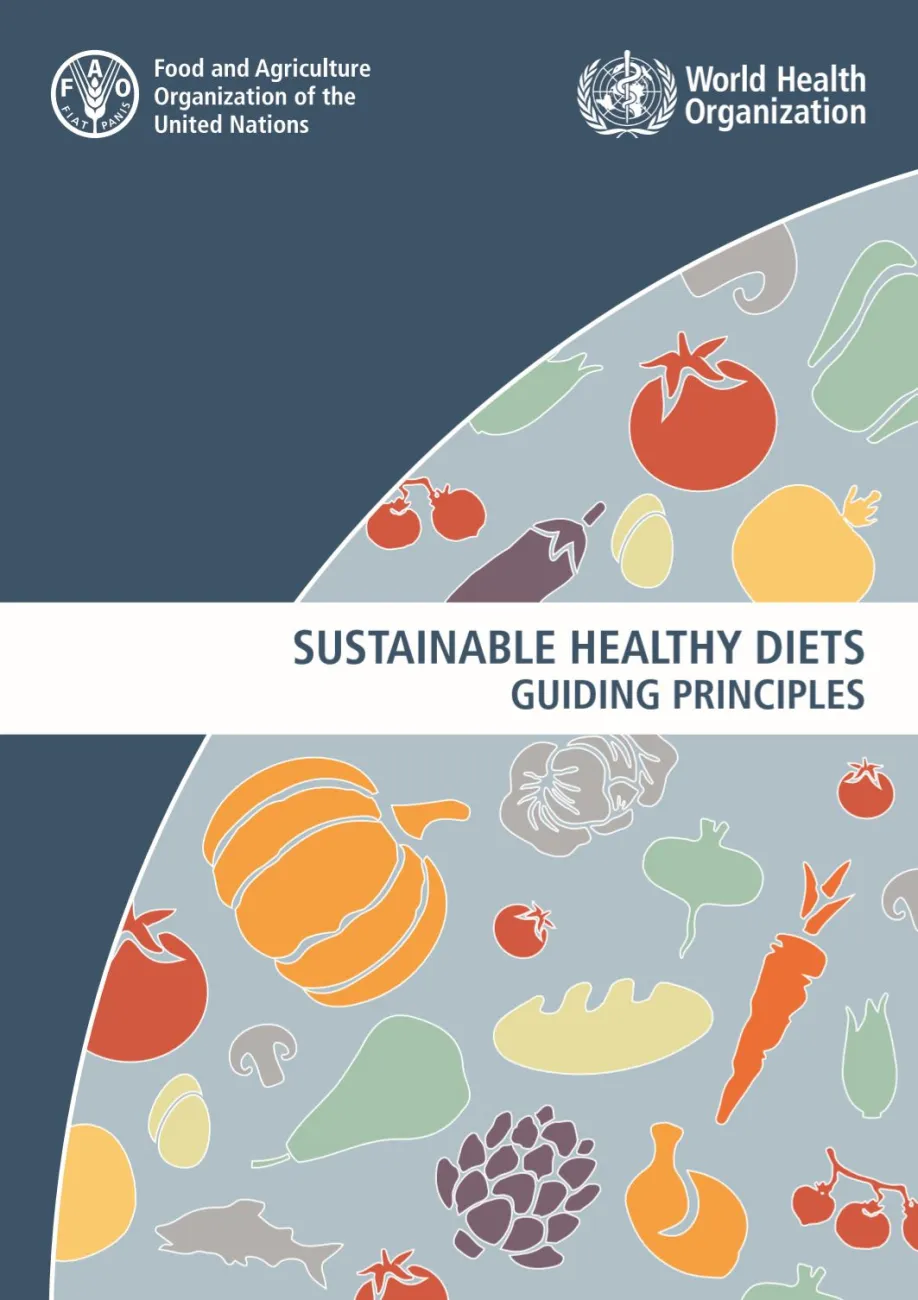
Image Reports Sustainable healthy diets: Guiding principles The Food and Agriculture Organisation of the United Nations (FAO) and the World Health Organisation (WHO) have published this set of guiding principles for sustainable healthy diets, aimed at policymakers. Read
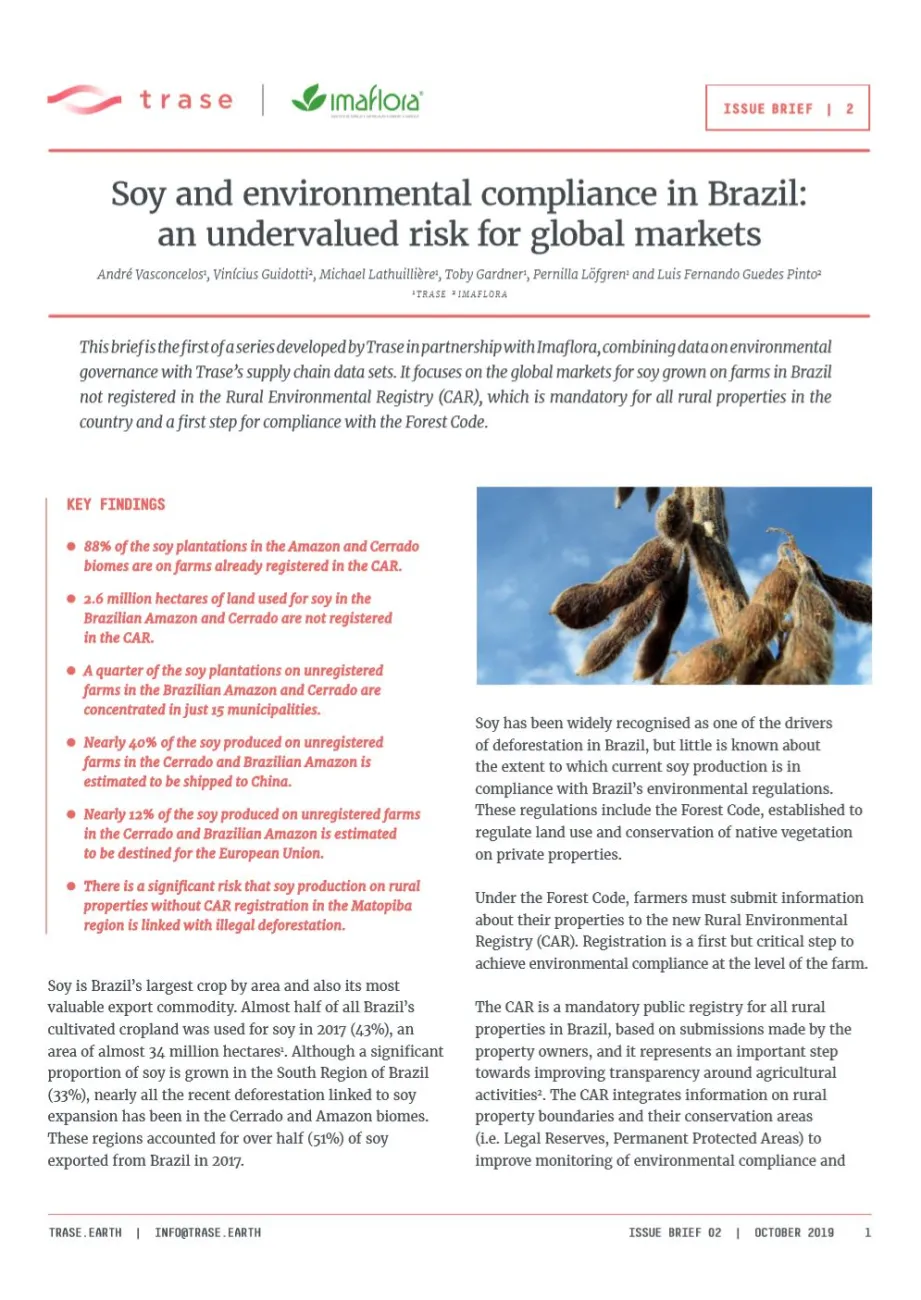
Image Reports Soy and environmental compliance in Brazil This brief from Trase (a partnership between the Stockholm Environment Institute and Global Canopy) examines soy grown on unregistered farms in Brazil. Legally, farms in Brazil should be registered with the Rural Environmental Registry as the first step of complying with the Forest Code, which stipulates how much native vegetation should be left intact on private properties. Read
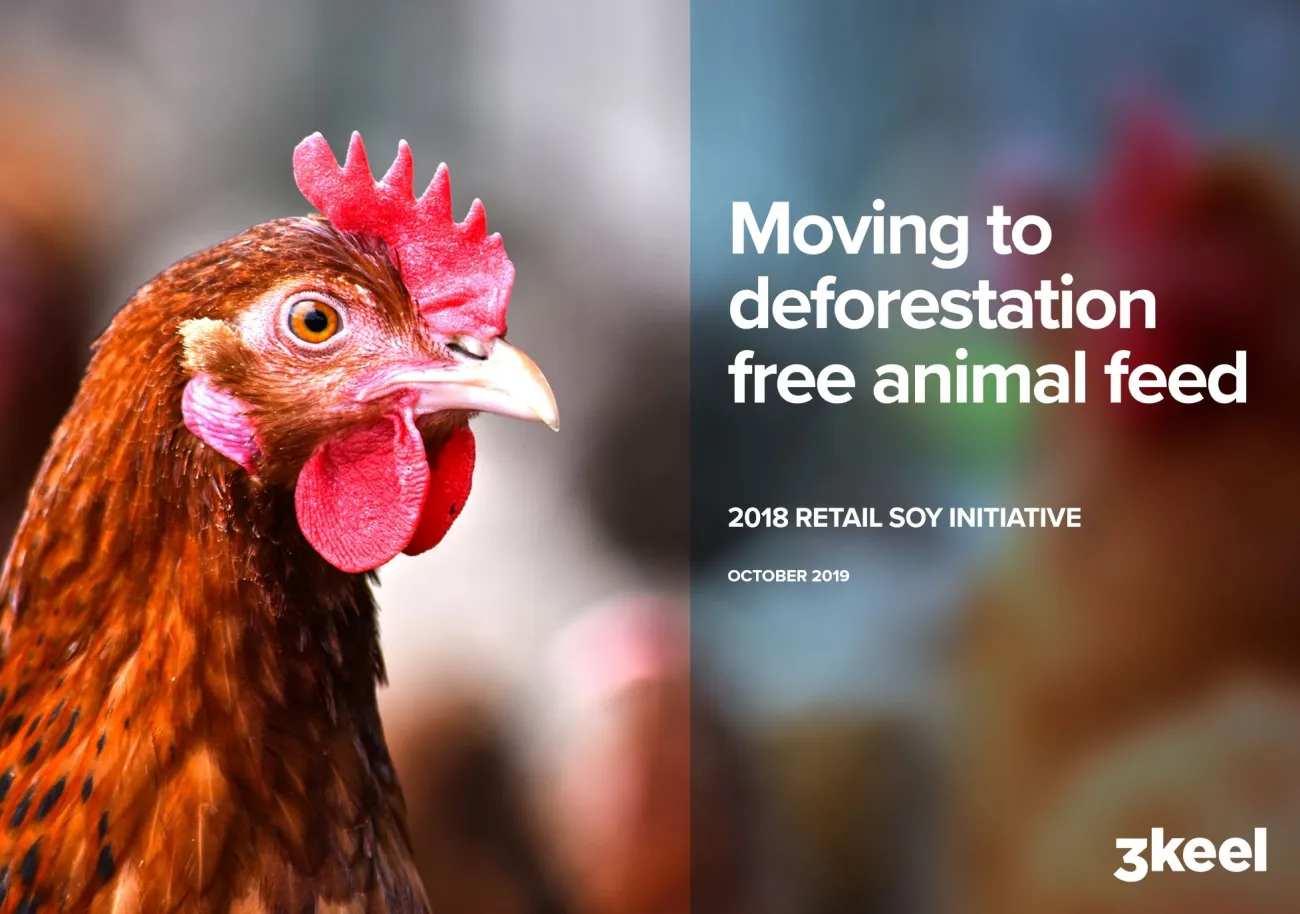
Image Reports Case study: Moving to deforestation free animal feed This case study from UK sustainability consultancy 3Keel describes 3Keel’s work with seven European retailers to quantify the amount of soymeal used for animal feed in these supply chains, identify where the soy was produced and determine whether any of that soy was certified as being deforestation-free. Read