Image Resources Our extensive research library contains thousands of summaries of journal articles, reports and news stories that can be searched by keyword and category RESOURCES CATEGORY Books Briefing paper Event recording Featured articles Featured report Game Journal articles News and resources Reports Think piece Video Working paper Workshop summary Year 2026 2025 2024 2023 2022 2021 2020 2019 2018 2017 2016 2015 2014 2013 2012 2011 2010 2009 2008 2007 2002 2001 Image Journal articles Global impacts of COVID-19 on food security This paper gives the first global review of how food security has been affected by the COVID-19 pandemic. It finds that, in general, food availability was not disrupted significantly since food systems were able to adapt to the disruptions caused by the pandemic. However, both physical and financial access to food were negatively affected. Read Image News and resources Using chemistry to track supply chain authenticity This feature in The Guardian newspaper profiles the work of Oritain, a firm that assesses whether the geographical origins of products such as tea, fish, beef, apples, cotton and wool match the claims made on their labels. This is possible because regions often have unique ratios of elements, which can then be detected in the product. The feature discusses how the technology has been used to detect fraud, as well as its limitations with regards to the environmental or social impacts of production. Read Image News and resources Eat Just to build cultured-meat plant in Qatar US-based alternative protein startup Eat Just is planning to build a large-scale cultured meat plant in Qatar, with the support of the Qatar Free Zones Authority and investment from a state-backed venture capital firm. Eat Just plans to export to neighbouring regions as well as western Europe. If Qatar’s Ministry of Public Health grants approval for Eat Just’s cell-based chicken (produced by its subsidiary Good Meat), the country will become the second to permit the sale of cultured meat, following Singapore (see our summary Cultured meat approved for sale for the first time). Read Image News and resources UK could face permanent food supply chain issues Ian Wright of the UK’s Food & Drink Federation, which represents food manufacturers, has warned that the just-in-time system on which the UK’s supermarkets, convenience stores and restaurants have relied is “no longer working” and may not work again. In his view, the UK could face “permanent shortages” in the sense of not all products being available all the time. Read Image News and resources 'Green neo-colonialism' risks starvation in Africa International foundations, NGOs and government aid programmes are risking starvation in Africa by promoting “utopian visions of organic peasant agriculture”, according to this viewpoint piece by James Njoroge published by the Genetic Literacy Project. Read Image Books Holiday hunger in the UK This book describes the extent and causes of “holiday hunger” in the UK, faced by up to three million children when free school meals are not available. It reviews responses to holiday hunger, including holiday clubs where children can eat for free during school holidays. Read Image Reports Indigenous Peoples' food systems This report from the Food and Agriculture Organization of the United Nations argues that Indigenous Peoples must be included in debates on the future of the global food system, such as the 2021 United Nations Food Systems Summit, and that Indigenous Peoples’ food systems are in many ways aligned with the UN Sustainable Development Goals. Read Image Reports Funding agricultural innovation for the Global South This report from the Commission on Sustainable Agriculture Intensification examines patterns of funding for agricultural innovation in the Global South. It finds that most (60-70%) of the approximately US$60 billion in funding per year comes from governments, particularly the Chinese government, with private corporations providing the next biggest portion (20-25%). Less than 7% of the overall funding is clearly targeted towards sustainable agricultural intensification. Read Image Reports Making finance work for food This report from the Finance for Biodiversity Initiative (F4B) examines how finance and capital can be redirected to support the transition to a healthy, sustainable and inclusive food system. F4B has also provided an extensive literature review on the interactions between finance and food. Read VIEW MORE
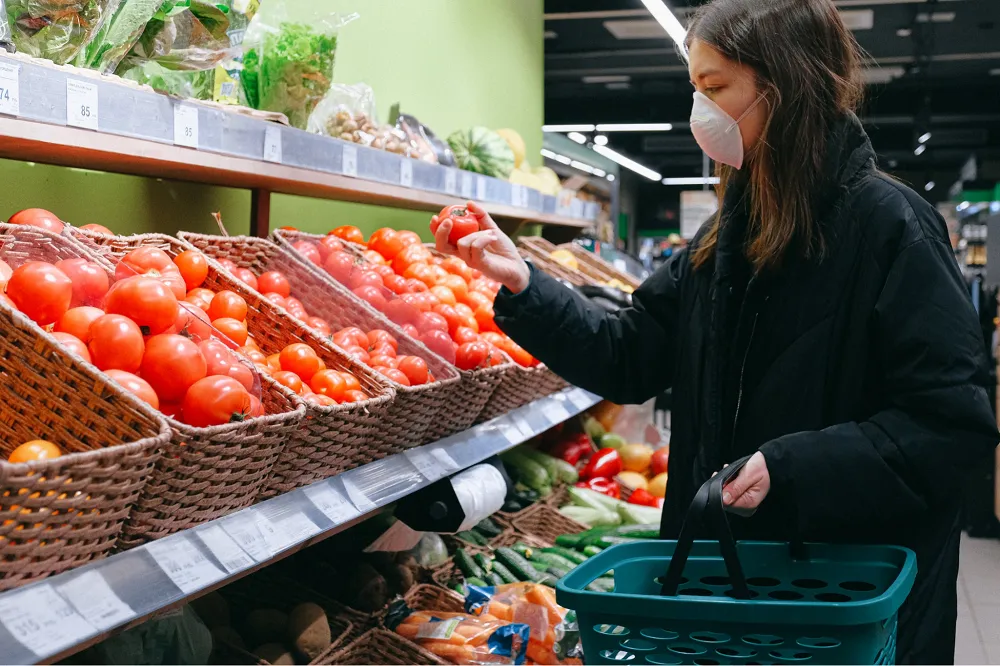
Image Journal articles Global impacts of COVID-19 on food security This paper gives the first global review of how food security has been affected by the COVID-19 pandemic. It finds that, in general, food availability was not disrupted significantly since food systems were able to adapt to the disruptions caused by the pandemic. However, both physical and financial access to food were negatively affected. Read
Image News and resources Using chemistry to track supply chain authenticity This feature in The Guardian newspaper profiles the work of Oritain, a firm that assesses whether the geographical origins of products such as tea, fish, beef, apples, cotton and wool match the claims made on their labels. This is possible because regions often have unique ratios of elements, which can then be detected in the product. The feature discusses how the technology has been used to detect fraud, as well as its limitations with regards to the environmental or social impacts of production. Read
Image News and resources Eat Just to build cultured-meat plant in Qatar US-based alternative protein startup Eat Just is planning to build a large-scale cultured meat plant in Qatar, with the support of the Qatar Free Zones Authority and investment from a state-backed venture capital firm. Eat Just plans to export to neighbouring regions as well as western Europe. If Qatar’s Ministry of Public Health grants approval for Eat Just’s cell-based chicken (produced by its subsidiary Good Meat), the country will become the second to permit the sale of cultured meat, following Singapore (see our summary Cultured meat approved for sale for the first time). Read
Image News and resources UK could face permanent food supply chain issues Ian Wright of the UK’s Food & Drink Federation, which represents food manufacturers, has warned that the just-in-time system on which the UK’s supermarkets, convenience stores and restaurants have relied is “no longer working” and may not work again. In his view, the UK could face “permanent shortages” in the sense of not all products being available all the time. Read
Image News and resources 'Green neo-colonialism' risks starvation in Africa International foundations, NGOs and government aid programmes are risking starvation in Africa by promoting “utopian visions of organic peasant agriculture”, according to this viewpoint piece by James Njoroge published by the Genetic Literacy Project. Read
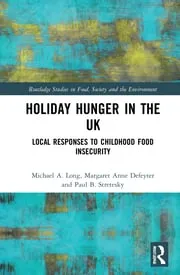
Image Books Holiday hunger in the UK This book describes the extent and causes of “holiday hunger” in the UK, faced by up to three million children when free school meals are not available. It reviews responses to holiday hunger, including holiday clubs where children can eat for free during school holidays. Read
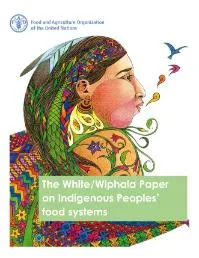
Image Reports Indigenous Peoples' food systems This report from the Food and Agriculture Organization of the United Nations argues that Indigenous Peoples must be included in debates on the future of the global food system, such as the 2021 United Nations Food Systems Summit, and that Indigenous Peoples’ food systems are in many ways aligned with the UN Sustainable Development Goals. Read
Image Reports Funding agricultural innovation for the Global South This report from the Commission on Sustainable Agriculture Intensification examines patterns of funding for agricultural innovation in the Global South. It finds that most (60-70%) of the approximately US$60 billion in funding per year comes from governments, particularly the Chinese government, with private corporations providing the next biggest portion (20-25%). Less than 7% of the overall funding is clearly targeted towards sustainable agricultural intensification. Read
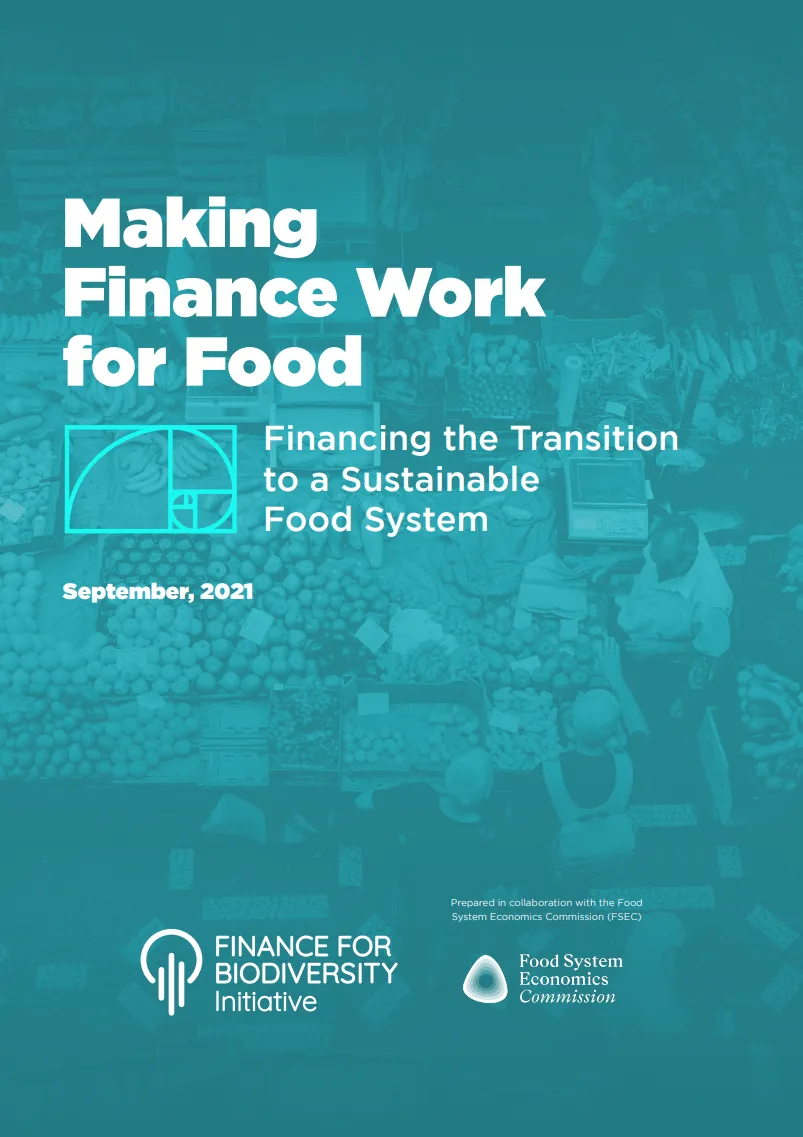
Image Reports Making finance work for food This report from the Finance for Biodiversity Initiative (F4B) examines how finance and capital can be redirected to support the transition to a healthy, sustainable and inclusive food system. F4B has also provided an extensive literature review on the interactions between finance and food. Read