Image Resources Our extensive research library contains thousands of summaries of journal articles, reports and news stories that can be searched by keyword and category RESOURCES CATEGORYBooksBriefing paperEvent recordingFeatured articlesFeatured reportGameJournal articlesNews and resourcesReportsThink pieceVideoWorking paperWorkshop summary YEAR201220132014201520162017201820192020202120222023202420252026 Image Resource IFPRI Paper: Institutions for agricultural mitigation This paper, produced by the International Food Policy Research Institute (IFPRI), explores the opportunities for climate change mitigation in the agricultural sector through the use of carbon markets. Carbon markets have not yet brought the technical potential for agricultural mitigation to fruition due to constraints on both the demand and supply side in terms of limited market opportunities and constraints to project implementation. Read Resource Three or four year crop rotation as profitable as corn/soybean rotation In many circles, it is taken as a matter of fact that to be able to feed an additional 2 billion people by 2050, farmers everywhere are going to have to adopt the intensive agricultural practices that have been perfected in the US heartland where massive amounts of corn and soybeans are harvested almost every year. For the most part, this production system also separates crop agriculture from livestock agriculture composed of large chicken complexes, huge hog production facilities, and massive feedlots. Read Resource Study: How can climate policy benefit from comprehensive land-use approaches? Scientists at Technische Universität München (TUM) have come up with a new land development concept tailored to medium-sized farms in South America that sees farmers transitioning from large-scale monoculture to more diverse crop mixtures spread over smaller plots interspersed with wooded areas. Their study, published in Frontiers in Ecology and the Environment, evaluated the economic viability of this model, based on a typical medium-sized agricultural holding, and found that although costs are higher in the beginning as a result of reforestation, the combination of woodland management and smaller plots of land pays off in the long term. Read Resource IFPRI: Nutrition Policies in Developing Countries This policy note by the International Food Policy Research Institute (IFPRI) calls for governments to prioritize policies and actions and invest substantially in efforts to address the needs of their malnourished populations. Despite the importance of adequate nutrition for economic and social development, few countries have given nutrition issues high priority in national policy-making processes and resultant policies. This policy note reviews individual developing countries’ nutrition policies, highlights examples of countries that have successfully included nutrition in their development agendas, and concludes by outlining the rationale for making malnutrition reduction a policy priority, together with policy recommendations. Read Image Resource IFPRI: The Meat of the Issue An article in Insights, the magazine of the International Food Policy Research Institute (IFPRI), explores the complex issues of increasing livestock production and consumption. As consumption is flattening in the developed world, over the next several decades demand for meat will continue to increase in the developing world. The article also explores the need for raising livestock sustainably in order to mitigate negative impacts on human health and the environment. Read Resource The impact of the 2012 U.S. drought The most severe and extensive drought in at least 25 years is seriously affecting U.S. agriculture, with impacts on the crop and livestock sectors and with the potential to affect food prices at the retail level. Read Resource Study: Policy options for achieving dietary change This study by CE DELFT, a Dutch independent research and consultancy organisation , examines how food consumption patterns might be influenced in order to reduce food related GHG emissions. Its stated objective is to identify and analyse policy options which offer potential for achieving this goal. Read Resource Danish government scraps fat tax The Danish government has officially ended its tax on saturated fat just a year after it was introduced, and has cancelled a proposed sugar tax. Read Resource NHF report: What is the role of health related food duties? New duties on foods known to be unhealthy should be part of a package of public health policies to tackle overweight and obesity and other diet-related diseases, according to the National Heart Forum (NHF). Read VIEW MORE
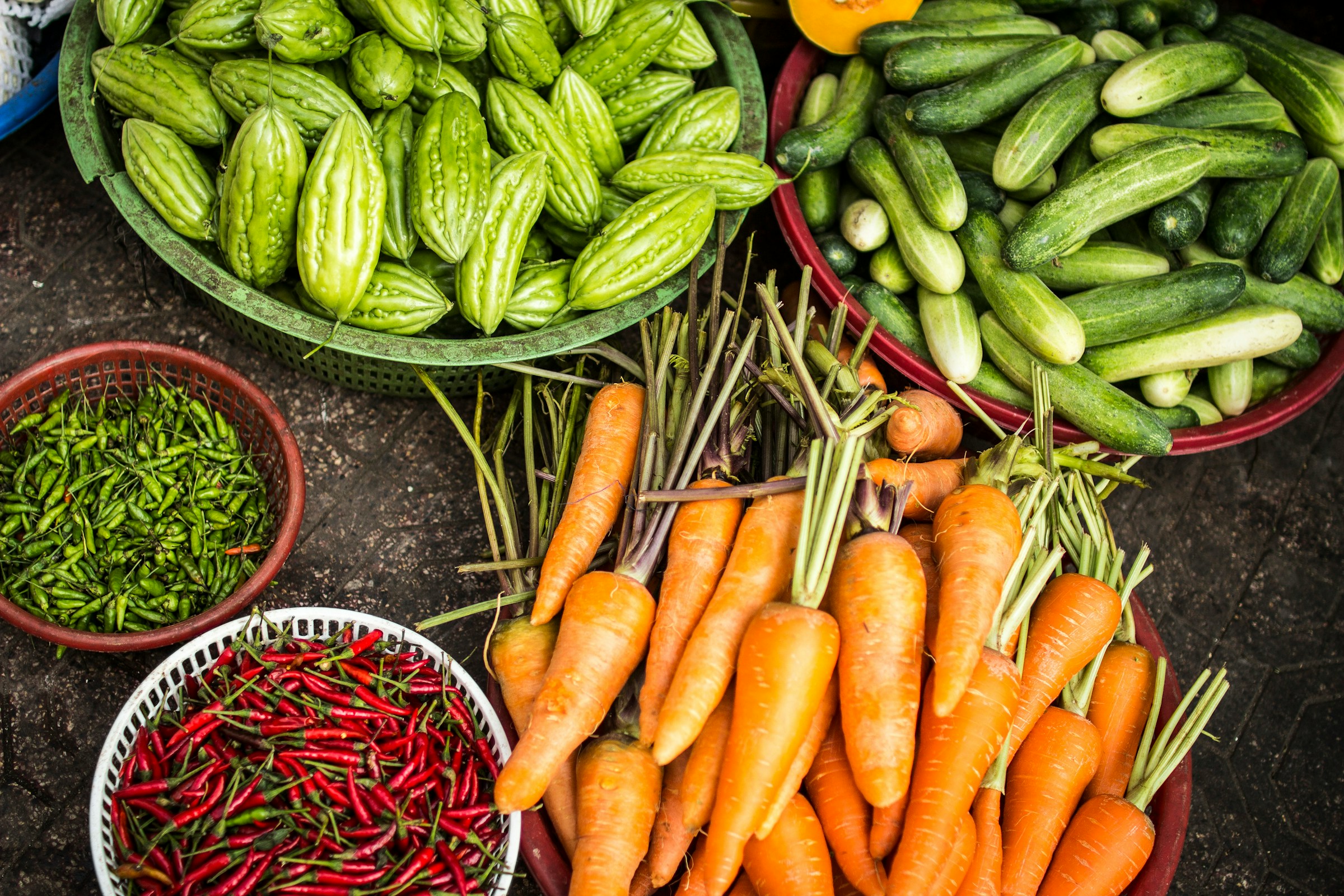
Image Resource IFPRI Paper: Institutions for agricultural mitigation This paper, produced by the International Food Policy Research Institute (IFPRI), explores the opportunities for climate change mitigation in the agricultural sector through the use of carbon markets. Carbon markets have not yet brought the technical potential for agricultural mitigation to fruition due to constraints on both the demand and supply side in terms of limited market opportunities and constraints to project implementation. Read
Resource Three or four year crop rotation as profitable as corn/soybean rotation In many circles, it is taken as a matter of fact that to be able to feed an additional 2 billion people by 2050, farmers everywhere are going to have to adopt the intensive agricultural practices that have been perfected in the US heartland where massive amounts of corn and soybeans are harvested almost every year. For the most part, this production system also separates crop agriculture from livestock agriculture composed of large chicken complexes, huge hog production facilities, and massive feedlots. Read
Resource Study: How can climate policy benefit from comprehensive land-use approaches? Scientists at Technische Universität München (TUM) have come up with a new land development concept tailored to medium-sized farms in South America that sees farmers transitioning from large-scale monoculture to more diverse crop mixtures spread over smaller plots interspersed with wooded areas. Their study, published in Frontiers in Ecology and the Environment, evaluated the economic viability of this model, based on a typical medium-sized agricultural holding, and found that although costs are higher in the beginning as a result of reforestation, the combination of woodland management and smaller plots of land pays off in the long term. Read
Resource IFPRI: Nutrition Policies in Developing Countries This policy note by the International Food Policy Research Institute (IFPRI) calls for governments to prioritize policies and actions and invest substantially in efforts to address the needs of their malnourished populations. Despite the importance of adequate nutrition for economic and social development, few countries have given nutrition issues high priority in national policy-making processes and resultant policies. This policy note reviews individual developing countries’ nutrition policies, highlights examples of countries that have successfully included nutrition in their development agendas, and concludes by outlining the rationale for making malnutrition reduction a policy priority, together with policy recommendations. Read
Image Resource IFPRI: The Meat of the Issue An article in Insights, the magazine of the International Food Policy Research Institute (IFPRI), explores the complex issues of increasing livestock production and consumption. As consumption is flattening in the developed world, over the next several decades demand for meat will continue to increase in the developing world. The article also explores the need for raising livestock sustainably in order to mitigate negative impacts on human health and the environment. Read
Resource The impact of the 2012 U.S. drought The most severe and extensive drought in at least 25 years is seriously affecting U.S. agriculture, with impacts on the crop and livestock sectors and with the potential to affect food prices at the retail level. Read
Resource Study: Policy options for achieving dietary change This study by CE DELFT, a Dutch independent research and consultancy organisation , examines how food consumption patterns might be influenced in order to reduce food related GHG emissions. Its stated objective is to identify and analyse policy options which offer potential for achieving this goal. Read
Resource Danish government scraps fat tax The Danish government has officially ended its tax on saturated fat just a year after it was introduced, and has cancelled a proposed sugar tax. Read
Resource NHF report: What is the role of health related food duties? New duties on foods known to be unhealthy should be part of a package of public health policies to tackle overweight and obesity and other diet-related diseases, according to the National Heart Forum (NHF). Read