Image Resources Our extensive research library contains thousands of summaries of journal articles, reports and news stories that can be searched by keyword and category RESOURCES CATEGORYBooksBriefing paperEvent recordingFeatured articlesFeatured reportGameJournal articlesNews and resourcesReportsThink pieceVideoWorking paperWorkshop summary YEAR201220132014201520162017201820192020202120222023202420252026 Resource Environmental Impacts of Dietary Recommendations and Dietary Styles: Germany as an example You may be interested in this study co-authored by FCRN network member Toni Meier on diets and environmental impacts, published in the Journal of Environmental Science & Technology. Read Resource Mealworms as a Protein Source for Humans A study regarding the efficiency of beetle larvae (mealworms) as a potential protein source was published in the journal PLOS ONE by researchers at the University of Wageningen in Netherlands. The researchers compared the environmental impact of meat production on a mealworm farm to traditional animal farms using three parameters: land usage, energy needs, and greenhouse gas emissions. From the start of the process to the point that the meat left the farm, they found that mealworms scored better than the other foods. Per unit of edible protein produced, mealworm farms required less land and similar amounts of energy. Read Resource Action by 2020 key for limiting climate change Read Image Resource Crop Genetic Resources as a Global Commons: Challenges in International Law and Governance This new book addresses how the collective pooling and management of shared plant genetic resources for food and agriculture can be supported through laws regulating access to genetic resources and the sharing of benefits arising from their use. Read Resource Carbon footprint of the Australian dairy industry A lifecycle assessment study, carried out by PE International, measured the greenhouse gas emissions emitted from the production of a number of dairy products in Australia to identify the industry’s overall carbon footprint. An industry cross section of primary data has been analysed from 140 farms across Australia. Read Resource UK “Responsibility Deal” failing The UK consumer group Which? has released a report, “A taste for change,” which questions the effectiveness of voluntary industry-led initiatives such as the Responsibility Deal. Read Resource Climate Counts Scorecard Climate Counts is a non-profit organization that rates the world’s largest companies (by sales) on their actions to address climate change against a 22-criteria scoring methodology. Their Climate Counts scorecard offers consumers a tool for making informed purchasing and investing decisions based on how well major name brands are addressing climate change. Read Resource Food Pricing Strategies, Population Diets, and Non-Communicable Disease: A Systematic Review of Simulation Studies In this systematic review published in the journal PLOS Medicine, researchers investigated the association between food pricing strategies and food consumption and non-communicable diseases by analyzing the results of published mathematical modeling studies of food pricing interventions. Read Image Resource Poorer quality wheat when carbon dioxide levels in the air rise Researchers at the University of Gothenburg, Sweden, have published a study in the journal Global Change Biology claiming that rising levels of atmospheric carbon dioxide have a negative impact on the protein content of wheat grain and thus its nutritional quality. Read VIEW MORE
Resource Environmental Impacts of Dietary Recommendations and Dietary Styles: Germany as an example You may be interested in this study co-authored by FCRN network member Toni Meier on diets and environmental impacts, published in the Journal of Environmental Science & Technology. Read
Resource Mealworms as a Protein Source for Humans A study regarding the efficiency of beetle larvae (mealworms) as a potential protein source was published in the journal PLOS ONE by researchers at the University of Wageningen in Netherlands. The researchers compared the environmental impact of meat production on a mealworm farm to traditional animal farms using three parameters: land usage, energy needs, and greenhouse gas emissions. From the start of the process to the point that the meat left the farm, they found that mealworms scored better than the other foods. Per unit of edible protein produced, mealworm farms required less land and similar amounts of energy. Read
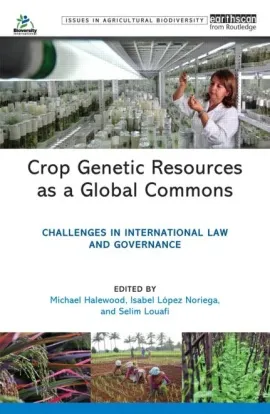
Image Resource Crop Genetic Resources as a Global Commons: Challenges in International Law and Governance This new book addresses how the collective pooling and management of shared plant genetic resources for food and agriculture can be supported through laws regulating access to genetic resources and the sharing of benefits arising from their use. Read
Resource Carbon footprint of the Australian dairy industry A lifecycle assessment study, carried out by PE International, measured the greenhouse gas emissions emitted from the production of a number of dairy products in Australia to identify the industry’s overall carbon footprint. An industry cross section of primary data has been analysed from 140 farms across Australia. Read
Resource UK “Responsibility Deal” failing The UK consumer group Which? has released a report, “A taste for change,” which questions the effectiveness of voluntary industry-led initiatives such as the Responsibility Deal. Read
Resource Climate Counts Scorecard Climate Counts is a non-profit organization that rates the world’s largest companies (by sales) on their actions to address climate change against a 22-criteria scoring methodology. Their Climate Counts scorecard offers consumers a tool for making informed purchasing and investing decisions based on how well major name brands are addressing climate change. Read
Resource Food Pricing Strategies, Population Diets, and Non-Communicable Disease: A Systematic Review of Simulation Studies In this systematic review published in the journal PLOS Medicine, researchers investigated the association between food pricing strategies and food consumption and non-communicable diseases by analyzing the results of published mathematical modeling studies of food pricing interventions. Read
Image Resource Poorer quality wheat when carbon dioxide levels in the air rise Researchers at the University of Gothenburg, Sweden, have published a study in the journal Global Change Biology claiming that rising levels of atmospheric carbon dioxide have a negative impact on the protein content of wheat grain and thus its nutritional quality. Read