Image Resources Our extensive research library contains thousands of summaries of journal articles, reports and news stories that can be searched by keyword and category RESOURCES CATEGORYBooksBriefing paperEvent recordingFeatured articlesFeatured reportGameJournal articlesNews and resourcesReportsThink pieceVideoWorking paperWorkshop summary YEAR201220132014201520162017201820192020202120222023202420252026 Resource Goat grazing, its interactions with other herbivores and biodiversity conservation issues A study published in the journal Small Ruminant Research notes that many breeds of goat are at great risk of disappearing. A study from the Regional Service of Agro-Food Research and Development (SERIDA) analysed the global situation - the state of different breeds, the multiple implications of their conservation, their interaction with other animal species, and the consequences of goat grazing from an environmental viewpoint. The authors found that the biggest loss in the genetic resources of indigenous goats has been observed in Europe. Read Resource EU Agricultural Outlook The European Commission has released a report entitled: Prospects for Agricultural Markets and Income in the EU from 2012-2022. The report predicts that total meat production in the EU is expected to decline by 2% over the next two years, due in part to the ban on sow stalls. After the oncoming 2% decline, it may take up to 10 years for the EU meat sector to reach its 2011 production level of 45 million tones. The report also predicted that the EU would see its share of global meat exports decline over the next decade. Read Resource OECD Better Life Index A new index has been produced by the Organisation for Economic Cooperation and Development (OECD) that can be used to compare well-being across 36 countries, based on 11 topics the OECD has identified as essential. Read Image Resource Enough Is Enough: Building a Sustainable Economy in a World of Finite Resources by Rob Dietz and Dan O’Neill Read Resource The Role of Diet in Phosphorous Demand A study conducted by researchers at McGill University, Canada, and published in the journal Environmental Research Letters, shows that changing diets have accounted for a 38% increase in the world’s per capita ‘phosphorous footprint’ between 1961 and 2007. Researchers analyzed annual country-specific diet composition data to calculate the amount of phosphorous applied to food crops. Their findings indicate that a sustainable supply of the essential mineral is in question. Read Resource Proceedings of the Nutrition Society The latest issue of the journal Proceedings of the Nutrition Society features a number of articles related to food, nutrition, and sustainability (including one by the FCRN’s founder, Tara Garnett). Read Resource Climate Change Laws Read Image Resource Foodprinting Oxford: How to feed a city Read Image Resource FAO: The State of Food and Agriculture Report The UN’s Food and Agricultural Organization (FAO) has released their annual flagship publication on the theme “Investing in agriculture for a better future”. The report says that farmers are the largest investors in developing country agriculture and argues, therefore, that farmers and their investment decisions must be central to any strategy aimed at improving agricultural investment. However, they need a favourable climate for agricultural investment based on economic incentives and an enabling environment. Read VIEW MORE
Resource Goat grazing, its interactions with other herbivores and biodiversity conservation issues A study published in the journal Small Ruminant Research notes that many breeds of goat are at great risk of disappearing. A study from the Regional Service of Agro-Food Research and Development (SERIDA) analysed the global situation - the state of different breeds, the multiple implications of their conservation, their interaction with other animal species, and the consequences of goat grazing from an environmental viewpoint. The authors found that the biggest loss in the genetic resources of indigenous goats has been observed in Europe. Read
Resource EU Agricultural Outlook The European Commission has released a report entitled: Prospects for Agricultural Markets and Income in the EU from 2012-2022. The report predicts that total meat production in the EU is expected to decline by 2% over the next two years, due in part to the ban on sow stalls. After the oncoming 2% decline, it may take up to 10 years for the EU meat sector to reach its 2011 production level of 45 million tones. The report also predicted that the EU would see its share of global meat exports decline over the next decade. Read
Resource OECD Better Life Index A new index has been produced by the Organisation for Economic Cooperation and Development (OECD) that can be used to compare well-being across 36 countries, based on 11 topics the OECD has identified as essential. Read
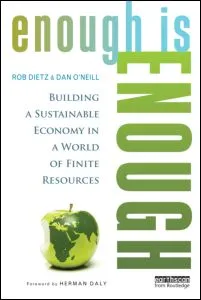
Image Resource Enough Is Enough: Building a Sustainable Economy in a World of Finite Resources by Rob Dietz and Dan O’Neill Read
Resource The Role of Diet in Phosphorous Demand A study conducted by researchers at McGill University, Canada, and published in the journal Environmental Research Letters, shows that changing diets have accounted for a 38% increase in the world’s per capita ‘phosphorous footprint’ between 1961 and 2007. Researchers analyzed annual country-specific diet composition data to calculate the amount of phosphorous applied to food crops. Their findings indicate that a sustainable supply of the essential mineral is in question. Read
Resource Proceedings of the Nutrition Society The latest issue of the journal Proceedings of the Nutrition Society features a number of articles related to food, nutrition, and sustainability (including one by the FCRN’s founder, Tara Garnett). Read
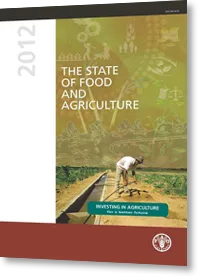
Image Resource FAO: The State of Food and Agriculture Report The UN’s Food and Agricultural Organization (FAO) has released their annual flagship publication on the theme “Investing in agriculture for a better future”. The report says that farmers are the largest investors in developing country agriculture and argues, therefore, that farmers and their investment decisions must be central to any strategy aimed at improving agricultural investment. However, they need a favourable climate for agricultural investment based on economic incentives and an enabling environment. Read