Image Resources Our extensive research library contains thousands of summaries of journal articles, reports and news stories that can be searched by keyword and category RESOURCES CATEGORYBooksBriefing paperEvent recordingFeatured articlesFeatured reportGameJournal articlesNews and resourcesReportsThink pieceVideoWorking paperWorkshop summary YEAR201220132014201520162017201820192020202120222023202420252026 Image Resource Think eat save Think.Eat.Save. is a campaign of the Save Food Initiative and a partnership between UNEP, FAO and Messe Düsseldorf in support of the UN Secretary-General’s Zero Hunger Challenge. Read Image Resource EC aims to simplify 'confusing' green claims A company wishing to market its product as green in several Member State markets faces a confusing range of choices of methods and initiatives, and might find it needs to apply several of them in order to prove the product's green credentials. This is turning into a barrier for the circulation of green products in the Single Market. Read Resource Tea 2030: Future scenarios for the tea industry Tea 2030 project, run by the UK’s Forum for the Future, has published a report identifying 19 factors likely to drive future development of value chain – and it seeks your views. Read Resource Book: Diversifying Food and Diets Currently 925 million people are undernourished and 195 million children under five years of age are stunted. At the same time, over 1 billion people are overweight and obese in both the developed and developing world. Diseases previously associated with affluence, such as cancer, diabetes and cardio-vascular disease, are on the rise. Read Image Resource Report: Livestock and Poultry: world markets and trade The latest United States Department of Agriculture report on global trade in livestock and poultry has been published. The report provides a snapshot of the current situation among the major players in world beef, pork, broiler meat, and turkey meat trade. Read Image Resource Report: India’s changing food production and consumption patterns A new report by the Confederation of Indian Industry (CII) and McKinsey & Company looks at how India’s food production and consumption patterns are changing and argues that action is needed to close the yield gap and improve overall supply chain efficiency. Read Image Resource Keeping EU biofuels policy alive costs society €10bn a year, study shows Europe is reforming its biofuels policy due to concerns raised about its impact on global land use change patterns and global food markets. The negative environmental impacts of the biofuels policy have been well demonstrated, but what is less clear are the economic implications. Read Image Resource Study: smaller plate sizes in buffet-style restaurants reduce food waste The authors of this study looked at the impact of measures introduced by Scandinavia’s largest hotel chain to reduce food waste. Plate sizes were reduced while signs were also posted encouraging customers to help themselves to food more than once (ie. signalling that they didn’t have to overload their plates the first time because they could always come back for more): the effect of these measures in combination was a 20% reduction in food waste. Read Image Resource Food as a Commodity, Human Right or Common Good? Implications for Hunger Eradication The United Nations Research Institute for Social Development (UNRISD) has released a podcast and power point presentation following a seminar held last week on the theme of "Food as a Commodity, Human Right or Common Good? Implications for Hunger Eradication". Read VIEW MORE
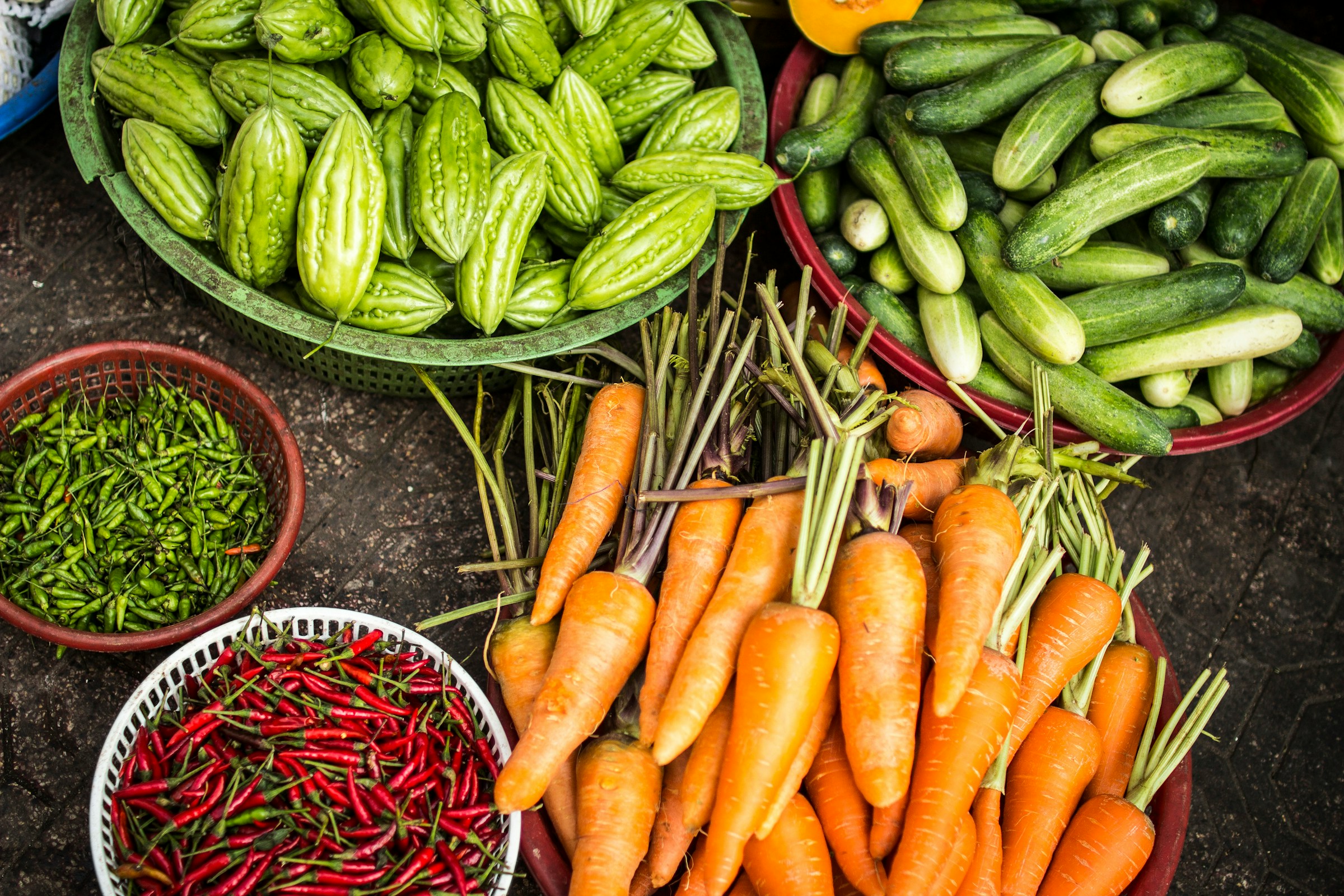
Image Resource Think eat save Think.Eat.Save. is a campaign of the Save Food Initiative and a partnership between UNEP, FAO and Messe Düsseldorf in support of the UN Secretary-General’s Zero Hunger Challenge. Read
Image Resource EC aims to simplify 'confusing' green claims A company wishing to market its product as green in several Member State markets faces a confusing range of choices of methods and initiatives, and might find it needs to apply several of them in order to prove the product's green credentials. This is turning into a barrier for the circulation of green products in the Single Market. Read
Resource Tea 2030: Future scenarios for the tea industry Tea 2030 project, run by the UK’s Forum for the Future, has published a report identifying 19 factors likely to drive future development of value chain – and it seeks your views. Read
Resource Book: Diversifying Food and Diets Currently 925 million people are undernourished and 195 million children under five years of age are stunted. At the same time, over 1 billion people are overweight and obese in both the developed and developing world. Diseases previously associated with affluence, such as cancer, diabetes and cardio-vascular disease, are on the rise. Read
Image Resource Report: Livestock and Poultry: world markets and trade The latest United States Department of Agriculture report on global trade in livestock and poultry has been published. The report provides a snapshot of the current situation among the major players in world beef, pork, broiler meat, and turkey meat trade. Read
Image Resource Report: India’s changing food production and consumption patterns A new report by the Confederation of Indian Industry (CII) and McKinsey & Company looks at how India’s food production and consumption patterns are changing and argues that action is needed to close the yield gap and improve overall supply chain efficiency. Read
Image Resource Keeping EU biofuels policy alive costs society €10bn a year, study shows Europe is reforming its biofuels policy due to concerns raised about its impact on global land use change patterns and global food markets. The negative environmental impacts of the biofuels policy have been well demonstrated, but what is less clear are the economic implications. Read
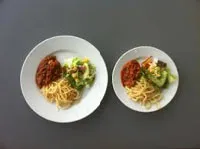
Image Resource Study: smaller plate sizes in buffet-style restaurants reduce food waste The authors of this study looked at the impact of measures introduced by Scandinavia’s largest hotel chain to reduce food waste. Plate sizes were reduced while signs were also posted encouraging customers to help themselves to food more than once (ie. signalling that they didn’t have to overload their plates the first time because they could always come back for more): the effect of these measures in combination was a 20% reduction in food waste. Read
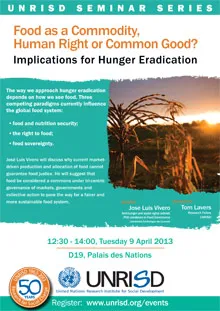
Image Resource Food as a Commodity, Human Right or Common Good? Implications for Hunger Eradication The United Nations Research Institute for Social Development (UNRISD) has released a podcast and power point presentation following a seminar held last week on the theme of "Food as a Commodity, Human Right or Common Good? Implications for Hunger Eradication". Read