Image Resources Our extensive research library contains thousands of summaries of journal articles, reports and news stories that can be searched by keyword and category RESOURCES CATEGORYBooksBriefing paperEvent recordingFeatured articlesFeatured reportGameJournal articlesNews and resourcesReportsThink pieceVideoWorking paperWorkshop summary YEAR201220132014201520162017201820192020202120222023202420252026 Image Resource Using certified sustainable palm oil no longer good enough, says WWF The Roundtable on Sustainable Palm Oil has recently finalized a review of the its Principles and Criteria for Sustainable Palm Oil Production (P&Cs), and agreed a new set of standards. RSPO founder member WWF is signing up to the standards but cautions that they are not good enough. It says that using palm oil certified as sustainable under the Roundtable on Sustainable Palm Oil (RSPO) is no longer enough to ensure companies are acting responsibly. Read Image Resource Nepal to generate electricity from waste Due to Nepal’s large energy deficit where supply shortfalls and interrupted power affect both household and the national industry, the country is now looking for energy alternatives such as using its growing urban and industrial waste. Read Resource Nitrogen calculator webtool Scientists at Lancaster, Virginia and Oxford universities have produced a web-based tool that allows anyone living in the UK to see their own ‘nitrogen footprint’. Read Image Resource Presentation: Critique of policy measures to address recent food price crises Beginning in 2007, the world has suffered three rounds of high food prices. These crises were caused by a variety of factors—from extreme weather events to civil conflict—but poor policies by affected countries exacerbated the problem, according to an expert on the subject who spoke at IFPRI last week. Read Image Resource FAO report: Edible insects: Future prospects for food and feed security Read Image Resource European food industry statement on health-oriented food taxes Read Image Resource Living within a Fair Share Ecological Footprint Details as follows: According to many authorities the impact of humanity on the earth is already overshooting the earth’s capacity to supply humanity’s needs. This is an unsustainable position. This book does not focus on the problem but on the solution, by showing what it is like to live within a fair earth share ecological footprint. Read Image Resource Predictors and correlates of taste preferences in European children This is an interesting study which tests preferences for sugar, fat, salt and umami (savoury-ness) among children in a range of European countries. It finds that children’s liking for these tastes varies by country, suggesting that culture has a very strong part to play in influencing food preferences. While hardly a major revelation in itself, what I take from this study is that the very common assumptions we see about the ‘inevitability’ of growth in demand for high fat and high sugar foods, or for meat products, are open to challenge. Read Resource KPMG launches Green Tax Index Audit and tax advisory company KPMG has reported on the findings of its first Green Tax Index. This was created by KPMG to increase awareness of the complex, fragmented and rapidly evolving green tax landscape worldwide. It aims to encourage companies to explore the opportunities of green tax incentives, and to reduce exposure to green tax penalties. The tool analyses green tax incentives and penalties in 21 major economies, focusing on key policy areas such as energy efficiency, water efficiency, carbon emissions, green innovation and green buildings. Read VIEW MORE
Image Resource Using certified sustainable palm oil no longer good enough, says WWF The Roundtable on Sustainable Palm Oil has recently finalized a review of the its Principles and Criteria for Sustainable Palm Oil Production (P&Cs), and agreed a new set of standards. RSPO founder member WWF is signing up to the standards but cautions that they are not good enough. It says that using palm oil certified as sustainable under the Roundtable on Sustainable Palm Oil (RSPO) is no longer enough to ensure companies are acting responsibly. Read
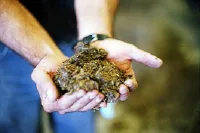
Image Resource Nepal to generate electricity from waste Due to Nepal’s large energy deficit where supply shortfalls and interrupted power affect both household and the national industry, the country is now looking for energy alternatives such as using its growing urban and industrial waste. Read
Resource Nitrogen calculator webtool Scientists at Lancaster, Virginia and Oxford universities have produced a web-based tool that allows anyone living in the UK to see their own ‘nitrogen footprint’. Read
Image Resource Presentation: Critique of policy measures to address recent food price crises Beginning in 2007, the world has suffered three rounds of high food prices. These crises were caused by a variety of factors—from extreme weather events to civil conflict—but poor policies by affected countries exacerbated the problem, according to an expert on the subject who spoke at IFPRI last week. Read
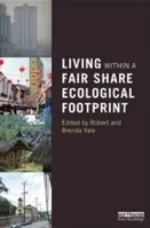
Image Resource Living within a Fair Share Ecological Footprint Details as follows: According to many authorities the impact of humanity on the earth is already overshooting the earth’s capacity to supply humanity’s needs. This is an unsustainable position. This book does not focus on the problem but on the solution, by showing what it is like to live within a fair earth share ecological footprint. Read
Image Resource Predictors and correlates of taste preferences in European children This is an interesting study which tests preferences for sugar, fat, salt and umami (savoury-ness) among children in a range of European countries. It finds that children’s liking for these tastes varies by country, suggesting that culture has a very strong part to play in influencing food preferences. While hardly a major revelation in itself, what I take from this study is that the very common assumptions we see about the ‘inevitability’ of growth in demand for high fat and high sugar foods, or for meat products, are open to challenge. Read
Resource KPMG launches Green Tax Index Audit and tax advisory company KPMG has reported on the findings of its first Green Tax Index. This was created by KPMG to increase awareness of the complex, fragmented and rapidly evolving green tax landscape worldwide. It aims to encourage companies to explore the opportunities of green tax incentives, and to reduce exposure to green tax penalties. The tool analyses green tax incentives and penalties in 21 major economies, focusing on key policy areas such as energy efficiency, water efficiency, carbon emissions, green innovation and green buildings. Read