Image Resources Our extensive research library contains thousands of summaries of journal articles, reports and news stories that can be searched by keyword and category RESOURCES CATEGORYBooksBriefing paperEvent recordingFeatured articlesFeatured reportGameJournal articlesNews and resourcesReportsThink pieceVideoWorking paperWorkshop summary YEAR201220132014201520162017201820192020202120222023202420252026 Image Resource China looks to green its import of agricultural commodities This blog by Thomas Verhagen, the Senior Programme Manager at Cambridge University’s Institute for Sustainability Leadership, details how Chinese banking regulators and collaborators are aiming to change Chinese food imports. Read Image Resource G20 Leaders welcome 'Green Finance' initiatives For the first time in its history, G20 Leaders have referenced the importance of greening the financial system. In addition to the mention in their annual Communiqué, G20 members also published a Green Finance Synthesis Report that examines the need for and challenges of developing green finance. Read Image Resource Marrakesh climate talks represent unique opportunity to decide the future of agriculture within international climate policy Ongoing discussions on agriculture within the United Nations Framework Convention on Climate Change (UNFCCC), will culminate this year at the COP22 climate negotiations in Marrakech, following a long process since their initiation in Durban in 2011. The talks in Marrakech follow the signing of the Paris Agreement in 2015 which, in its preamble, explicitly refers to safeguarding food security. Also, the vast majority of countries’ Intended Nationally Determined Contributions submissions (i.e. climate pledges) prioritise agriculture as a sector for adaptation and mitigation action. Read Image Resource Future fisheries can expect $10 billion revenue loss due to climate change The authors used a species distribution model and applied this to the 887 marine fish (which represents 60% of global average annual catch in the 2000s) and invertebrate species in the world oceans under high and low emissions scenarios. The authors find that global maximum catch potential (MCP) is projected to decrease globally by 7.7% between 2010 and 2050, under the business as usual scenario, and the global revenue from this is predicted to decrease by 10.4% compared to 2010. Under the low emissions scenario, MCP is projected to decrease globally by 4.1% and revenue by 7.1% Read Image Resource Challenging assumptions about the effects of elevated CO2 on crops: soybean field trials show that intensifying drought eliminates the expected benefits This paper by researchers in the US and Australia reports the findings of a long-term field-trial-based investigation into the effect of elevated carbon dioxide concentrations (CO2) on soy yield and drought tolerance. Their findings challenge the widely-held belief that crop yield will be increased by elevated CO2 (the so-called CO2 fertilisation effect) both because of increased photosynthetic rate, and because of lower susceptibility to drought: it has long been assumed that in higher CO2 conditions, stomatal conductance will be lower, leading to slower water loss from the leaves, slower water uptake from the roots, and consequently more moisture remaining in the soil for longer, thereby sustaining crops in limited rainfall. Read Image Resource Trimming the excess: environmental impacts of discretionary food consumption in Australia This study estimates the environmental impacts of what it terms discretionary foods - foods and drinks that do not provide nutrients that the body particularly needs. It finds that these foods account for 33-39% of food-related footprints in Australia. Read Image Resource The Solutions Journal - Special issue: Towards sustainable food futures A key objective of this Special Issue is to provide a creative space for scholars who may be limited in the scope of their publication outlets, especially when it comes to proposing “out of the box” ideas. Read Image Resource The debate continues: beef production intensification for decreased GHG emissions? An academic debate on the controversial possibility of decreasing greenhouse gas emissions via increased beef production in the Brazilian Cerrado finds a new set of commentators, who have responded to an original paper by de Oliveira Silva et al. earlier in 2016 in the same journal, Nature Climate Change. Read Image Resource Climate-smart soils Recent assessments have strongly suggested that meeting the widely agreed target of limiting global warming to less than 2°C will require the deployment of substantial carbon sinks in addition to measures to curb greenhouse gas (GHG) emissions. This perspective article examines the latest research and thinking on the ability of agricultural soil management to reduce GHG emissions and promote soils as carbon sinks, and the practical feasibility of implementing available soil management practices Read VIEW MORE
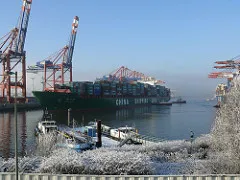
Image Resource China looks to green its import of agricultural commodities This blog by Thomas Verhagen, the Senior Programme Manager at Cambridge University’s Institute for Sustainability Leadership, details how Chinese banking regulators and collaborators are aiming to change Chinese food imports. Read
Image Resource G20 Leaders welcome 'Green Finance' initiatives For the first time in its history, G20 Leaders have referenced the importance of greening the financial system. In addition to the mention in their annual Communiqué, G20 members also published a Green Finance Synthesis Report that examines the need for and challenges of developing green finance. Read
Image Resource Marrakesh climate talks represent unique opportunity to decide the future of agriculture within international climate policy Ongoing discussions on agriculture within the United Nations Framework Convention on Climate Change (UNFCCC), will culminate this year at the COP22 climate negotiations in Marrakech, following a long process since their initiation in Durban in 2011. The talks in Marrakech follow the signing of the Paris Agreement in 2015 which, in its preamble, explicitly refers to safeguarding food security. Also, the vast majority of countries’ Intended Nationally Determined Contributions submissions (i.e. climate pledges) prioritise agriculture as a sector for adaptation and mitigation action. Read
Image Resource Future fisheries can expect $10 billion revenue loss due to climate change The authors used a species distribution model and applied this to the 887 marine fish (which represents 60% of global average annual catch in the 2000s) and invertebrate species in the world oceans under high and low emissions scenarios. The authors find that global maximum catch potential (MCP) is projected to decrease globally by 7.7% between 2010 and 2050, under the business as usual scenario, and the global revenue from this is predicted to decrease by 10.4% compared to 2010. Under the low emissions scenario, MCP is projected to decrease globally by 4.1% and revenue by 7.1% Read
Image Resource Challenging assumptions about the effects of elevated CO2 on crops: soybean field trials show that intensifying drought eliminates the expected benefits This paper by researchers in the US and Australia reports the findings of a long-term field-trial-based investigation into the effect of elevated carbon dioxide concentrations (CO2) on soy yield and drought tolerance. Their findings challenge the widely-held belief that crop yield will be increased by elevated CO2 (the so-called CO2 fertilisation effect) both because of increased photosynthetic rate, and because of lower susceptibility to drought: it has long been assumed that in higher CO2 conditions, stomatal conductance will be lower, leading to slower water loss from the leaves, slower water uptake from the roots, and consequently more moisture remaining in the soil for longer, thereby sustaining crops in limited rainfall. Read
Image Resource Trimming the excess: environmental impacts of discretionary food consumption in Australia This study estimates the environmental impacts of what it terms discretionary foods - foods and drinks that do not provide nutrients that the body particularly needs. It finds that these foods account for 33-39% of food-related footprints in Australia. Read
Image Resource The Solutions Journal - Special issue: Towards sustainable food futures A key objective of this Special Issue is to provide a creative space for scholars who may be limited in the scope of their publication outlets, especially when it comes to proposing “out of the box” ideas. Read
Image Resource The debate continues: beef production intensification for decreased GHG emissions? An academic debate on the controversial possibility of decreasing greenhouse gas emissions via increased beef production in the Brazilian Cerrado finds a new set of commentators, who have responded to an original paper by de Oliveira Silva et al. earlier in 2016 in the same journal, Nature Climate Change. Read
Image Resource Climate-smart soils Recent assessments have strongly suggested that meeting the widely agreed target of limiting global warming to less than 2°C will require the deployment of substantial carbon sinks in addition to measures to curb greenhouse gas (GHG) emissions. This perspective article examines the latest research and thinking on the ability of agricultural soil management to reduce GHG emissions and promote soils as carbon sinks, and the practical feasibility of implementing available soil management practices Read