Think piece
Unpacking wartime food security and fertiliser narratives
Fodder at a glance
🪖 Unpacking wartime food security and fertiliser narratives
🏜️ The limits of UAE’s push for food security
🪐 Exploring food self-sufficiency across alternative dietary futures
🌿 Seeing animals, choosing plants: Evidence from a cafeteria
🌽 Beyond yields: Smallholders’ realities matter for biodiversity
Editor's note
As the war in Iran enters its fourth week, fertilizer supply chain disruptions and food security implications have dominated headlines in the food space. We keep hearing the same statistics and chokepoints; the Straits of Hormuz closure has blocked 35 percent of the world’s urea, the most widely used form of synthetic fertiliser and it has caused the price of natural gas, a key input into synthetic fertiliser, to double. Media outlets issued warnings of “food crisis”, “food shortages” and “global hunger”.
There are certainly very real impacts of fertiliser shortages, but it’s interesting there’s been little to no scrutiny of whether agriculture should be so dependent on synthetic fertiliser, given it’s made with natural gas, responsible for 2.5 percent of global emissions, pollutes waterways and underpins a model of agriculture widely understood to be unsustainable, unjust and unhealthy. For more on the connections between our food and fossil fuels, check out our podcast series, Fuel to Fork.
As I read more about the unfolding consequences of the war for food production, I saw that the CEO of Yara, one of the largest global synthetic fertiliser companies, appears time and time again in the media. He comments not only on fertiliser supply chain disruptions, but also raises its potential impacts on global hunger.
“What I’m worried about is like we saw in 2021, that it’s the most vulnerable that pay the higher price. We saw what that meant, hunger and famine in many parts of the world,” Sven Tore Holsether told the Financial Times on March 5th. He has also appeared in the Guardian and Bloomberg.
Holsether isn't wrong. High fertilizer prices do translate to higher food prices, and that hits the most vulnerable hardest. But, intentionally or not, he was positioning synthetic fertiliser as a proxy for food security and the key tool for combatting hunger.
It struck me that I was seeing - in real time - how food security narratives are created and reinforced. At TABLE, we believe that the food stories we tell are the futures we eat – that narratives shape the solutions, priorities and policies on the future of food.
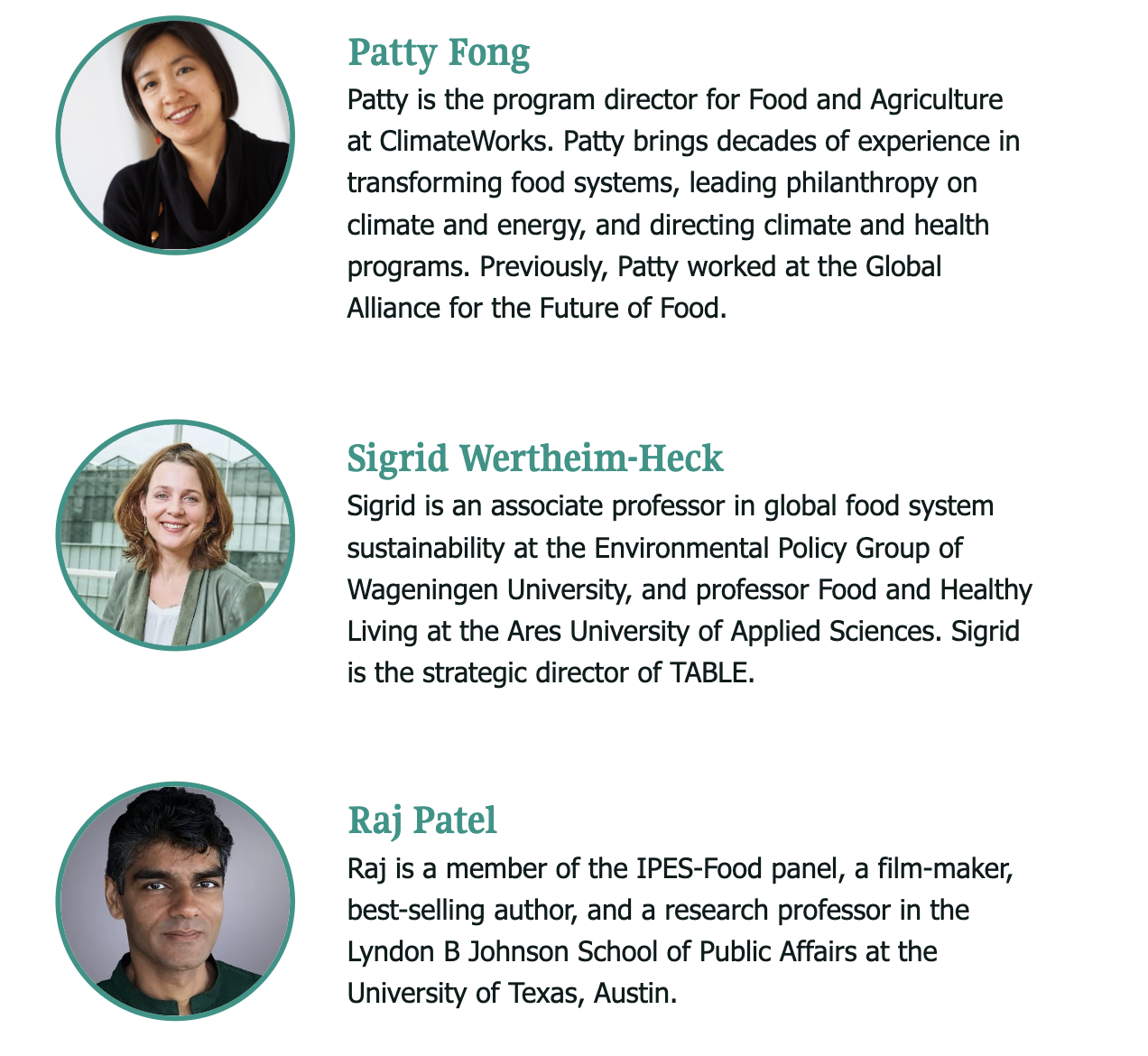
But who gets to define the problem, and what and whose voices get left out of the conversation? I’m going to unpack the current discourse with three renowned experts: Raj Patel, a member of IPES-Food and research professor at the University of Texas, Sigrid Wertheim-Heck, associate professor at Wageningen University and strategic director of TABLE, Patty Fong, Food and Agriculture director of ClimateWorks Foundation.
Unpacking wartime food security and fertiliser narratives
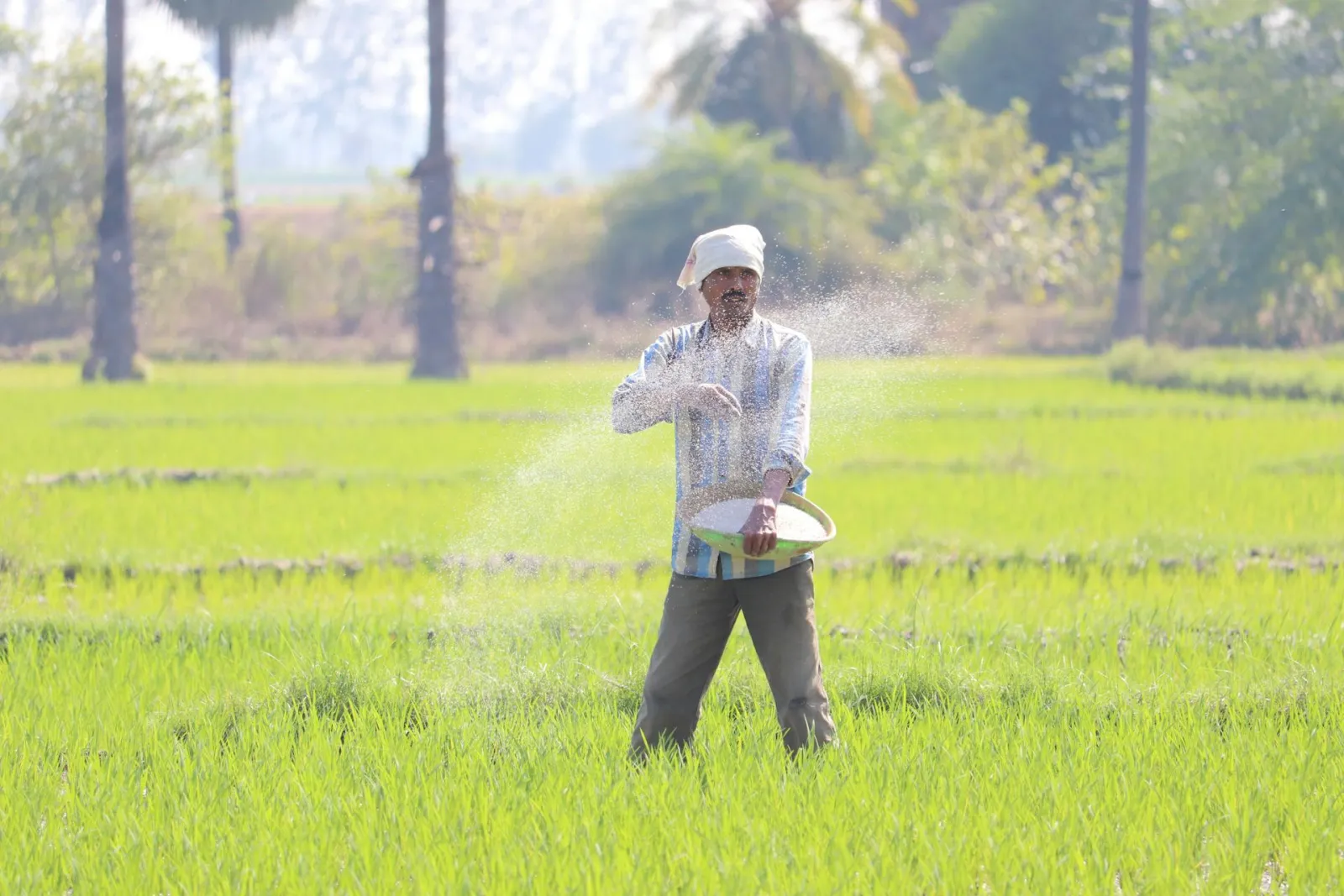
The invention of synthetic fertiliser in the 20th century revolutionised agriculture. It made nitrogen, an essential nutrient for plant growth, abundant where before it was scarce. The need to build fertility was so great in the 18th century that industrial quantities of guano, seabird droppings, were harvested from remote Peruvian islands.
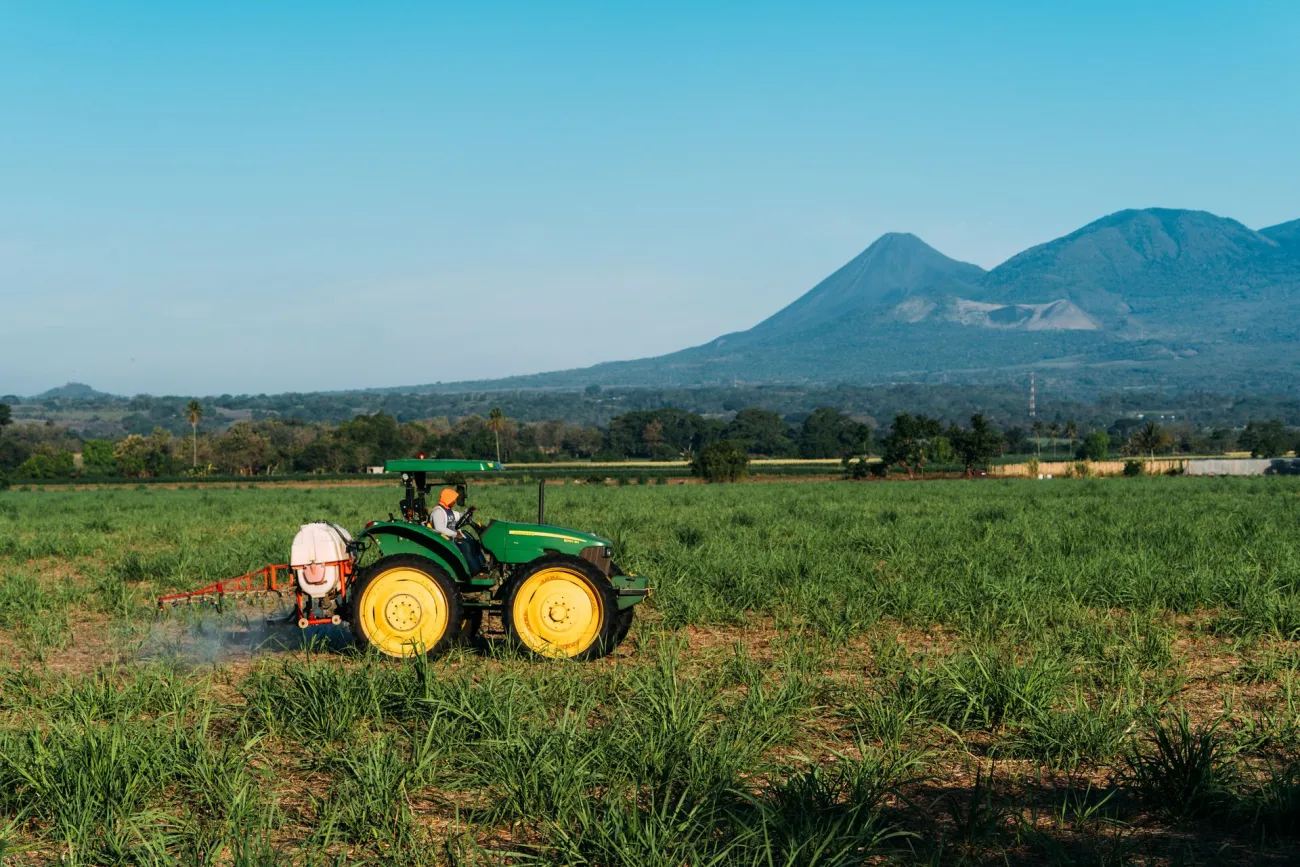
Now some 50% of the world's calories are produced with synthetic fertiliser. Since 1961, it has tripled production of crops and livestock. But it has come at a cost. Synthetic fertilisers generate 2.5 percent of global greenhouse gas emissions, pollute waterways, and contribute to the creation of ocean dead zones. Fuelled by natural gas and coal, farmers are subject to the vagaries of global energy markets, and increasingly, war, as we’re seeing in the Middle East.
The role of synthetic fertiliser is very much contested in debates around the future of food. TABLE’s explainer, Nitrogen in the Food System, explored this debate and scenarios for reducing its use: from improving efficiency, to changing farm practices, adopting new technologies and dietary change.
But in current conversations around war, food security, and fertiliser, its complicated role receives scant mention. Why does this matter now and in the long term?
Patty Fong, Food and Agriculture director of ClimateWorks Foundation argues that dominant narratives we are currently hearing establish a particular problem diagnosis and a framing of the solutions.
The problem with stories
“Narratives are the stories that we tell ourselves and tell others”, says Fong. “They underpin the priorities, the financial flows, which then determine what food is being produced, who has access to what types of foods, what foods are affordable.”
But within these narratives, there are assumptions about how the world works, and how it should work in the future, she says. In short, narratives dictate the problems and the solutions. In this case, there’s a shortage of fertiliser, and we need more of it.
In a Guardian article explaining how fertiliser shortage will threaten farmers, Yara’s CEO Holsether, recommended that governments step in to help farmers face rising fertiliser costs.
There is a strongly-held assumption that productive farming is not possible without synthetic fertiliser but there are parts of the world who have invested in that and are saving money, says Raj Patel, a member of IPES-Food and a professor at Lyndon B Johnson School for Public Affairs at the University of Texas.
“It's an entire echo chamber around the impossibility of escaping fertilizers in Europe,” says Patel, citing how India, following the Ukraine war and fertiliser shortages, invested heavily in its Atmanirbhar strategy (meaning self-reliance in Hindi) and has developed policy to shift away from synthetic fertilizers.
“If you thought that Europe might have learned its lesson from the Russian gas shock two years ago, it hasn't,” says Patel.
It’s a tension between long and short term goals, but action in the short term can dangerously undermine the long term, as we saw in the energy sector. After war broke out in Ukraine, the UK regulator approved new oil fields in the name of energy security, deepening fossil fuel dependency but violating climate targets. It’s not unimaginable that food security and fertiliser follow in the same footsteps.
Whose narrative counts?
In times of crisis, the voices of those with power and money rise to the top. It’s little surprise that CEOs from companies like Yara are talking to the FT and the Guardian. They have significant resources to not only talk to journalists but also government officials through lobbying.
“Those with power and a lot of resources can amplify the most dominant narrative right now,” says Fong. She argues this is based on an age-old ‘feed the world’ narrative that promotes sustainable intensification, claiming to produce more food on less land, and global trade as the best way to feed people while overlooking conflict, poverty, access and power imbalances as additional drivers of food insecurity.
Critics of sustainable intensification (see the TABLE explainer on the subject) argue that the approach doesn’t necessarily do what it claims, produce more food on less land thereby protecting more nature, because it’s hard to increase productivity without increasing use of inputs that have negative environmental consequences particularly when it comes to soils and waterways.
Often the 'more' food that's being produced is of the kind that is not particularly good for our health (generally commodity crops) and can have damaging effects for certain vulnerable people such as smallholder farmers in lower income countries who can't compete with cheap food from overseas. And while sustainable intensification may have a small land sparing effect in some circumstances, it’s also the case that higher productivity increases profitability and/or increases demand, which in turn motivates expansion, an effect which is known as the Jevon's Paradox. TABLE’s podcast with Michael Grunwald, author of We Are Eating the Earth, is an example of this position.
Food security is more complex than fertiliser availability
Given farmers’ dependence on synthetic fertiliser, there is no doubt that war in Iran poses risks to food production. As a result, the media around the world have announced the threat of food shortages, rising prices and food insecurity.
But food security is much more complex than availability of fertiliser, says Sigrid Wertheim-Heck, associate professor of sustainable food systems at Wageningen University.
“If you want to talk about resilience [in food systems], you should start from the plate,” says Wertheim-Heck. She explains that the FAO’s definition of food security is that under all conditions people should have equal access to safe, healthy, sustainable foods according to their preferences. But in current conversations around food security and resilience, that definition is rarely used as intended: consumption is often treated as a byproduct of trade, rather than its starting point.
“The whole narrative is around commodity trade,” says Wertheim-Heck. “But food security and resilience are ultimately lived realities – if we want to understand what food resilience is we need to understand and be interested in [people’s] stories.”
Likewise, the climate crisis and biodiversity loss pose huge threats to global food security. Just last month, the UK government published a report on how global biodiversity loss and the collapse of critical ecosystems could affect the UK’s security. Fertiliser and global commodity trade has a significant role to play in this story, but you wouldn’t know it from the coverage.
It's because it’s a more difficult story to tell. Pressed for time and following the news cycle, journalists give energy to certain narratives because they focus on the immediate problem and not how it interacts with the medium to long term, says Fong. It’s compounded because some companies have more resources to tell their version of the story, she adds.
Fong has some advice for grappling with narratives.
“It's just important for us to understand and be critical of what we are hearing,” says Fong.
“Who is behind the [narratives]? What is the interest behind them? And what voices are we not hearing?”
Comments (0)