Reports
Business-as-usual cocoa is driving a new wave of global forest destruction
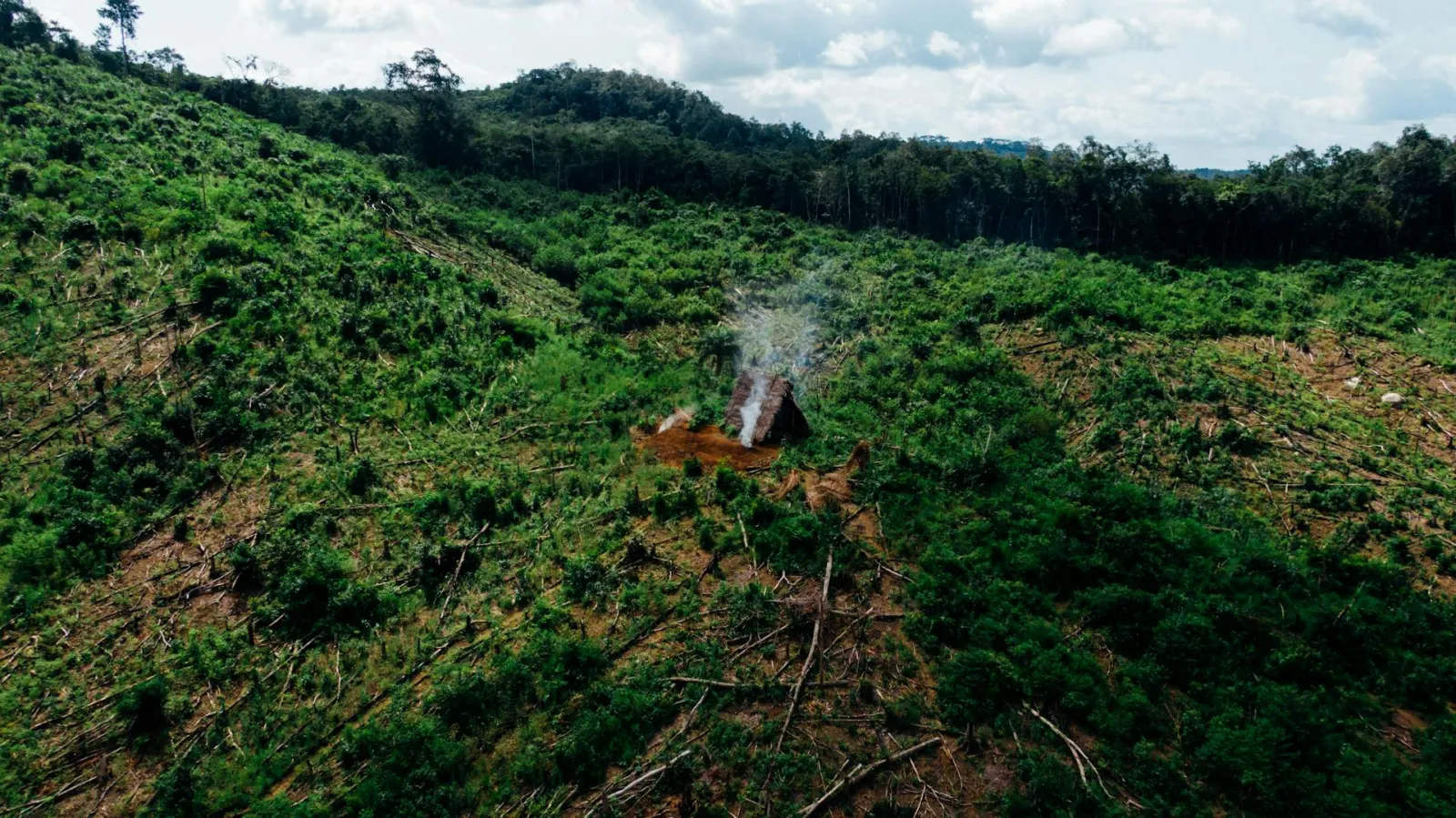
A WWF report finds that cocoa cultivation, long associated with deforestation in West Africa, is now driving a dangerous new front of forest loss in some of the world’s most critical tropical ecosystems, including Liberia and the Congo Basin.
Publisher's summary
A new WWF report, From Past to Future: How Business-as-Usual Cocoa Drives Forest Loss and What We Can Do, reveals that cocoa cultivation, long associated with deforestation in West Africa, is now driving a dangerous new front of forest loss in some of the world’s most critical tropical ecosystems, including Liberia and the Congo Basin.
The message is clear: without an urgent transformation of the cocoa sector, the world will keep losing irreplaceable forests just as climate impacts accelerate and global cocoa demand continues to rise.
Striking findings from the report
1. Cocoa has fueled more than 60% of agricultural deforestation in the world’s biggest cocoa exporters
Since 2000, cocoa cultivation has driven over 60% of agricultural commodity related forest loss in Côte d’Ivoire, Ghana and Cameroon. In Côte d’Ivoire alone, 37% of deforestation inside protected areas is directly linked to cocoa production.
2. A historic boom-and-bust cycle is repeating, and accelerating
The report shows that cocoa expansion consistently follows a predictable pattern:
forest invasion → rapid profits → soil exhaustion → declining yields → migration to new forests.
This centuries-old cycle is now advancing rapidly into the Upper Guinean Forest and Congo Basin, some of the planet’s last intact tropical forest landscapes.
3. Liberia is becoming the new deforestation hotspot
Liberia, home to 50% of the remaining dense Upper Guinean Forest, is already losing forest at alarming rates. Between 2021 and 2024, the country lost 2.52 million hectares of tree cover—with 15% of deforestation already linked to cocoa, largely driven by cross border migration of farmers fleeing depleted lands in Côte d’Ivoire.
WWF warns that Liberia is on the cusp of repeating the catastrophic forest losses seen in Côte d’Ivoire, which has already lost 94% of its forests over the past six decades.
4. The Congo Basin, Earth’s second largest rainforest, is next
Despite historically low deforestation, Cameroon is experiencing a surge in forest loss as cocoa expands.
In 2023 alone, 103,000 hectares of primary forest were cleared, the highest level ever recorded. Many of these areas overlap precisely with the regions most suitable for cocoa cultivation.
The Congo Basin hosts one in five of all living species, including forest elephants, great apes and unique plant life. Its degradation would have global climate repercussions.
5. Climate change is amplifying cocoa-driven deforestation
Climate disruption is shrinking the area suitable for cocoa production. As traditional cocoa zones become too hot or dry, producers move deeper into forests, accelerating destruction and creating a dangerous feedback loop where deforestation drives more climate instability.
Comments (0)