
Essay
Tracing cattle, tracing responsibility: why Brazil’s next step on transparency is also a political choice
Traceability is a vital tool for the monitoring and sustainability of Brazil’s cattle system, as well as to Brazil’s role in global environmental challenges and international trade. Despite its solutions in huge state infrastructure and digital platforms, Jordano Roma and Ana Kreter argue that traceability is not a purely technical tool. How it is implemented is highly political: who pays the costs, who reaps the benefits?
Over recent years, we have been studying how food systems change under pressure: from global markets, from climate change and from competing ideas of what development should mean. Working on Brazil’s agri-food systems, one point has become increasingly clear to us. Transparency in cattle production is no longer just a technical question. It is a political and social one, because it involves deciding who has access to data, how responsibility is assigned and who bears the costs and reaps the benefits.
Brazil is often described as an agricultural powerhouse. It is the world’s largest beef exporter and one of the largest producers of animal protein, yet around 70 per cent of the beef it produces is eaten at home, where beef holds a central place in the diet and food culture of much of the population. This position brings growing scrutiny. Abroad, importing markets, notably the European Union, have tightened requirements on products linked to deforestation. At home, banks, civil-society organisations and public authorities are paying closer attention to illegality, informality and crime in the sector, including a still significant volume of beef that escapes official sanitary inspection.
This scrutiny has a clear policy backdrop. Brazil has committed to halting and reversing deforestation and forest degradation by 2030, and annual deforestation rates have fallen since 2022. Brazilian law also distinguishes between illegal deforestation and vegetation clearance that is legally authorised, for instance within the limits set by the Forest Code. This distinction matters for what follows: complying with Brazilian law is not the same as being “deforestation-free” in the sense used by many buyers and investors.1
For readers new to the subject, traceability in cattle production means being able to follow an animal throughout its life, from the farm where it was born to the point where its meat is sold, and to record where it has been and under what conditions it was raised. In practice, this depends on identifying each animal individually, usually with ear tags, electronic identifiers or similar devices. Identification on its own is not traceability, but it is almost always what makes it possible to connect an animal’s movements to information about the farms it passed through, their environmental compliance and food safety. So although traceability is usually discussed as a technical issue, its effects reach well beyond technology, into debates on climate justice, international trade and the governance of data.
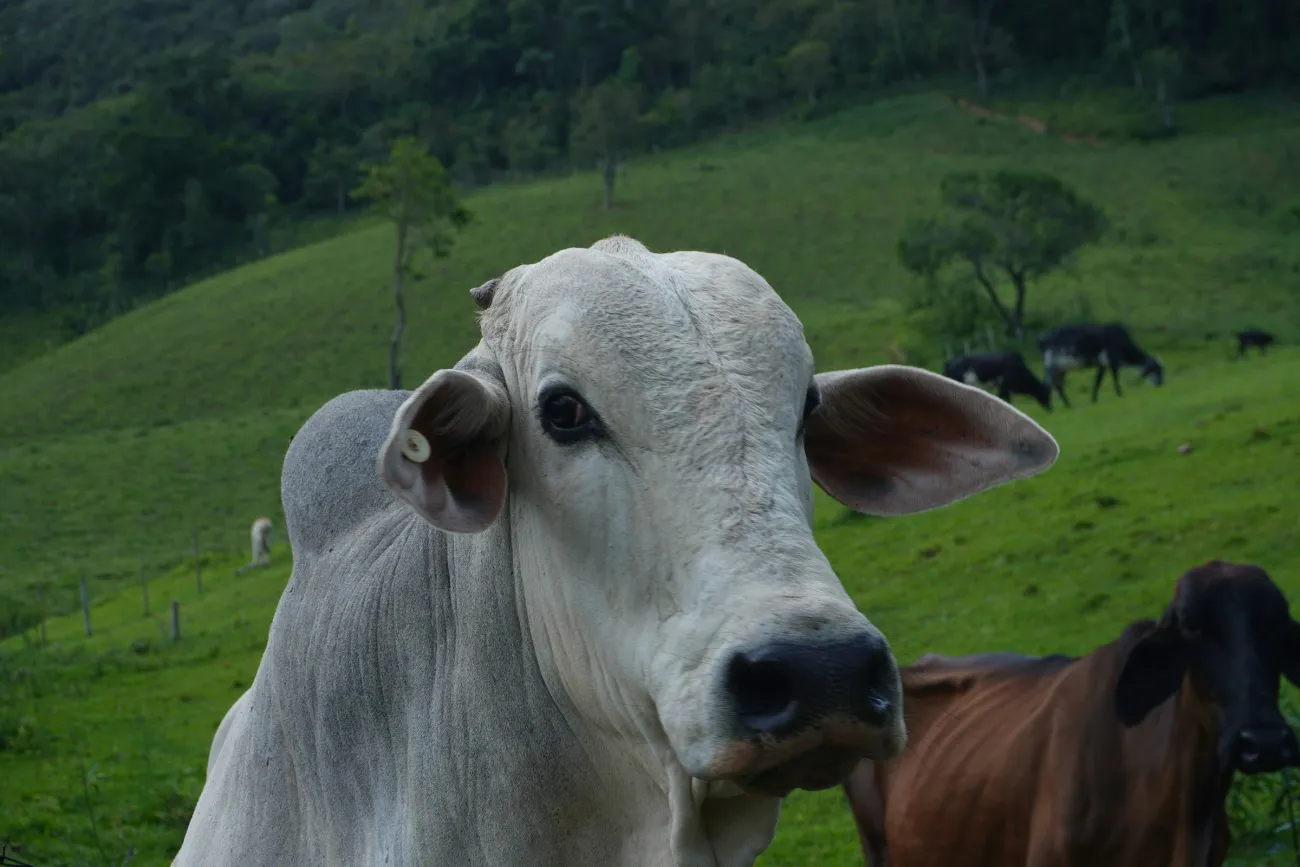
A cow with an ear tag in Cunha, Brazil. Photo by Vinicius Costa via Unsplash.
From sanitary tool to governance infrastructure
Historically, Brazil’s systems for controlling cattle were designed as animal-health (sanitary) instruments: their purpose was to control disease and protect food safety, and they mostly identified animals collectively, by herd or batch, rather than one by one. That model did what it was meant to do. It is no longer enough, however, now that sustainability, deforestation and responsibility along supply chains have become central concerns in domestic and international markets alike.
The technical gap at the heart of this debate is decisive. Without individual traceability, that is, without being able to identify and follow each animal through the different stages of production, we cannot fully see how cattle farming relates to land use, deforestation, land tenure and environmental compliance. This creates blind spots, above all in indirect supply chains, where animals pass through several farms before reaching the slaughterhouse and so largely escape the checks carried out by public authorities, meatpackers and their buyers.
A fairly common production pathway shows the problem. A calf is born on a small farm, raised on a second property in a frontier region under deforestation pressure, and fattened on a third, larger and better-equipped farm that sells to slaughterhouses exporting to demanding markets. If monitoring looks only at this final supplier, the social and environmental impacts of the earlier stages, such as illegal deforestation, land conflicts or poor working conditions, can stay invisible, even though they are built into the final product. Mapping these indirect suppliers is now one of the main obstacles to removing deforestation from beef supply chains, and to making sure that more intensive, higher-tech production does not rest on insecure or disputed land.
New policies and a turning point
Two recent policy developments suggest that Brazil is starting to tackle these gaps more systematically. The first is the National Programme for the Individual Identification of Cattle and Buffalo (PNIB), which sets a path towards individual identification across the whole country, bringing Brazil closer to standards already in place in other major beef-producing countries. Its timetable was set by Ordinance SDA/MAPA No. 1,331/2025, which phases in requirements and establishes that, from 1 January 2033, cattle and buffalo without individual identification and registration may no longer be moved anywhere in the country. What was once a technical option is therefore becoming a legal obligation, with direct consequences for producers, transporters and slaughterhouses.2
The second is the AgroBrasil+Sustentável platform, a public digital infrastructure developed by the Ministry of Agriculture with Serpro, the federal data-processing company. It brings together information from different databases on production, compliance and sustainability, and producers can access its basic services free of charge through their GOV.BR account.3 In some respects, these efforts parallel initiatives elsewhere to build agri-food data infrastructures, but they respond to Brazil’s particular conditions of land tenure, environment and politics.
Each initiative matters on its own. Together, they mark a turning point: the possibility of a national system that links animal-level traceability to environmental, social and land-tenure information. What is at stake is not only better record-keeping, but a governance infrastructure that makes practices that were once opaque visible, comparable and open to regulation.
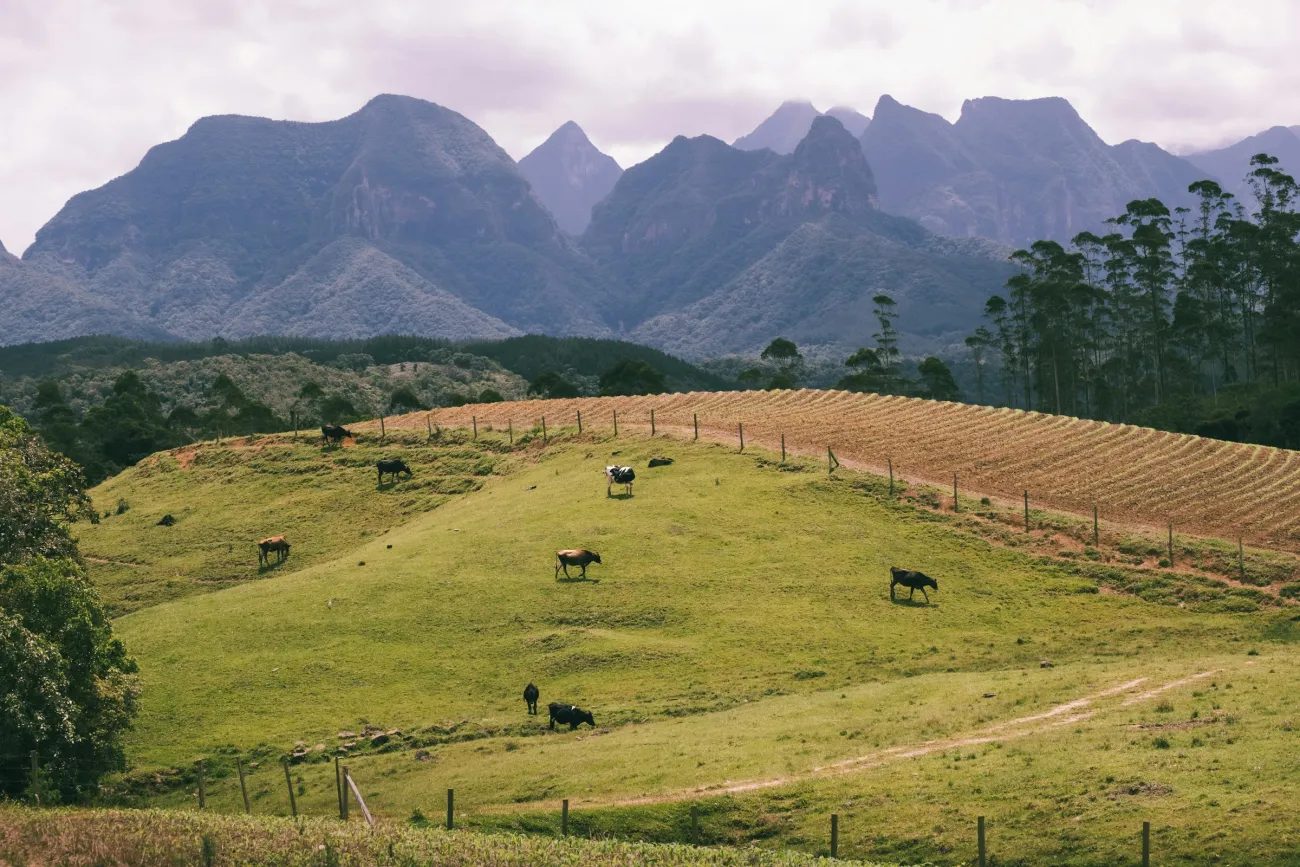
Cows graze on a fenced hillside with mountains in the distance in Urubici, State of Santa Catarina, Brazil. Photo by Ivan Cheremisin via Unsplash.
Why integration changes everything
The basic shift is not simply identifying animals one by one, but connecting that information to the land they move through, and checking whether those areas comply with environmental, land-tenure and other legal rules. Much of the relevant data already exists: records of animal movements, rural land registries, environmental compliance databases, certification schemes and, often, private monitoring systems run by companies and banks. The problem is that these datasets are scattered across different institutions, built to different standards and rarely able to talk to one another.
In our view, the main innovation of AgroBrasil+Sustentável and related initiatives is institutional rather than purely technological: it opens the possibility of bringing these scattered data flows into a shared infrastructure managed in the public interest. If that integration works in practice, it could change how decisions are made along the supply chain. Banks could assess risk more precisely when granting rural credit; slaughterhouses could strengthen their due diligence, the checks they run on suppliers; policymakers could target incentives better; and producers could be rewarded for practices they can actually prove.
Some of these incentives already exist. In the 2025/26 Plano Safra, the federal government’s annual rural credit programme, producers can obtain a reduction of up to one percentage point in interest on operating loans when conditions relating to the Rural Environmental Registry are combined with recognised agricultural practices.4 The mechanism builds on the previous programme, in which producers adopting sustainable practices became eligible for a 0.5 percentage point reduction, with financial institutions validating the information through AgroBrasil+Sustentável.5 Benefits of this kind depend on meeting specific eligibility criteria; individual identification of animals does not, by itself, guarantee cheaper credit.
Seen from a European supermarket, integration is exactly what would make it possible to check that beef sold as “deforestation-free” is not linked to earlier stages of the chain marked by illegal deforestation or rights violations. Without systems linking animals, farms and compliance records, responsibility tends to fall on the last visible link, while problems pile up further upstream, where monitoring is weaker. This is why integration has to be real, not just declared. Without genuine interoperability, meaning shared data standards, clear institutional mandates and sustained public investment in digital infrastructure, there is a real risk of adding bureaucracy without a matching gain in transparency or governance.
Traceability as politics, not neutral technology
One reason we think this debate matters is that traceability is often presented as a neutral technical fix, an almost inevitable “upgrade” on the road to modernisation. In practice, like any information infrastructure, it rests on choices: which data are collected, at what scale and how often, who can see them and how they are used to assign responsibility, incentives and penalties.
These choices are political because they decide who gains and who pays, in economic and reputational terms. Should compliance be judged only against national law, or should private actors, such as retailers and institutional investors, be able to impose additional requirements based on their own sustainability or animal-welfare standards? Many already do: since 2009, the major meatpackers have signed conduct adjustment agreements (TACs) with the Federal Public Prosecutor’s Office and public commitments that go beyond legal minimums, backed by monitoring and audit protocols.6 How should commercially sensitive information be protected, so that production strategies are not needlessly exposed while the aims of transparency are kept? And who should pay for implementation: producers, slaughterhouses, government, banks, or some negotiated combination of them? None of these questions can be answered by technology alone. They all depend on governance arrangements and on negotiation between competing interests.
This is why we treat traceability as a governance issue, governance being understood here as the rules, institutions and processes through which collective decisions are taken, responsibilities assigned and conflicts settled. Building a traceability system is not a matter of installing software and filling databases. It requires open negotiation over what should be made visible, to whom, at what scale and with what consequences, among governments, companies, producers and civil society, in Brazil and beyond.

A cow grazes at sunset in São Roque, Brazil. Photo by Gabrielle Roncarate via Unsplash.
Heterogeneity, inclusion and inequality
It would be tempting to present this agenda as a straightforward win for sustainability, and many actors do, especially in international forums concerned with imported deforestation. Our research on agri-food transitions in Brazil makes us more cautious, mainly because the cattle sector is so uneven.
Large producers, with access to technology, secure land titles and the capacity to invest in sophisticated management systems, are in a very different position from small and medium-sized producers in remote areas, or in regions where land rights are unresolved and technical assistance is scarce. A rapid move towards complex traceability and data requirements could unintentionally deepen these inequalities, raising new barriers for those who already struggle to obtain credit, to complete their Rural Environmental Registry (Cadastro Ambiental Rural, CAR) or to get support for restoring pastures and adopting integrated crop–livestock–forestry systems.
Some clarification of the CAR is useful here. It is a mandatory electronic registry in which rural properties declare their environmental information, such as the location of protected areas, and which state agencies must then analyse and validate. Registration does not recognise ownership or possession of the land, nor does it replace environmental licensing.7 In many regions, this analysis advances slowly and unevenly, particularly for small and medium producers. Where land rights remain insecure, there is less incentive to invest over the long term in pasture recovery, integrated systems or sustainable intensification, and access to rural credit becomes harder, which in turn deepens vulnerability.
Inequality also shapes demand. Beef is central to Brazilian food culture, but it is not evenly present on every table. According to Brazil’s 2017–2018 Household Budget Survey, beef accounted for 2.7 per cent of the calories available from household food purchases among the poorest fifth of the population, rising to 3.9 per cent among the richest fifth. These figures measure food acquired by households rather than total individual consumption, but they suggest that price weighs heavily on purchasing decisions.8 For many lower-income consumers, attributes such as inspection status, origin or a “deforestation-free” label are likely to count for less than price, which limits how far environmental signals can travel in the domestic market, even as export markets raise their demands.
These dynamics bring the Brazilian debate close to global discussions on a “just transition”: how to move towards more sustainable food systems without reinforcing existing exclusions, or shifting the burden of change onto those least able to adapt. Seen this way, traceability is a promising but double-edged instrument. It can make vulnerable practices and places visible, but it can also justify new forms of exclusion if it is not matched by inclusive policies and support.
Incentives, actors and controversy
Incentives help explain why positions on traceability vary so much. For export-oriented companies, individual traceability is increasingly seen as a condition for keeping access to premium markets and avoiding trade restrictions, particularly in the European Union. Banks tend to see integrated data systems as a way of managing credit risk, allowing them to tell apart clients with different environmental and social records.
Among producers, the picture is more mixed. Many support greater transparency in principle, recognising that it can add value to their products and improve financing conditions. But they worry about the costs of implementation, the paperwork, who controls their data and the risk that new requirements will widen the gap between family farmers and large agribusiness. Organisations working with smallholders consistently stress the need for technical assistance, affordable identification technologies and targeted financial support, so that compliance does not become one more source of exclusion in a sector already marked by deep inequalities.
Civil society is also part of the picture. Imaflora’s Boi na Linha programme, run in partnership with the Federal Public Prosecutor’s Office, brings together meatpackers, retailers and other actors to align monitoring criteria and make socio-environmental commitments in the beef chain more transparent.9
For public policy, these tensions call for arrangements that combine regulatory requirements with mechanisms for inclusion, avoiding both the shortcut of excessive leniency and the quiet exclusion of the most vulnerable producers. On the demand side, there is a further challenge: building markets that value environmental and social attributes, such as traceability, secure land tenure and the absence of deforestation, and not only taste and appearance, which still matter most to most consumers.
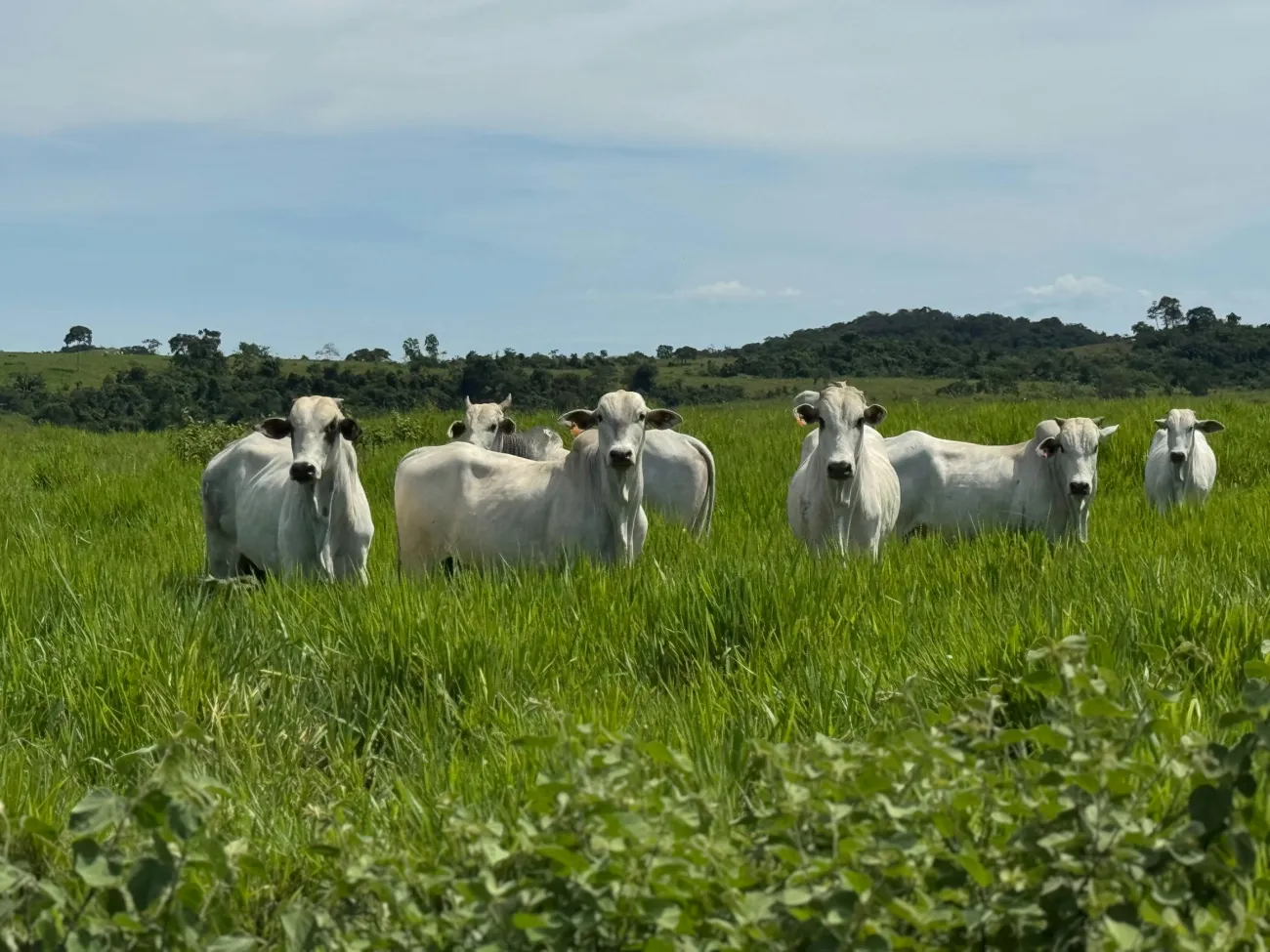
A herd of white cows in green pasture in Nova Brasilândia, Brazil. Photo by Carlos Pimenta Souza Junior via Unsplash.
What needs to happen next
For Brazil to build a reliable, large-scale individual traceability system, three priorities stand out. First, the federal government, together with the states that manage land and environmental registries, needs to treat interoperability as a public good: something provided and safeguarded in the public interest, rather than left to one-off agreements or scattered proprietary solutions. Linking databases on animal movements, land registries, environmental compliance, credit and certification requires clear institutional mandates, shared standards and long-term investment in public digital infrastructure, including platforms such as AgroBrasil+Sustentável.
Second, incentives need to go hand in hand with inclusion, so that traceability does not become another barrier for small and medium producers. This means pairing requirements with practical support: technical assistance to adapt production systems, affordable identification technologies, credit lines that account for transition costs and dedicated efforts to resolve land-tenure issues where the analysis of CAR records is still incomplete. Without this, the transparency agenda risks being seen as yet another top-down demand, out of touch with how production actually works.
Third, governance arrangements must be able to adapt, since rules and institutions will need to change as technologies evolve, markets shift and new conflicts arise. Regular dialogue between government, the private sector, producers, banks and civil society will be essential to adjust instruments, address concerns about data protection, revise compliance criteria and share costs more fairly.
A broader question about food systems
Although this discussion starts from the Brazilian case, its implications go well beyond Brazil. Brazilian beef reaches consumers in Europe, Asia, the Middle East and many other regions, feeding debates on the deforestation embedded in imported products and on the credibility of the sustainability pledges made by retailers, food companies, investors and governments. Decisions taken now about transparency in Brazil’s cattle supply chains directly affect whether these actors can show that their climate and biodiversity policies translate into practice.
More broadly, individual traceability combined with integrated data speaks to a question that concerns societies everywhere: how can we know whether the food we eat meets basic environmental and social expectations, in a world marked by inequality and unequal access to information? For those of us working where food systems, the environment and inequality meet, traceability is a concrete place to start, because it makes visible what was hidden. And once something is visible, it can be regulated, challenged and redesigned.
Why this matters now
There is, at present, a window of opportunity. The institutional pieces are starting to fall into place, pressure from markets and public opinion is unlikely to ease, and the technology is increasingly available, including in forms that different kinds of producers can use. The outcome, however, is not settled. Implemented carefully, the combination of individual traceability, integrated data and inclusive support could make Brazil a global reference for transparent, deforestation-free cattle supply chains. Handled badly, it could deepen inequalities, inflame unresolved land conflicts or fail to deliver the change it promises.
This is why we believe the moment deserves close attention. In the end, tracing cattle also means tracing responsibility. It is about whether food systems can become more transparent, more accountable and better prepared for the environmental and social challenges of our time, and about recognising that the choices Brazil makes today will shape not only the future of its cattle sector, but also wider debates on what responsible food production should look like in the decades ahead.
Comments (0)