Game
Barefood
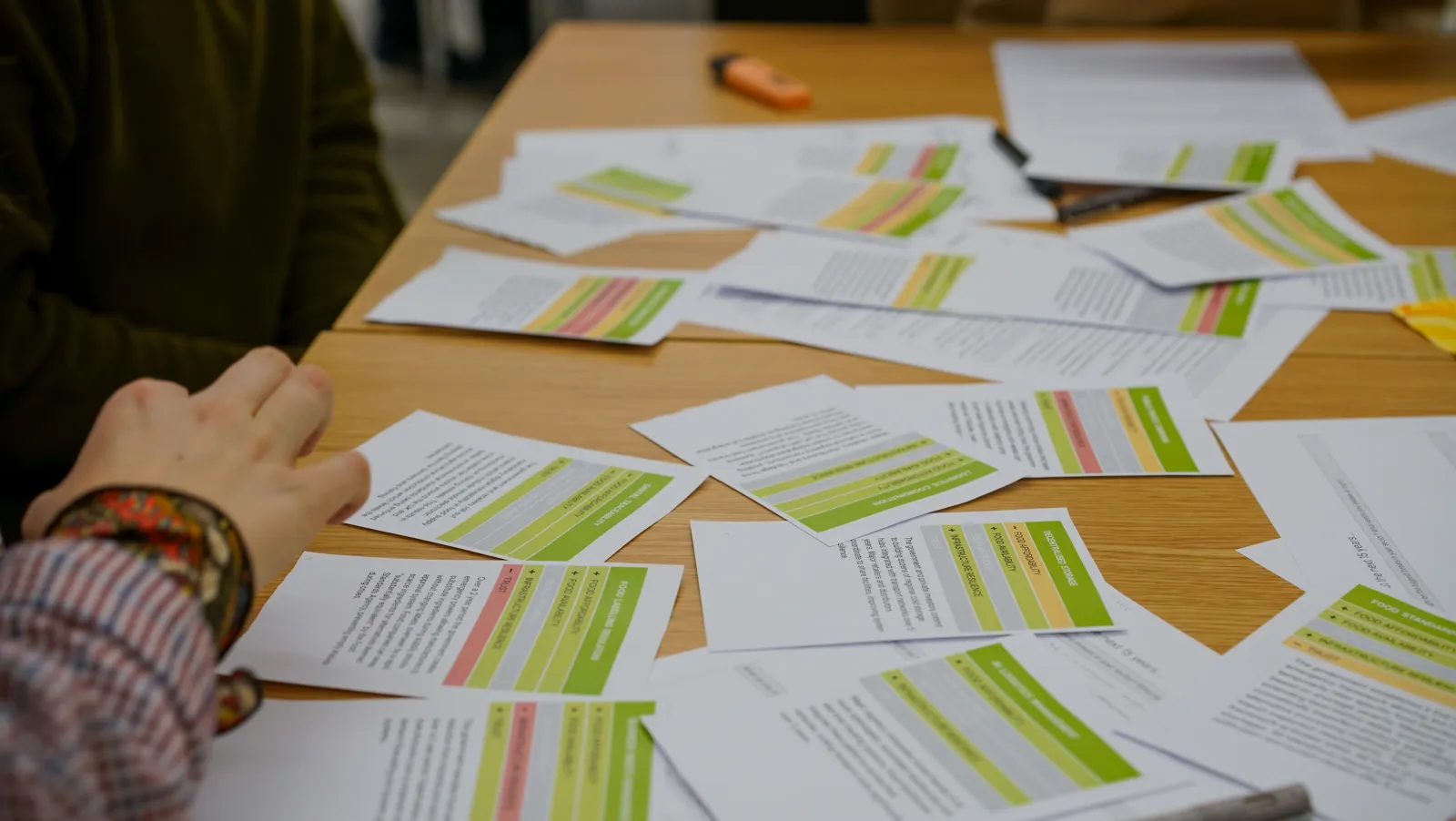
Barefood is a serious game for decision-makers and experts to explore and plan for the complex vulnerabilities within the UK food system. It can also be played by the public and students. Barefood lets you simulate what happens when chronic weaknesses, like food poverty or just-in-time logistics, meet acute shocks, such as extreme weather or cyber attacks. By taking on various stakeholder roles and making difficult choices with limited resources across simulated five-year rounds, participants identify how the food system might fail, and develop resilient strategies to prevent potential civil unrest. The game requires a minimum of 7 players, and can accommodate up to 35 players as they join one of 7 stakeholder groups. A game session can last between 2 and 4 hours.
Why have you developed this game?
In recent years we’ve witnessed empty supermarket shelves, panic buying, and supply chain failures that would have seemed impossible a decade ago. Chronic vulnerabilities in the UK food system – from food poverty to just-in-time logistics – have created a system where minor shocks can cascade into major crises. The question isn’t if another crisis will hit, but whether we’ll be prepared when it does. Conventional risk management tools have their place, but they struggle with the non-linear dynamics that characterize food systems. Risk registers list threats individually, missing how they amplify each other. Financial models project costs but can’t capture human behaviours under stress. Strategy documents propose interventions but rarely test how people will actually respond when systems begin failing. Barefood serves as what researchers call a boundary object, which allows participants from different sectors to engage with a shared scenario while bringing different perspectives and priorities. This common ground becomes crucial for the kind of cross-sector coordination that resilience requires but current structures too often inhibit.
Who is the target audience?
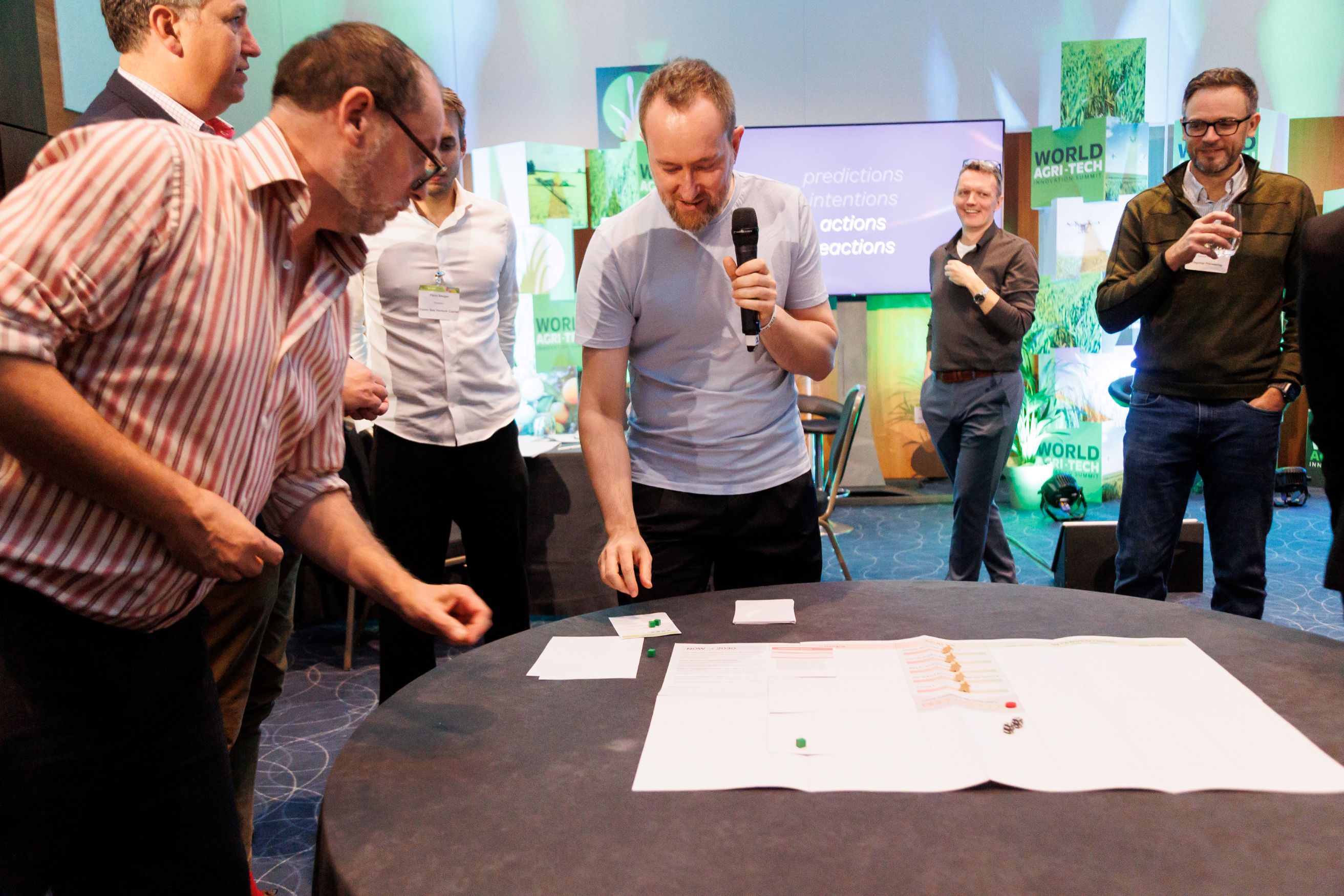
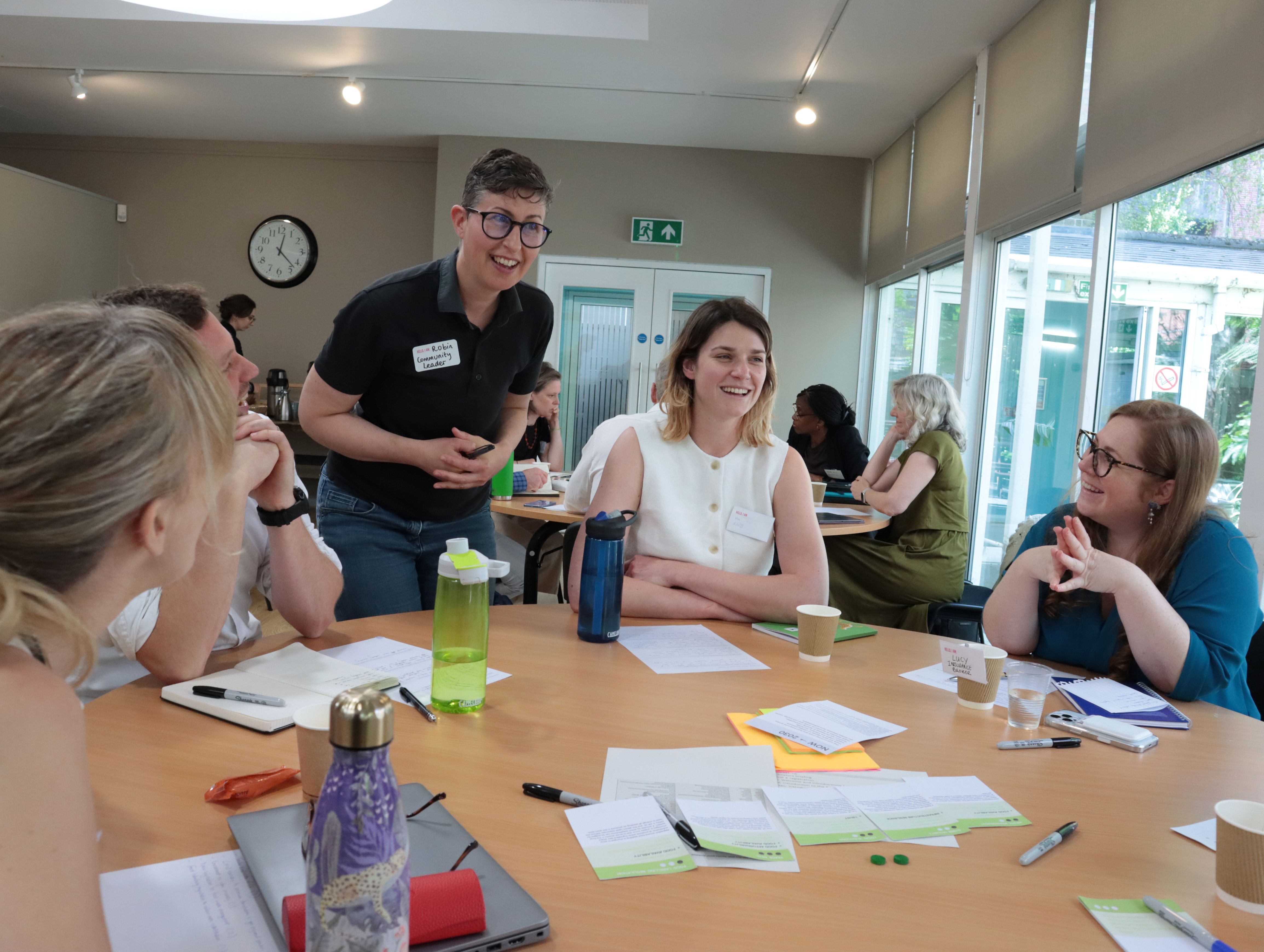
Participants join one of 7 stakeholder teams: Government, Finance, Agri-Tech Bio-Tech Industry, Food Production, Food Distribution, Retail, and Consumers & Third Sector. The game can be played by a professional group of individuals each of whom represent or work in those teams and allows them to play themselves. Alternatively the game has been played by students and the public where they take on the role of each of the teams.
How does the game contribute to addressing the debates around the food system?
In Barefood, players quickly discover how chronic weaknesses amplify acute impacts, with manageable disruptions unfolding into potential catastrophes. They know what should be done, but face systemic contradictions that force short-term thinking. With limited resources and crises mounting, participants find themselves making decisions they know will worsen future problems. The game helps participants discuss uncomfortable truths about how our food system actually works and how it might fail. In doing so, we can be better prepared and respond to shocks with resilient strategies, rather than letting crisis force our hand. 4. The game mechanics deliberately mirror real-world dynamics while compressing time, letting players experience in hours what might take years to unfold in the real world.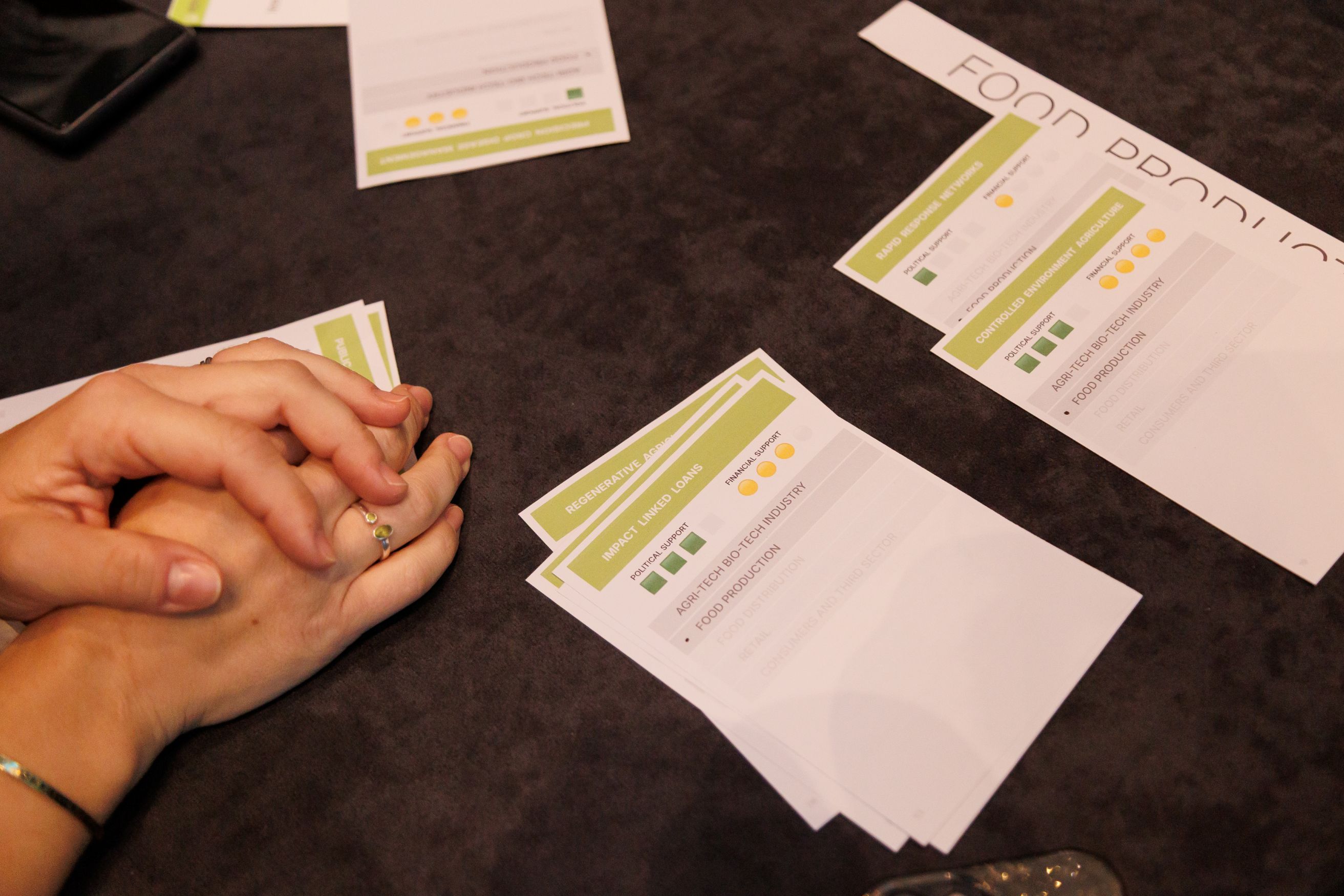
Contacts & info
This work is funded as part of the Backcasting to Achieve Food Resilience in the UK project under the UK Biotechnology and Biological Sciences Research Council (BBSRC) grant number BB/Z516697/1.
Authors and contacts:
- Aled Jones aled.jones@aru.ac.uk
- Matteo Menapace m@tteo.me
Comments (0)