Image Resources Our extensive research library contains thousands of summaries of journal articles, reports and news stories that can be searched by keyword and category RESOURCES CATEGORY Books Briefing paper Event recording Featured articles Featured report Game Journal articles News and resources Reports Think piece Video Working paper Workshop summary Year 2026 2025 2024 2023 2022 2021 2020 2019 2018 2017 2016 2015 2014 2013 2012 2011 2010 2009 2008 2007 2002 2001 Image News and resources Event recording: No More Omissions A recording of the event “No More Omissions: Real Policy Action on Land Use, Animal Agriculture & GHGs–with a Focus on Methane” is now available. The event was held on 11 November 2022 at the COP27 Food4Climate Pavilion, organised by Brighter Green and the Global Forest Coalition. Read Image News and resources Cultivating a future where antibiotics still work This blog post from The Good Food Institute addresses the question of whether cultivated meat (and other lab-grown foods) can reduce the risk of antibiotic resistance compared to livestock production. Antibiotics are often added to cell culture media in laboratories to prevent infection, but over a dozen cultivated food companies claim to have antibiotic-free processes. Read Image News and resources Reboot Food supports open-source precision fermentation A group of campaigners known as Reboot Food has published a manifesto calling for open-source precision fermentation technology to be used widely to transform the food system away from reliance on animal agriculture and free up land for nature restoration. Precision fermentation technology, which is already used to produce insulin and rennet as well as some new food products, could in theory produce all of the world’s protein on an area of land smaller than Greater London, says the manifesto. Read Image News and resources Cultivated meat moves one step closer to sale in the US The United States Food & Drug Administration (FDA) has completed its first pre-market consultation for a food product made from cultivated animal cells. The cultivated chicken product, made by UPSIDE Foods, still has to pass further approval stages before it can be sold to consumers in the US, including inspection of the manufacturing facilities by the United States Department of Agriculture Food Safety and Inspection Service. The process described in the consultation documents uses genetic engineering, antibiotics and bovine serum at various stages, although antibiotics are not used in the main cell growth and differentiation phases. Read Image Books Food Loss and Waste Policy: From Theory to Practice This book explores policies on food waste and loss from around the world, including France, Italy, Romania, Japan, China and the United States. It is aimed at students, academics and policymakers. Read Image Books Food for Life: The New Science of Eating Well In this book, epidemiologist Tim Spector sets out his approach to nutrition. He describes the importance of the microbiome, explores which foods are really “healthy” and “unhealthy” and discusses the impacts of food consumption on the environment. The book also contains many short chapters dedicated to specific food types, including fruit, legumes, fungi, meat and fermented dairy. Read Image Reports Promoting sustainable food consumption in Germany The Scientific Advisory Board on Agricultural Policy, Food and Consumer Health Protection to the German Federal Ministry of Food and Agriculture has just released an English version of a report on promoting more sustainable food consumption. The report, originally published in 2020 in German, defines policies that integrate consideration of four areas: human health, social aspects, the environment (including climate) and animal welfare. It focuses on designing food environments to support consumers in choosing healthy, sustainable diets. Read Image Reports Gene editing and animal suffering This report from Compassion in World Farming argues that the traditional selective breeding of livestock has led to great suffering for farmed animals, and that gene editing technologies are likely to exacerbate these welfare issues. It describes how traditional breeding has resulted in chickens that grow so quickly they suffer from leg disorders and heart disease, dairy cows that produce so much milk they experience lameness, mastitis and metabolic disorders, and turkeys that are so large they have joint deformations and cannot mate naturally. The report argues that gene editing should only be used in exceptional circumstances where (a) there is no negative impact on animal health and welfare, (b) no less intrusive methods are available and (c) it does not facilitate industrial livestock systems. Read Image Reports Transforming society to meet climate goals Only an urgent societal transformation can deliver the emissions cuts needed to limit climate warming to 2°C or 1.5°C, according to this report from the United Nations Environment Programme. The report sets out a sector-by-sector examination of how to achieve this transformation. Read VIEW MORE
Image News and resources Event recording: No More Omissions A recording of the event “No More Omissions: Real Policy Action on Land Use, Animal Agriculture & GHGs–with a Focus on Methane” is now available. The event was held on 11 November 2022 at the COP27 Food4Climate Pavilion, organised by Brighter Green and the Global Forest Coalition. Read
Image News and resources Cultivating a future where antibiotics still work This blog post from The Good Food Institute addresses the question of whether cultivated meat (and other lab-grown foods) can reduce the risk of antibiotic resistance compared to livestock production. Antibiotics are often added to cell culture media in laboratories to prevent infection, but over a dozen cultivated food companies claim to have antibiotic-free processes. Read
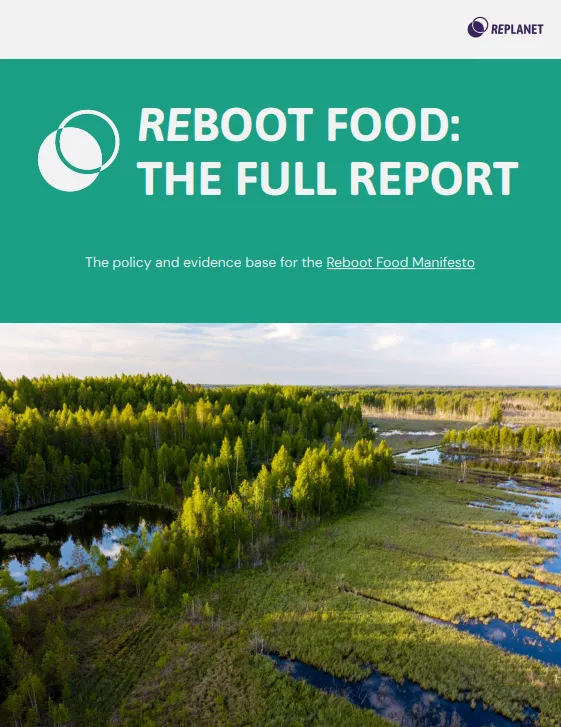
Image News and resources Reboot Food supports open-source precision fermentation A group of campaigners known as Reboot Food has published a manifesto calling for open-source precision fermentation technology to be used widely to transform the food system away from reliance on animal agriculture and free up land for nature restoration. Precision fermentation technology, which is already used to produce insulin and rennet as well as some new food products, could in theory produce all of the world’s protein on an area of land smaller than Greater London, says the manifesto. Read
Image News and resources Cultivated meat moves one step closer to sale in the US The United States Food & Drug Administration (FDA) has completed its first pre-market consultation for a food product made from cultivated animal cells. The cultivated chicken product, made by UPSIDE Foods, still has to pass further approval stages before it can be sold to consumers in the US, including inspection of the manufacturing facilities by the United States Department of Agriculture Food Safety and Inspection Service. The process described in the consultation documents uses genetic engineering, antibiotics and bovine serum at various stages, although antibiotics are not used in the main cell growth and differentiation phases. Read
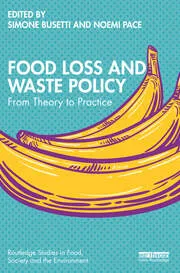
Image Books Food Loss and Waste Policy: From Theory to Practice This book explores policies on food waste and loss from around the world, including France, Italy, Romania, Japan, China and the United States. It is aimed at students, academics and policymakers. Read
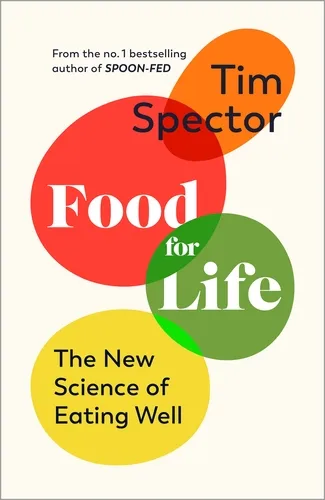
Image Books Food for Life: The New Science of Eating Well In this book, epidemiologist Tim Spector sets out his approach to nutrition. He describes the importance of the microbiome, explores which foods are really “healthy” and “unhealthy” and discusses the impacts of food consumption on the environment. The book also contains many short chapters dedicated to specific food types, including fruit, legumes, fungi, meat and fermented dairy. Read
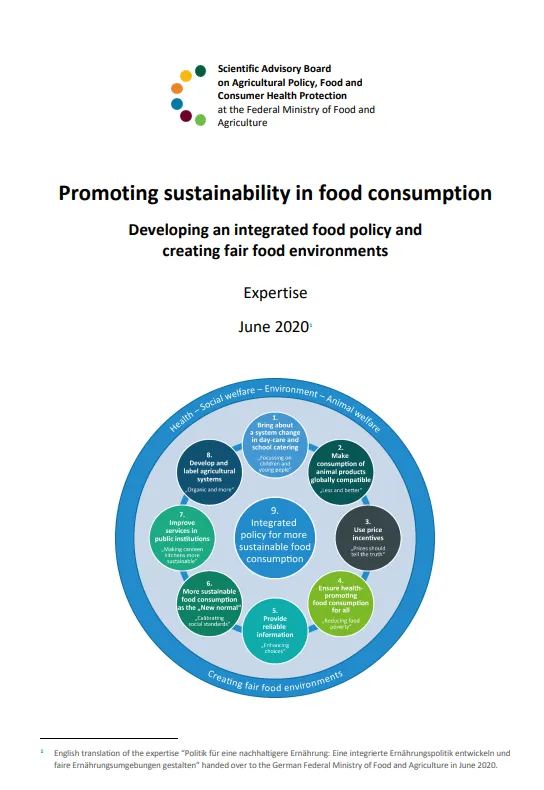
Image Reports Promoting sustainable food consumption in Germany The Scientific Advisory Board on Agricultural Policy, Food and Consumer Health Protection to the German Federal Ministry of Food and Agriculture has just released an English version of a report on promoting more sustainable food consumption. The report, originally published in 2020 in German, defines policies that integrate consideration of four areas: human health, social aspects, the environment (including climate) and animal welfare. It focuses on designing food environments to support consumers in choosing healthy, sustainable diets. Read
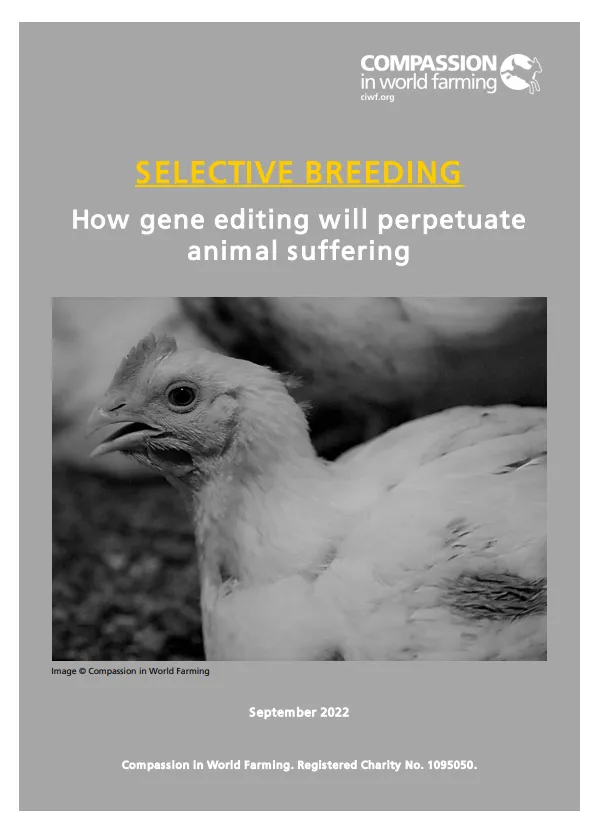
Image Reports Gene editing and animal suffering This report from Compassion in World Farming argues that the traditional selective breeding of livestock has led to great suffering for farmed animals, and that gene editing technologies are likely to exacerbate these welfare issues. It describes how traditional breeding has resulted in chickens that grow so quickly they suffer from leg disorders and heart disease, dairy cows that produce so much milk they experience lameness, mastitis and metabolic disorders, and turkeys that are so large they have joint deformations and cannot mate naturally. The report argues that gene editing should only be used in exceptional circumstances where (a) there is no negative impact on animal health and welfare, (b) no less intrusive methods are available and (c) it does not facilitate industrial livestock systems. Read
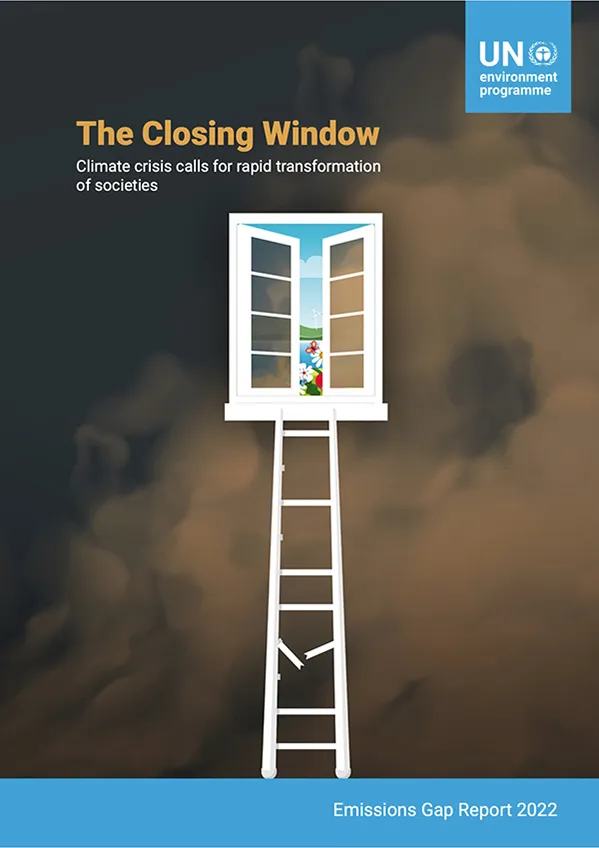
Image Reports Transforming society to meet climate goals Only an urgent societal transformation can deliver the emissions cuts needed to limit climate warming to 2°C or 1.5°C, according to this report from the United Nations Environment Programme. The report sets out a sector-by-sector examination of how to achieve this transformation. Read