Event recording
Event Recording: The protein fetish: meat, money & micronutrients (Food Day, London Climate Action Week 22 June 2026)
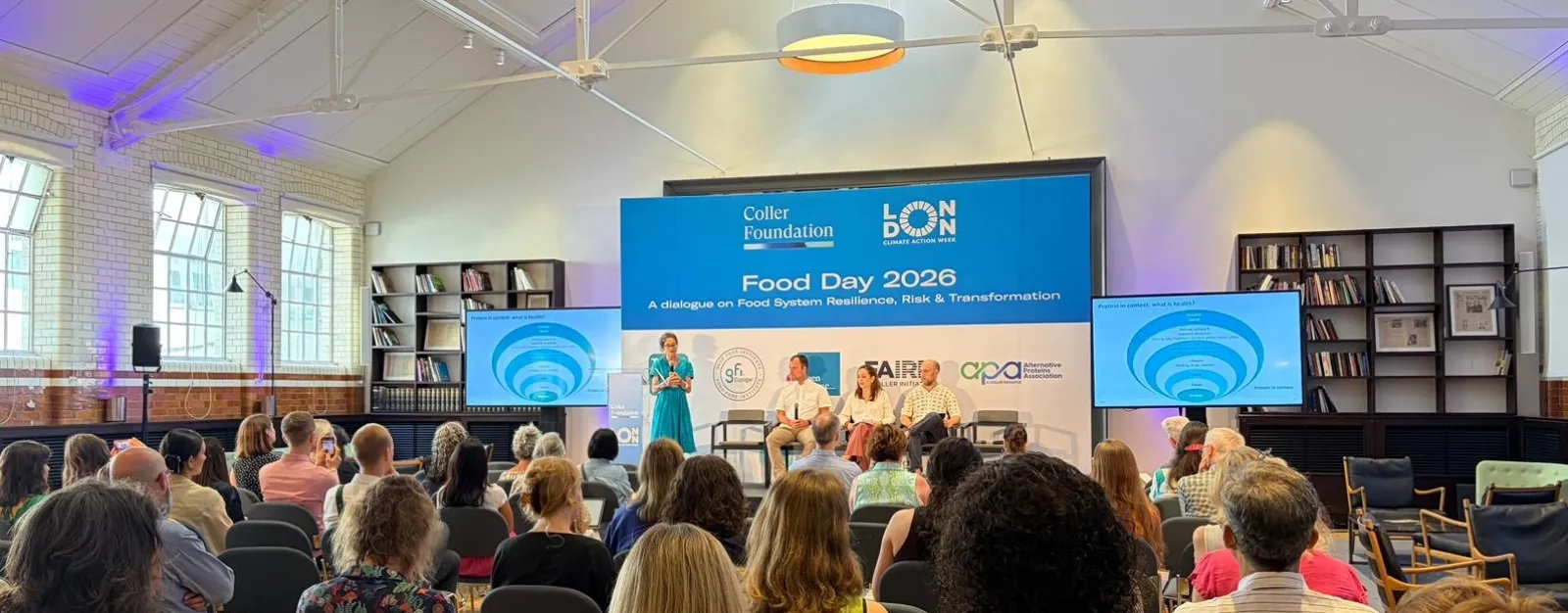
This event occurred on 22 June 2026 at London Climate Action Week as part of Food Day at the Science Museum, hosted by the Jeremy Coller Foundation.
Moderator: Tara Garnett, Director of TABLE
Speakers: Marcela Quintero (The Alliance of Biodiversity and CIAT), Mark Breen (Hubbub), and Oliver Witard (King’s College London)
Protein - as problem, aspiration, solution, obsession - is everywhere. In popular health discourse, especially on social media, we are constantly told to get “enough” protein to build muscle, manage weight or simply be healthy. In advertising and retail, the word itself seems to matter more than the food product it describes, prominently stamped across yoghurt, drinks, puddings and bars as a shortcut for health. But this fixation matters for more than just marketing. Protein sits at the centre of major questions about diet, health, environment and the future of food, especially because the foods most closely associated with it – meat, milk and eggs – can carry significant environmental costs. At the same time, we are bombarded with confusing and competing health messages: to eat more protein, or less or to eat different kinds all together. With messaging pulling in different different directions, the upshot is confusion and conflict.
We need greater clarity on protein - and particularly on what ‘enough’ and ‘good’ protein looks like. What are we missing when we give so much of our attention to protein, and how might this single nutrient focus - on protein or any other - distort how we feed, protect and heal ourselves?
This TABLE session brings together experts from different parts of this protein discussion to unpack how this nutrient became so prominent, why it has become such a powerful modern fixation and what this all means for healthier, fairer and more sustainable food futures. Together, we will explore:
- why protein matters in environmental debates,
- how it has developed into a modern fetish,
- disparities and differences in how it is consumed,
- the competing narratives around it and
- its implications, and the implications of any nutrient-focus, for building toward better food futures.
Comments (0)