Close
Login Register
Search
  • About
    • What We Do
    • Who We Are
    • FAQs
  • Our Writing
    • Explainers
    • Essays
    • Letterbox
    • Reports & More
  • Podcasts
  • Our Events
  • Projects
    • Power In The Food Systems
    • Local-Global Scale Project
    • MEAT: The Four Futures Podcast
    • Fuel To Fork
    • Nature
    • Reckoning with Regeneration
    • SHIFT
    • Games at TABLE
    • Rethinking the Global Soy Dilemma
  • Resources
  • Opportunities
    • Jobs
    • Funding
    • Courses
    • Collaborations
    • Events
  • Newsletter
  • TABLE (EN)
Search
Back

Sustainable healthy diets

Image
Resource
The Importance of Reducing Animal Product Consumption and Wasted Food in Mitigating Catastrophic Climate Change
This report by the Johns Hopkins Center for a Livable Future highlights the need to reduce livestock farming and food waste if climate change is to be addressed, and the relative absence of these important mitigation strategies from recent climate talks (e.g. COP21 in Paris).
Read
Image
Resource
FCRN long summary: Energy use, GHG and blue water impacts of scenarios where US diet aligns with new USDA dietary recommendations
This paper quantifies what the environmental impacts would be if the typical US diet were to shift in line with the USDA dietary recommendations. The paper has created a lot of interest and debate since it shows that shifting towards healthier diets in some cases can increase the energy, emission and water intensity of the diet. This is why we wanted to provide a more extensive summary and some commentary below. Please do read, share and add your own comments. For a comment by the study's lead author Michelle Tom see here and for another comment by Professor Michael Hamm see here. 
Read
Image
Resource
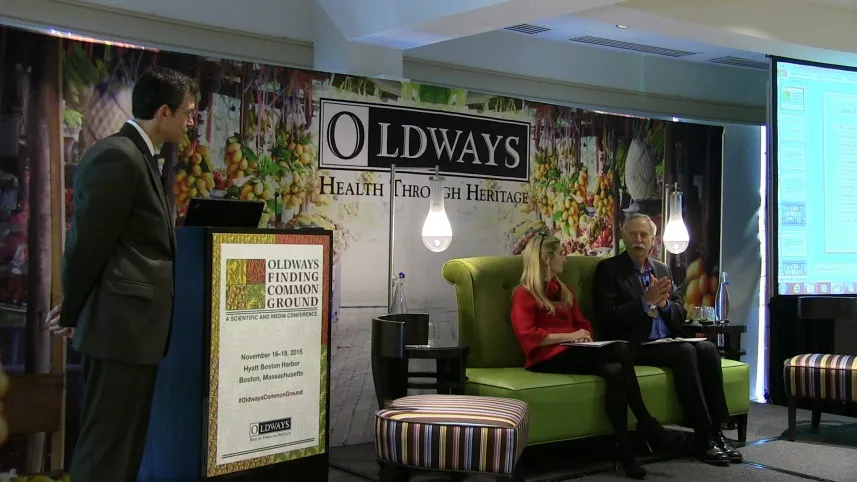
11 Points of consensus on what we should eat: Top scientists reach consensus on nutrition
Over 75 top nutrition scientists and medical experts gathered in Boston in October 2015 at the Finding Common Ground Conference, convened by the non-profit Oldways to try to agree on principles for a healthy diet (primarily aimed at a U.S. audience). Oldways is a food and nutrition education organization aiming to inspire healthy eating through cultural food traditions and lifestyles. The meeting was attended by a diverse range of experts, many vocal proponents of particular types of diets (vegan, paleo, low-fat, Mediterranean etc.) and is described to have led to some heated debates.
Read
Image
Resource
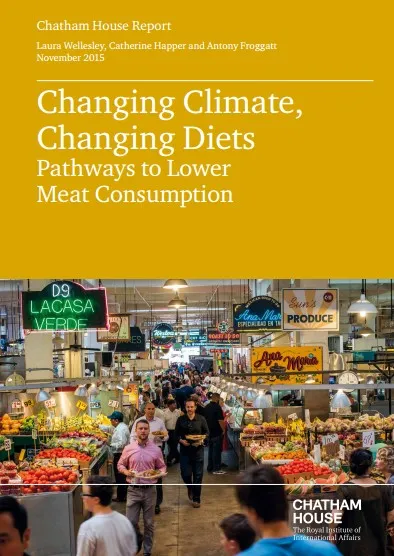
Changing Climate, Changing Diets: Pathways to Lower Meat Consumption – new report by Chatham House
Reducing global meat consumption will be critical to keeping global warming below the ‘danger level’ of two degrees Celsius, the main goal of the 2015 climate negotiations in Paris, according to this new report by Chatham House.
Read
Image
Resource
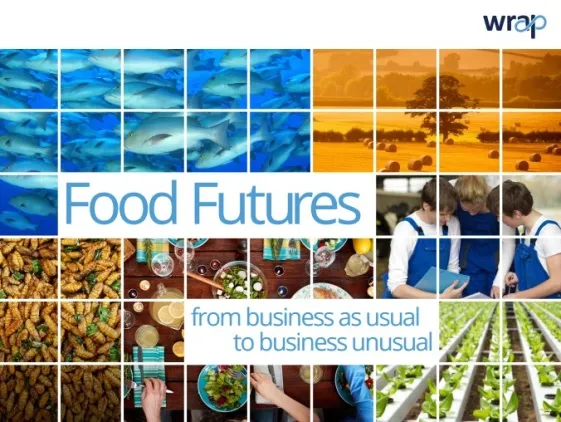
WRAP report: Food futures – from business as usual to business unusual
This report, Food Futures, by the UK’s waste agency WRAP, looks at a broad range of food sustainability challenges for the future and at possible solutions.
Read
Image
Resource
Eating like there's no tomorrow: Public awareness of the environmental impact of food and reluctance to eat less meat as part of a sustainable diet
This paper looks at public awareness of the environmental impacts of meat and attitudes to reducing meat consumption. The study, carried out in Scotland, was based on focus group discussions and individual interviews and tried to understand the cultural and social values associated with eating meat. It found a lack of awareness of the association between meat consumption and climate change, and suggested that individual dietary change will be difficult to achieve without addressing these values and beliefs.
Read
Image
Resource
The Case for Protein Diversity - Accelerating the adoption of more sustainable eating patterns in the UK
This white paper, produced by the independent sustainability company The Carbon Trust and sponsored by Quorn Foods, argues that greater diversity of main ingredients would be better for Britain both from a health and climate perspective. Increasing the diversity of UK protein choices is described as a practical way to promote more sustainable diets with lower impacts on health and environment.
Read
Image
Resource
Reducing Food Loss And Waste While Improving The Public’s Health
This paper presents an overview of policies and interventions aimed at addressing food loss and waste. It argues that to curtail food waste in higher income countries, measures such as clarifying food date labels could go a long way. Consumers are often confused by "use by," "best by" and "sell by" dates on food packaging and throw out perfectly edible food. Improving date labelling policy can also improve food safety.
Read
Image
Resource
A Food Systems Approach To Healthy Food And Agriculture Policy
In this paper researchers recommend taking a broader "systems" approach to food policy in order to tackle public health issues as far-ranging as climate change and antibiotic use in food animal production. Three examples are given of a food systems approach to food policy: farm-to-school programs, incorporating sustainability into the Dietary Guidelines for Americans and antibiotic use in food animal production.
Read
  • VIEW MORE

Sign up for Fodder, our monthly newsletter unpacking the future of food.

Tick below to opt-in to email communications.

You can change your mind at any time by clicking the unsubscribe link in the footer of any email you receive from us, or by contacting us at info@tabledebates.org.

We use Mailchimp as our marketing platform. By clicking below to subscribe, you acknowledge that your information will be transferred to Mailchimp for processing. Learn more about Mailchimp's privacy practices.
  • Glossary
  • About
  • Our Writing
  • Podcasts
  • Resources

Social

YouTube Facebook Instagram

© Copyright 2025

A collaboration between: